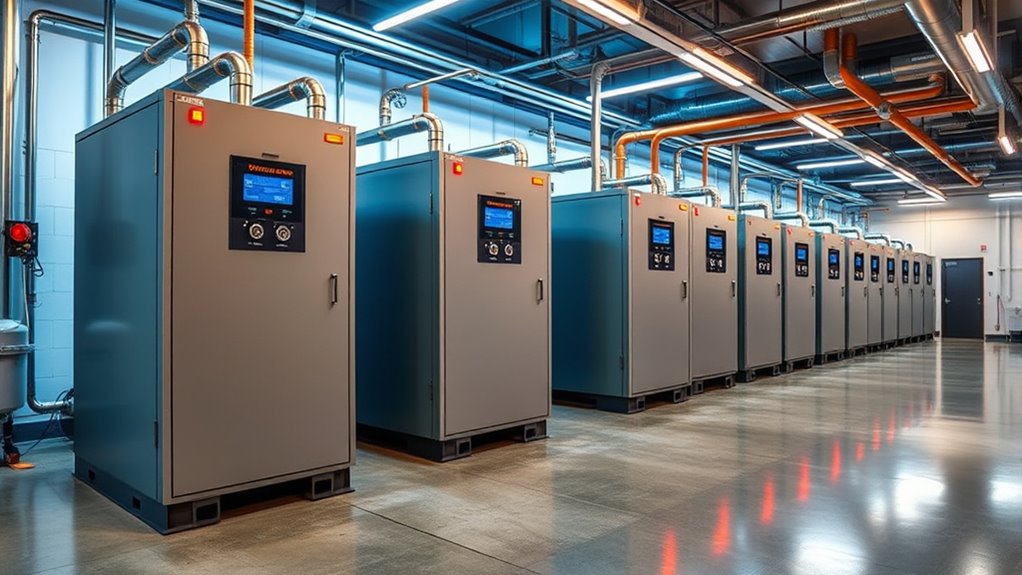

By using variable speed compressors, you can effectively minimize peak energy demand by adjusting their capacity to match real-time needs. These compressors run more efficiently during low demand, slowing down to save energy, and speed up when demand spikes, preventing sudden power surges. This dynamic adjustment helps balance the load, reduces stress on the grid, and cuts costs. If you want to learn how to optimize this further, there’s more to explore.

Get backup power and energy gear delivered free with Prime
- Fast, free delivery on millions of items
- Prime Video, Amazon Music and more included
- Member-only deals all year
Key Takeaways
- Variable speed compressors adjust their output to match real-time cooling or heating needs, reducing unnecessary energy use during peak times.
- They prevent sudden power surges by smoothly increasing or decreasing capacity, helping to flatten demand spikes.
- Dynamic compressor control supports load balancing strategies, distributing energy consumption more evenly over time.
- Using variable speed technology lowers overall energy consumption, decreasing peak demand and easing stress on the power grid.
- Integrating these compressors with smart scheduling and control systems enhances peak demand mitigation and improves grid stability.

During periods of high energy use, peak demand strains the power grid and increases costs for everyone. When many devices and systems draw maximum power simultaneously, it can lead to blackouts, higher utility rates, and inefficient energy distribution. To combat this, smart scheduling becomes an essential tool. By intelligently planning when certain equipment operates, especially during peak times, you can reduce your overall energy consumption. For example, running less critical systems during off-peak hours helps shift demand away from the busiest times, easing the load on the grid and lowering costs. This proactive approach not only benefits the grid but also saves you money and prolongs equipment lifespan.
Load balancing is another key strategy in minimizing peak energy demand. It involves distributing energy use evenly across different times and systems to prevent sudden spikes. When you implement load balancing, you’re effectively spreading out your energy consumption, so it doesn’t all occur at once. This can be achieved through advanced control systems that monitor real-time energy use, automatically adjusting operations to maintain a steady load. For instance, cooling or heating systems equipped with smart controllers can modulate their activity based on current demand, ensuring they run at the best times without overwhelming the grid. Incorporating energy-efficient components, such as variable speed compressors, further enhances this process by dynamically matching capacity to actual needs, reducing waste and improving overall system efficiency.
One of the most effective ways to incorporate load balancing is through the use of variable speed compressors. Unlike traditional compressors that operate at a fixed speed, variable speed compressors can adjust their output based on immediate demand. This means they run more efficiently by matching their capacity to the actual cooling or heating needs at any given moment. When demand is low, the compressor slows down, consuming less energy; when demand spikes, it speeds up to meet the requirements without creating sudden load peaks. This dynamic adjustment reduces unnecessary energy consumption during off-peak periods and prevents abrupt power surges during high demand.
variable speed compressor for HVAC
As an affiliate, we earn on qualifying purchases.
As an affiliate, we earn on qualifying purchases.
Frequently Asked Questions
How Do Variable Speed Compressors Impact Overall System Maintenance?
Variable speed compressors can decrease your maintenance frequency because they operate more smoothly and with less stress on components. However, they may require more specialized maintenance due to advanced controls and equipment compatibility issues. You should stay attentive to manufacturer guidelines and make certain your team is trained on the specific needs of these systems. Proper maintenance keeps them running efficiently and extends their lifespan, ultimately saving you time and money.
What Are the Initial Costs Versus Long-Term Savings?
You’ll find that the initial costs for variable speed compressors are higher due to advanced technology and installation. However, a thorough cost analysis shows significant long-term savings through reduced energy consumption and lower operational costs. The investment benefits include improved efficiency, peak demand reduction, and extended equipment lifespan. Over time, these advantages outweigh the upfront expenses, making variable speed compressors a financially sound choice for optimizing energy use and cutting costs.
Can Existing Systems Be Retrofitted With Variable Speed Technology?
Think of retrofitting like upgrading an old car; it’s possible but can be tricky. Yes, existing systems can often be retrofitted with variable speed technology, but retrofit challenges and compatibility issues might arise. You’ll need to assess your current compressor’s design and control systems to guarantee compatibility. Consulting with experts helps prevent surprises, ensuring a smooth upgrade that maximizes energy savings without costly modifications.
How Do Variable Speed Compressors Affect Equipment Lifespan?
You’ll find that variable speed compressors generally extend equipment lifespan because they operate more efficiently, reducing wear and tear from constant on-off cycling. This improved energy efficiency means less stress on components, and you’ll notice noise reduction as they run more smoothly at variable speeds. Over time, these benefits can lead to lower maintenance costs and longer-lasting equipment, making them a smart investment for your system’s durability.
Are There Specific Industries That Benefit Most From This Technology?
You’ll find that industries like manufacturing, HVAC, and food processing reap the most benefits from variable speed compressors. These sectors face fluctuating demand, making energy efficiency essential. By adopting this technology, you can optimize operations, cut energy costs, and reduce peak demand. The suspense lies in how much your industry could save—are you ready to open these advantages and stay ahead in your field?
smart load balancing control systems
As an affiliate, we earn on qualifying purchases.
As an affiliate, we earn on qualifying purchases.
Conclusion
By implementing variable speed compressors, you not only reduce your peak energy demand but also uncover unexpected savings. It’s fascinating how a simple adjustment can align your energy use with actual needs, preventing costly spikes. As you optimize your system, you might find that what once seemed like a minor tweak becomes your biggest energy breakthrough. Sometimes, the smallest change can lead to the greatest impact—just like catching the perfect moment when everything falls into place.
energy-efficient variable speed compressor
As an affiliate, we earn on qualifying purchases.
As an affiliate, we earn on qualifying purchases.
HVAC smart scheduling controller
As an affiliate, we earn on qualifying purchases.
As an affiliate, we earn on qualifying purchases.
Halloween Picks
halloween
As an affiliate, we earn on qualifying purchases.