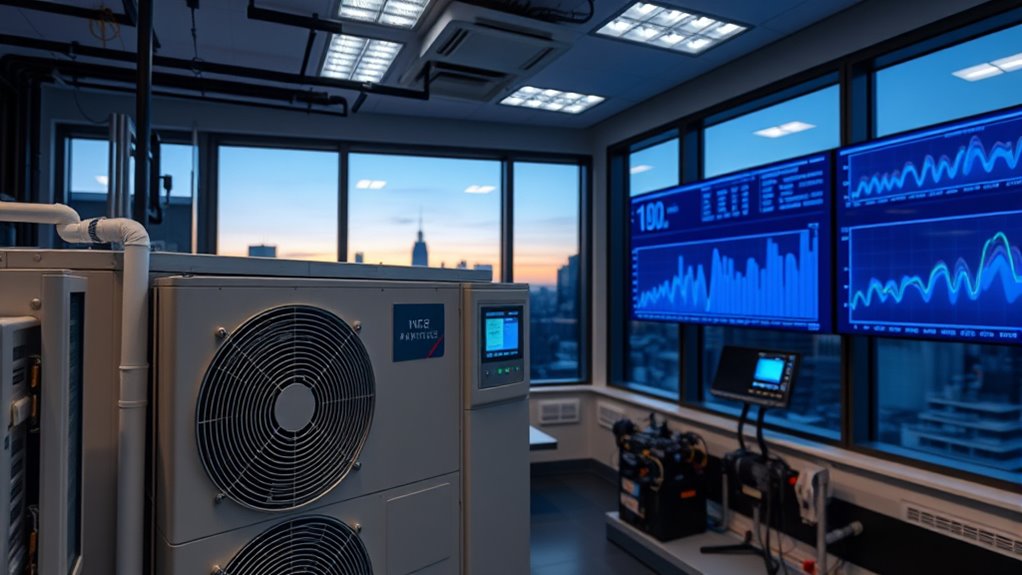
Implementing an energy management system (EMS) for your commercial HVAC with heat pumps helps you optimize energy use, cut costs, and boost operational efficiency. It allows you to monitor and control heating and cooling in real time, automate adjustments based on occupancy and weather, and identify inefficiencies quickly. An EMS also supports sustainability goals and regulatory compliance. Keep exploring to discover how this technology can transform your building’s performance and savings even further.
Key Takeaways
- Centralize control of heat pumps for optimized energy use and improved operational efficiency.
- Enable real-time monitoring and automation to reduce energy waste and extend equipment lifespan.
- Integrate predictive analytics for future energy demand forecasting and proactive system adjustments.
- Support sustainability goals by aligning with renewable energy sources and ensuring regulatory compliance.
- Facilitate maintenance and troubleshooting through centralized alerts, diagnostics, and coordinated system management.
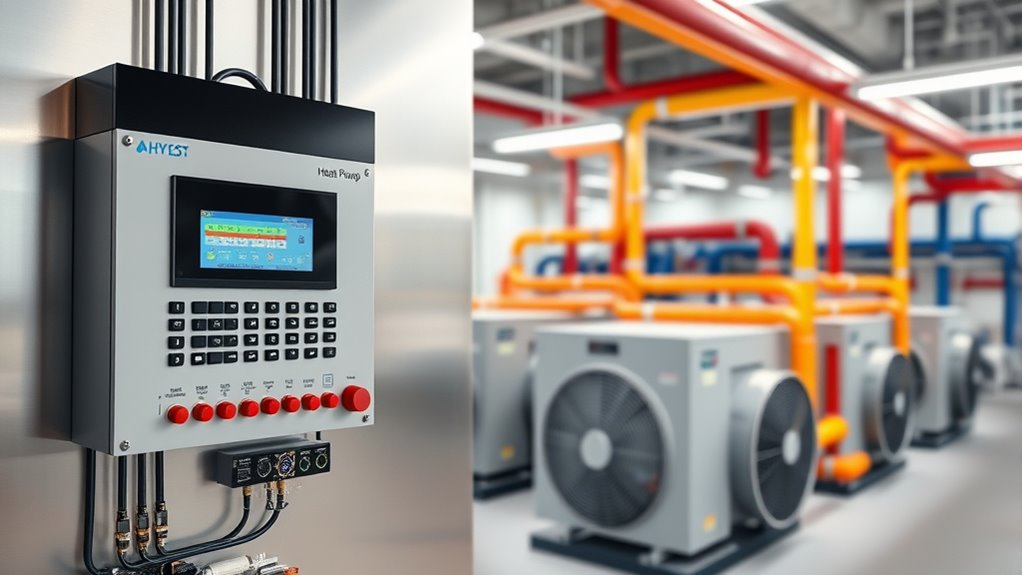
Are you looking for ways to optimize your commercial HVAC system with heat pumps? If so, implementing an effective energy management system (EMS) can make a significant difference. An EMS helps you monitor, control, and improve your heating and cooling processes, ultimately leading to substantial cost savings. By integrating your heat pumps into a centralized system, you gain better control over energy consumption, ensuring your equipment operates at peak efficiency without wasting resources. This system integration allows you to fine-tune your HVAC operations based on real-time data, occupancy patterns, and weather conditions, which not only reduces operational costs but also extends the lifespan of your equipment.
When you adopt an EMS for your heat pumps, you gain a clear overview of energy use across your entire facility. This visibility enables you to identify inefficiencies quickly and address them proactively. For example, if certain zones in your building are over-conditioned or under-conditioned, your EMS can automatically adjust the heat pump settings, preventing unnecessary energy expenditure. This level of precise control ensures you’re using energy only when needed, which directly results in lower utility bills. Additionally, many systems come with predictive analytics that forecast future energy demands, allowing you to plan and optimize your HVAC schedules well in advance.
System integration plays a crucial role in maximizing these benefits. When your heat pumps are seamlessly connected to other building management systems (BMS), you can coordinate HVAC operations with lighting, security, and other critical functions. This holistic approach not only improves comfort and efficiency but also simplifies maintenance by providing centralized alerts and diagnostics. As a result, you can quickly troubleshoot issues before they escalate, reducing downtime and repair costs. Moreover, integrating your heat pumps into an EMS supports renewable energy strategies, such as aligning HVAC operation with solar power generation, further enhancing your energy savings and sustainability efforts.
In addition to operational advantages, an EMS with integrated heat pumps helps you comply with energy regulations and sustainability goals. Many jurisdictions incentivize energy-efficient upgrades, and having a sophisticated control system in place can make qualifying for these programs easier. Plus, reducing energy consumption aligns with your company’s environmental commitments, potentially boosting your reputation with clients and stakeholders. Incorporating energy-efficient components such as glycolic acid-based products can further enhance your overall sustainability strategy.

HVAC Control Systems
As an affiliate, we earn on qualifying purchases.
As an affiliate, we earn on qualifying purchases.
Frequently Asked Questions
How Do EMS Optimize Heat Pump Performance During Peak Load Times?
During peak load times, your EMS maximizes heat pump performance by engaging demand response strategies to reduce energy use. It activates peak shaving techniques, temporarily lowering cooling or heating output to ease demand on the grid. This not only prevents overloads but also cuts costs. The system continuously monitors energy consumption, adjusting operation to balance comfort and efficiency, ensuring your heat pumps work effectively without exceeding capacity during critical periods.
Can EMS Integrate With Existing Building Automation Systems Seamlessly?
You can absolutely integrate an EMS with your existing building automation system, but be aware of potential integration challenges and compatibility issues. To guarantee a seamless connection, you’ll need to verify that the EMS supports your current protocols and hardware. Working with a knowledgeable provider helps address compatibility concerns early, making the integration smoother and more efficient, so you can optimize your HVAC system without major disruptions.
What Are the Cybersecurity Risks Associated With HVAC EMS?
You should be aware that HVAC EMS face cybersecurity risks like phishing threats that target system access. To protect your system, guarantee data encryption is robust, preventing unauthorized data interception. Regularly update software and train staff to recognize phishing attempts. These measures help safeguard your HVAC system from cyberattacks, ensuring continuous operation and data integrity. Staying vigilant minimizes vulnerabilities and keeps your building’s climate control secure.
How Does EMS Handle System Failures or Malfunctions?
When a system failure occurs, your EMS swiftly detects faults through advanced diagnostics and fault detection features. You’ll see alerts on your dashboard, allowing you to quickly identify and address issues before they escalate. This proactive approach minimizes downtime, keeps your HVAC running smoothly, and saves you money. With real-time monitoring, you gain peace of mind knowing your system is always under control and functioning at its peak.
What Is the Typical ROI Timeframe for Implementing HVAC EMS?
You can typically expect a return on investment within 1 to 3 years after installing an HVAC EMS. The system boosts your cost savings by reducing energy consumption and enhances energy efficiency across your building. These improvements lower your utility bills quickly, making the initial investment worthwhile. Over time, the system continues to deliver savings, helping you optimize operations and improve overall energy management.

Aowel 2 Heat/ 1 Cool Non-Programmable Thermostat for Home Heat Pump System and Conventional Single-Stage System, with Room Temperature & Humidity Monitor (White Backlit Screen)
Before buying, please confirm whether the product is compatible with your system, and check the size of the…
As an affiliate, we earn on qualifying purchases.
As an affiliate, we earn on qualifying purchases.
Conclusion
By integrating energy management systems with commercial HVAC heat pumps, you can optimize efficiency and cut costs. Think of it like tuning a fine instrument—you get the perfect harmony between performance and savings. Embrace these systems as your steady compass, guiding you through peak demands and off-peak lows. With smart management, you’ll keep your building comfortable and energy-smart, proving that a little foresight goes a long way—because a well-maintained system is a well-running system.

SRE with AIOps: Building resilient systems with AIOps, ML-driven observability, and agentic AI (English Edition)
As an affiliate, we earn on qualifying purchases.
As an affiliate, we earn on qualifying purchases.

HVAC Current Switch, Generic, Electrical Control Monitoring Device
VERSATILE APPLICATION: Designed for HVAC system monitoring and control, this current switch provides reliable electrical status detection
As an affiliate, we earn on qualifying purchases.
As an affiliate, we earn on qualifying purchases.