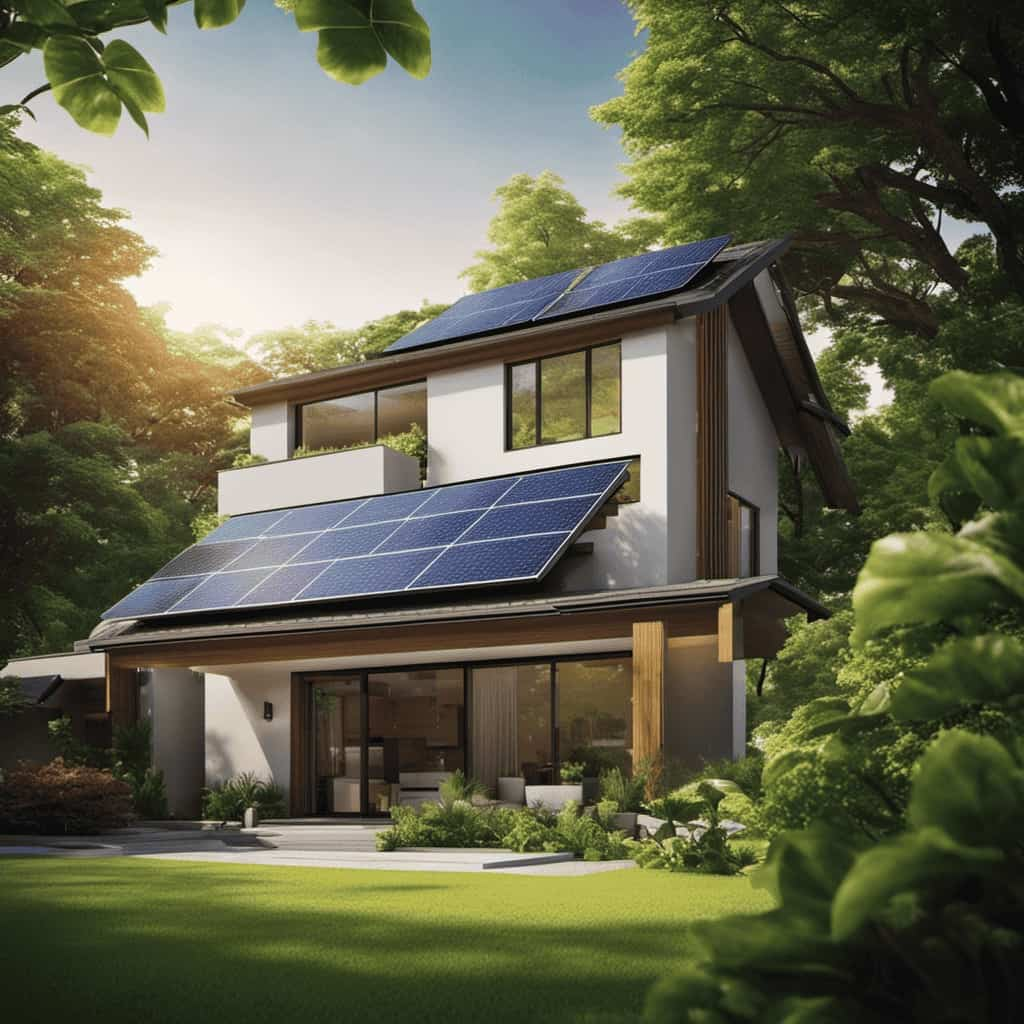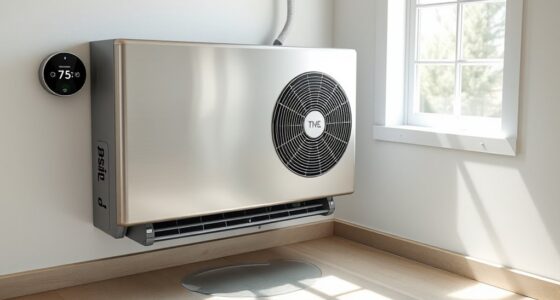
Geothermal heat pumps help you achieve net-zero energy homes by using stable underground temperatures to efficiently heat and cool your space. They transfer heat rather than generate it, which considerably cuts energy use and bills. This renewable approach works well with high-efficiency insulation and solar power, making your home produce as much energy as it consumes. Discover how this sustainable solution can transform your home’s energy footprint as you explore further.

Get backup power and energy gear delivered free with Prime
- Fast, free delivery on millions of items
- Prime Video, Amazon Music and more included
- Member-only deals all year
Key Takeaways
- Geothermal heat pumps reduce energy consumption by efficiently transferring heat, lowering the home’s overall energy demand.
- They utilize stable underground temperatures, providing reliable, year-round heating and cooling with minimal external energy input.
- Their high efficiency supports the integration of renewable energy sources, enabling homes to produce as much energy as they consume.
- By decreasing reliance on fossil fuels, geothermal systems help lower the home’s carbon footprint and promote sustainability.
- They enhance overall energy performance, facilitating the achievement of net-zero energy goals in residential design.
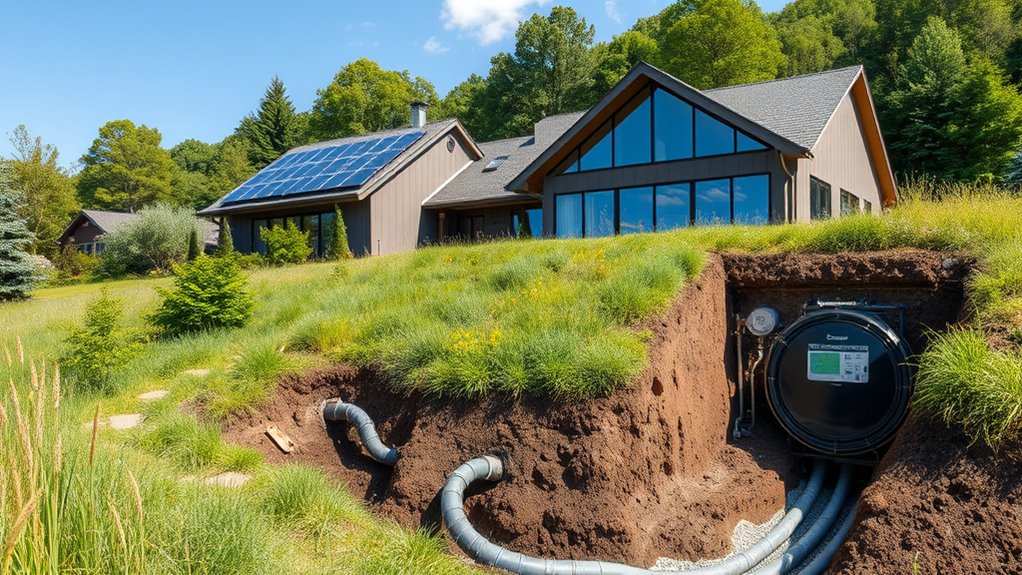
Geothermal heat pumps are transforming the way we heat and cool homes by harnessing the stable underground temperature to provide energy-efficient comfort. When you install a geothermal system, you’re tapping into a renewable energy source that offers remarkable geothermal efficiency. Unlike traditional HVAC systems that rely on burning fossil fuels or electric resistance heating, geothermal heat pumps leverage the constant temperature beneath the Earth’s surface—typically between 45°F and 75°F—to deliver heating in winter and cooling in summer. This consistent underground temperature means your system doesn’t have to work as hard to maintain your home’s comfort, which substantially boosts its geothermal efficiency.
Because of this, you’ll notice substantial energy savings over time. The lower energy consumption directly translates into reduced utility bills, helping you cut costs while also reducing your carbon footprint. Geothermal systems use electricity to run the heat pump itself, but since they transfer heat rather than generate it, they can achieve efficiencies of 300-600%, far surpassing conventional systems. This means that for every unit of electricity used, you get three to six units of heating or cooling. Over the lifespan of the system—often 25 years or more—these energy savings accumulate, making geothermal heat pumps one of the most cost-effective and sustainable options available.
In a zero-energy home, where the goal is to produce as much renewable energy as it consumes, geothermal heat pumps play a critical role. By drastically lowering the amount of energy needed for climate control, they reduce the size and capacity of the renewable energy systems required, such as solar panels. This synergy creates a more achievable pathway to net-zero energy status. When combined with high-efficiency insulation, airtight construction, and solar power, geothermal heat pumps help you minimize your reliance on external energy sources. As a result, your home can generate enough renewable energy to offset its consumption, inching closer to true zero-energy living.
Furthermore, geothermal systems are highly reliable with minimal maintenance requirements, ensuring consistent performance over decades. This durability enhances your investment’s long-term geothermal efficiency and guarantees ongoing energy savings. Additionally, advancements in noise reduction technology mean modern geothermal heat pumps operate with minimal sound, making them even more suitable for residential settings. The quiet operation of geothermal heat pumps also means you’ll enjoy a comfortable indoor environment without disruptive noise. Ultimately, by choosing geothermal technology, you’re making a smart, eco-friendly decision that supports sustainable living while providing consistent, efficient comfort. This approach not only benefits your wallet but also aligns with the broader goal of creating a cleaner, greener future.
As an affiliate, we earn on qualifying purchases.
Frequently Asked Questions
How Long Do Geothermal Heat Pumps Typically Last?
Geothermal heat pumps typically last 20 to 25 years, thanks to their system durability. With proper maintenance requirements, you can extend their lifespan and keep your energy-efficient home comfortable. Regular inspections and cleaning help prevent issues, ensuring your system runs smoothly. Investing in quality installation and routine upkeep can maximize the longevity of your geothermal pump, making it a reliable, eco-friendly choice for your net-zero energy home.
What Is the Environmental Impact of Installing Geothermal Systems?
You’ll find geothermal systems generate great environmental benefits by substantially reducing your ecological footprint. Installing these systems minimizes greenhouse gas emissions and decreases reliance on fossil fuels, making your home greener and cleaner. While the initial installation may cause some environmental disturbance, the long-term positive impacts outweigh this, as geothermal energy provides sustainable, efficient heating and cooling. Overall, geothermal systems help you contribute to a healthier planet through eco-friendly energy choices.
Are Geothermal Heat Pumps Suitable for All Climate Zones?
Geothermal heat pumps are suitable for most climate zones, thanks to their adaptability. You’ll find that they perform well across diverse regional conditions, but keep in mind there can be regional efficiency variations. In extreme cold or heat, system adjustments or specific designs may be necessary to optimize performance. Overall, with proper sizing and installation, geothermal systems can effectively contribute to your home’s energy efficiency regardless of your climate zone.
What Are the Initial Costs Versus Long-Term Savings?
Your initial investment in a geothermal heat pump might seem high, but it pays off through significant energy savings over time. While installation costs can be substantial, you’ll save on heating and cooling bills for years. These long-term savings often outweigh the upfront expense, making geothermal systems a smart choice for reducing energy costs and moving toward a net-zero energy home.
Can Existing Homes Be Retrofitted With Geothermal Heat Pumps?
You can definitely retrofit your home with a geothermal heat pump, but be aware that about 60% of existing homes face retrofit challenges like limited space or unsuitable ground conditions. Despite these hurdles, geothermal systems offer historical efficiency benefits, reducing energy bills by up to 50%. Planning carefully guarantees a successful upgrade, making your home more sustainable and markedly lowering your carbon footprint.
energy-efficient geothermal HVAC
As an affiliate, we earn on qualifying purchases.
As an affiliate, we earn on qualifying purchases.
Conclusion
By choosing geothermal heat pumps, you’re like an explorer opening the secret to a greener future. These systems harness the Earth’s natural warmth, making your home more energy-efficient and helping you reach net-zero goals. Think of it as planting a tree that keeps giving back—sustainable and reliable. Embracing geothermal technology isn’t just a smart move; it’s a powerful step toward a cleaner, more sustainable world for you and future generations.
solar compatible geothermal heat pump
As an affiliate, we earn on qualifying purchases.
As an affiliate, we earn on qualifying purchases.
As an affiliate, we earn on qualifying purchases.
Halloween Picks
halloween
As an affiliate, we earn on qualifying purchases.