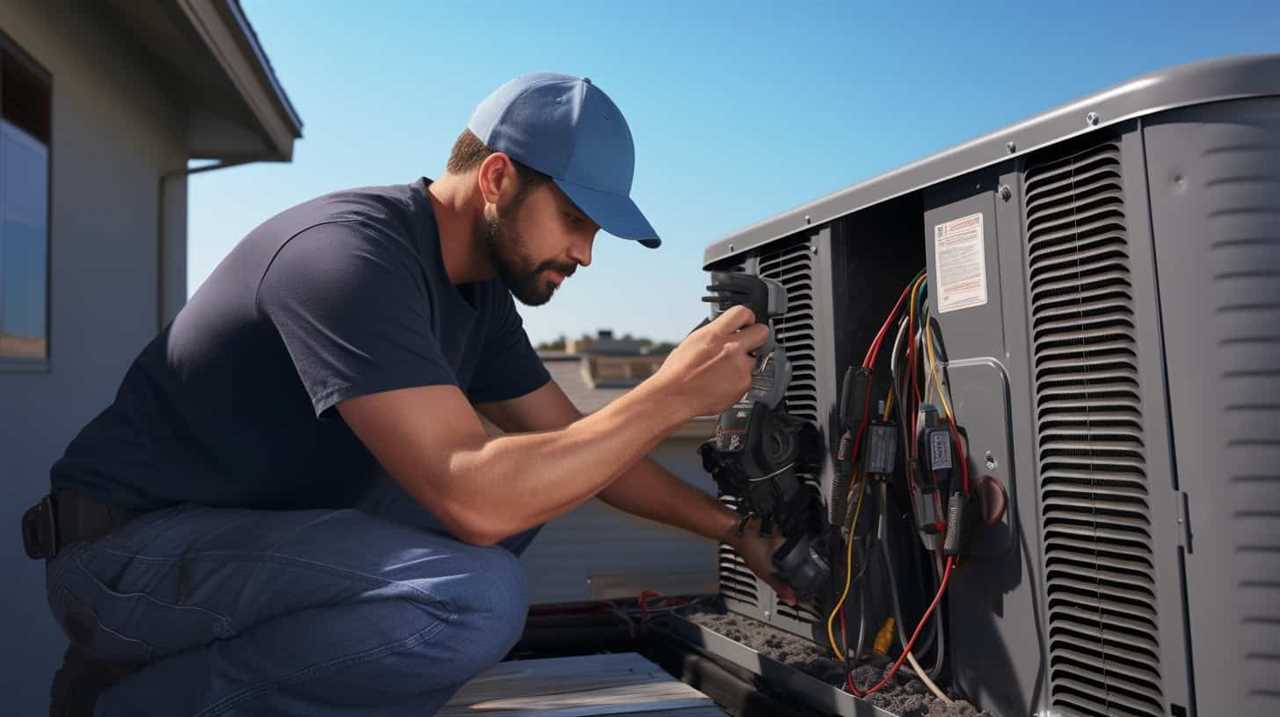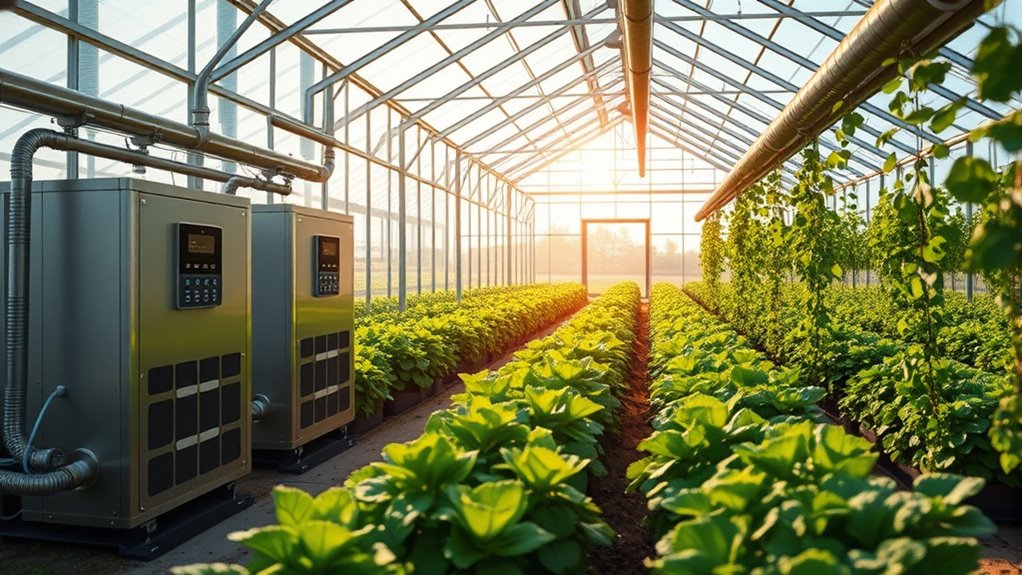

Heat pumps provide an energy-efficient way to improve your agricultural setup or greenhouses by regulating soil temperature, moisture, and humidity. They help create ideal growing conditions, reduce pests naturally, and lower reliance on chemicals. Plus, they support sustainable farming by utilizing renewable energy sources. Whether you’re managing soil health or climate control, heat pumps can enhance productivity and sustainability. Keep exploring to discover how this innovative technology can transform your agricultural practices.
Key Takeaways
- Heat pumps efficiently regulate soil temperature and moisture, enhancing crop growth and reducing water stress in agricultural settings.
- They create unfavorable conditions for pests by adjusting temperature and humidity, decreasing reliance on chemical pesticides.
- Heat pumps provide precise climate control in greenhouses, ensuring optimal conditions for various crops and improving yield quality.
- Utilizing renewable energy sources, heat pumps lower carbon emissions and promote sustainable farming practices.
- They support diverse agricultural processes, such as crop production and processing, by offering energy-efficient temperature management solutions.
Have you considered how heat pumps can revolutionize agricultural practices? These versatile systems are not just about heating and cooling; they can significantly impact soil health and pest management strategies. By leveraging their ability to transfer heat efficiently, you can better control soil moisture levels, which are critical for crop growth. Proper soil moisture ensures plants receive the right amount of water, preventing both drought stress and waterlogging. Heat pumps can be integrated into irrigation systems to maintain ideal moisture conditions, especially in regions where rainfall is unpredictable. This helps crops develop stronger roots and enhances nutrient uptake, ultimately increasing yields.
Heat pumps optimize soil moisture, boosting crop health and yields through efficient temperature control.
Beyond soil moisture management, heat pumps also play a vital role in pest control. Many pests thrive in specific temperature ranges, and by adjusting the microclimate around your crops, you can deter their proliferation. For example, by using heat pumps to slightly elevate temperatures during vulnerable periods, you can create unfavorable conditions for pests like aphids or mites without resorting to chemical pesticides. This targeted temperature regulation minimizes pest populations naturally, reducing chemical reliance and promoting healthier, more sustainable farming practices. Additionally, heat pumps can help in managing humidity levels, which are often linked to pest outbreaks, further enhancing your pest control measures.
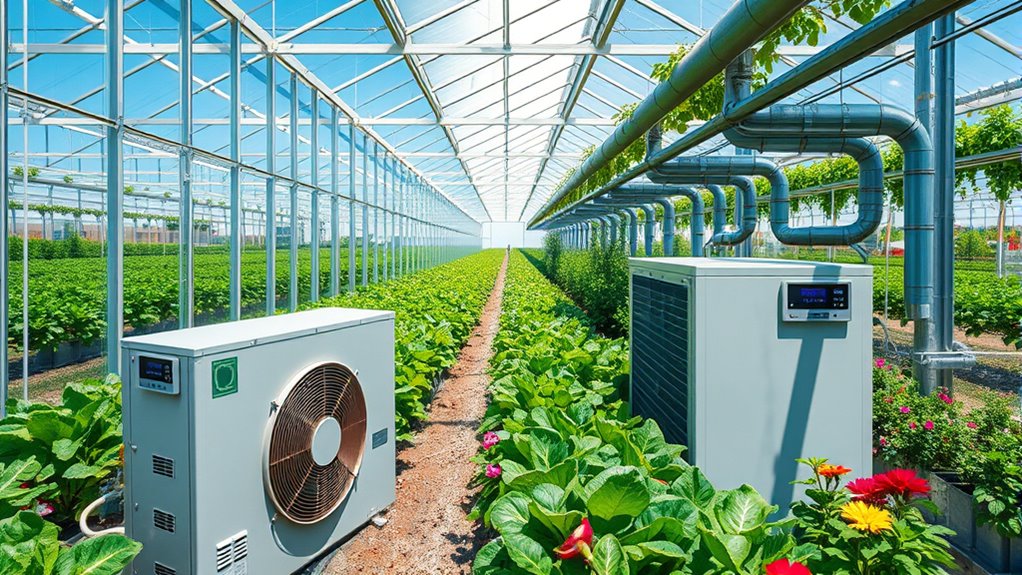
The adaptability of heat pumps makes them ideal for greenhouse environments as well. In greenhouses, maintaining a consistent temperature is essential for plant health and productivity. Heat pumps can provide precise climate control, adjusting to the needs of different crops and growth stages. This consistency fosters ideal soil moisture and humidity levels, reducing stress on plants and lowering the risk of diseases associated with overly moist or dry conditions. Moreover, their energy efficiency means you can achieve these benefits without greatly increasing your operational costs.
Integrating heat pumps into your agricultural setup also offers long-term sustainability benefits. They utilize renewable energy sources, such as ambient air, to operate, which reduces your carbon footprint. As you improve soil moisture management and pest control through these systems, you’ll notice healthier plants, fewer chemical inputs, and potentially higher profits. Their ability to create a controlled environment means you can extend growing seasons, protect crops from extreme weather, and adapt quickly to changing climate conditions.
Additionally, using heat pumps for juice extraction can optimize processing efficiency and reduce energy costs in agricultural operations. In essence, adopting heat pumps in your agricultural practices isn’t just about energy savings. It’s about harnessing advanced technology to improve soil health, enhance pest management, and support sustainable, resilient farming. By doing so, you position yourself at the forefront of innovative agriculture, ensuring productivity and environmental responsibility go hand in hand.

Carivia Hot Water Recirculating Pump,115V 168W Circulation Pump,3-Speed Control Water Circulation Pump with NPT 1'' Flanges,Quiet Operation Circulating Pump for Water Heater System Solar Heater Boiler
Product Specification:Voltage/Frequency: 115V/60Hz. Rated power: 120/156/168W. Max pressure: 145 psi (10 bar),Maximum temperature: 230F.The hot water circulation pump…
As an affiliate, we earn on qualifying purchases.
As an affiliate, we earn on qualifying purchases.
Frequently Asked Questions
How Do Heat Pumps Impact Crop Yields?
Heat pumps boost your crop productivity by providing consistent, ideal temperatures, which helps plants grow healthier and faster. They also improve water management by efficiently regulating humidity and temperature, reducing water waste. This stable environment minimizes stress on your crops, leading to better yields. By maintaining ideal conditions year-round, heat pumps help you maximize your harvests and ensure sustainable farming practices.
What Are the Maintenance Costs for Agricultural Heat Pumps?
Think of your heat pump like a trusty garden tool; with proper care, it lasts longer. Maintenance costs are generally moderate, depending on usage and environment. You should expect to perform routine checks and cleaning several times a year. Cost estimation varies, but regular maintenance, including filter changes and inspections, keeps expenses predictable and helps prevent costly repairs, ensuring your system runs efficiently and saves you money in the long run.
Can Heat Pumps Operate Effectively in Extreme Weather?
Yes, heat pumps can operate effectively in extreme weather, enhancing your climate resilience and maintaining energy efficiency. Modern models are designed to adapt to cold or hot conditions, ensuring consistent performance. By choosing a high-quality heat pump, you support your agricultural operations through weather fluctuations, reducing energy costs and minimizing disruptions. Proper maintenance and selecting the right system for your climate are key to maximizing efficiency in extreme conditions.
How Do Heat Pumps Compare to Traditional Heating Methods?
Think of heat pumps as the Swiss Army knives of heating. They outperform traditional methods by offering superior energy efficiency, helping you slash energy costs while maintaining consistent warmth. Unlike conventional systems that burn fuel, heat pumps transfer heat, making them environmentally friendly and cost-effective. You’ll find yourself saving money long-term and enjoying reliable, eco-conscious heating that adapts to your needs, turning the cold into comfort with remarkable efficiency.
Are There Government Incentives for Installing Agricultural Heat Pumps?
Yes, you can benefit from government incentives when installing agricultural heat pumps. Many policies offer subsidies or tax credits to encourage sustainable farming techniques, including heat pump adoption. These policy incentives aim to reduce your initial costs and promote energy efficiency. To access these benefits, check with local or national programs, as eligibility criteria and available funding can vary. Taking advantage of these incentives helps you save money and supports eco-friendly practices.

HEATIT ET-21 Freeze Thermostatically Controlled Outlet On at 38F /Off at 50F ET-21-1 1PCS
Thermostat control outlet with the smart indicator light: The indicator light turns on when it's below 38 and…
As an affiliate, we earn on qualifying purchases.
As an affiliate, we earn on qualifying purchases.
Conclusion
Incorporating heat pumps into your agricultural or greenhouse operations isn’t just smart—it’s a game-changer that could revolutionize your entire farming success. With their energy efficiency and eco-friendly benefits, you’ll save more than just money; you’ll be saving the planet itself. Imagine harnessing the power of cutting-edge technology that’s as groundbreaking as discovering gold in your backyard. Don’t wait—embrace heat pumps now and watch your agricultural productivity soar to heights you never thought possible!
soil moisture regulation heat pump
As an affiliate, we earn on qualifying purchases.
As an affiliate, we earn on qualifying purchases.

AquaMiracle Linear Air Pump, 950GPH Pond Bubbler Septic Air Pump, Energy-Efficient Pond Aerator for Outdoor Ponds, Aquariums, Hydroponics, Waste Treatment
SPECIFICATION – This linear air pump delivers a max of 950GPH powerful airflow at 0.03MPa pressure with an…
As an affiliate, we earn on qualifying purchases.
As an affiliate, we earn on qualifying purchases.