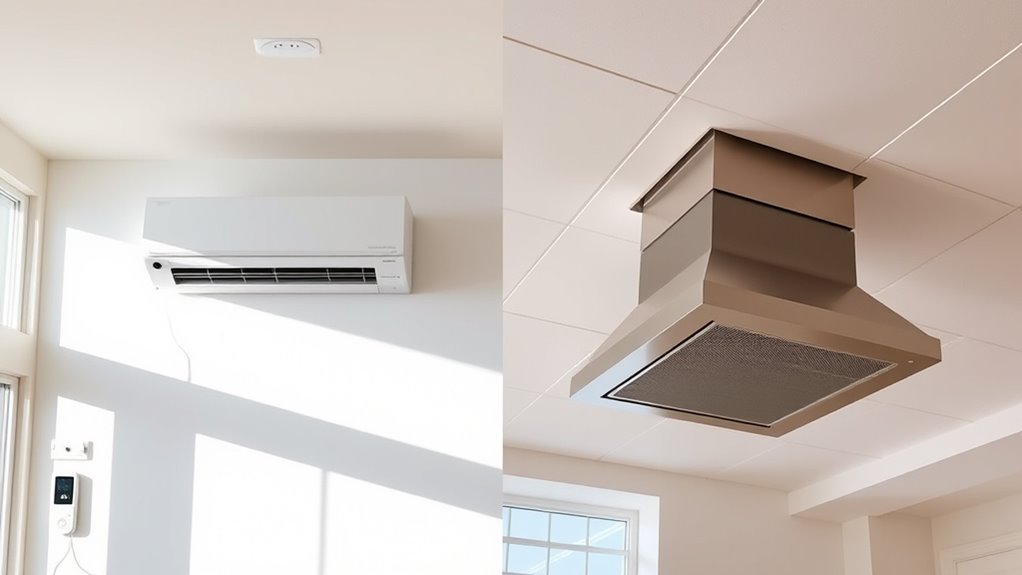

When choosing between ductless and ducted heating systems, consider your home’s size, layout, and energy goals. Ductless systems are great if you want targeted heating, lower installation costs, and quick setup, especially for specific zones. Ducted systems suit larger homes that need uniform warmth and could be more efficient if ductwork is already in place. To find the best fit for your needs, explore the advantages and drawbacks of each system further.
Key Takeaways
- Ductless systems offer targeted heating and higher energy efficiency, ideal for specific rooms or zones.
- Ducted systems provide uniform, whole-home heating suitable for larger or centrally controlled homes.
- Installation costs are generally lower for ductless systems due to less structural work needed.
- Ducted systems may incur higher upfront costs but benefit from existing ductwork in some homes.
- Long-term savings depend on energy efficiency, with ductless systems often reducing ongoing energy bills.
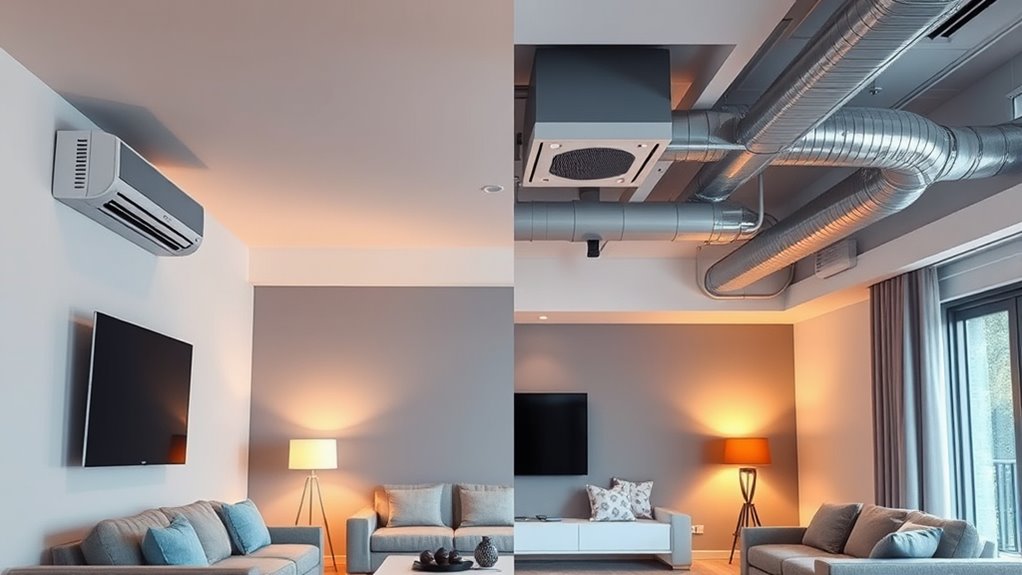
When selecting a heating system for your home, understanding the differences between ductless and ducted options is essential. Your choice impacts not only your comfort but also your energy efficiency and installation costs. Ductless systems, often called mini-splits, are designed to heat specific zones or rooms directly without relying on a network of ducts. This targeted approach can reduce energy waste because there are no ducts to lose heat through leaks or poor insulation. As a result, ductless systems often provide higher energy efficiency, especially in homes where ductwork is outdated or poorly insulated. They typically operate using inverter technology, adjusting their compressor speed to match the heating demand, which further conserves energy.
Choosing between ductless and ducted heating depends on your home’s layout, insulation, and energy efficiency goals.
On the other hand, ducted systems are more traditional, involving a network of ducts that distribute heated air throughout your entire home. While they may have higher upfront installation costs, especially if ductwork needs to be added or replaced, ducted systems can be more cost-effective over time if your home already has a functional duct system. They tend to be more convenient for larger homes or for those who prefer a centralized system that controls temperature uniformly across all rooms. However, ducted systems can suffer from energy inefficiencies if ducts are poorly maintained, leaky, or poorly insulated, leading to increased energy bills.
Installation costs are another significant factor to weigh. Ductless systems typically have lower installation costs because they require less structural work and can be installed quickly, often in a day or two. They don’t require extensive ductwork, which minimizes labor and material expenses. Conversely, installing a ducted system can be more expensive initially—especially if new ducts need to be run through your walls or attic—and may involve significant construction work. However, if you’re retrofitting an existing ducted system, the costs might be lower, but you’ll still need to evaluate the higher initial investment against potential long-term savings on energy bills.
Your decision should also factor in your home’s layout and your heating preferences. If you want flexibility in controlling temperatures in different rooms and prefer a less invasive installation, ductless might be the better choice. But if you value a seamless, centralized system with the ability to heat your entire home uniformly, ducted systems may serve you better. Ultimately, balancing installation costs with energy efficiency gains will help you choose the system that best suits your budget and comfort needs.

ALORAIR Whole House Dehumidifier, 90 PPD Commercial Grade Whole Home Dehumidifiers for Garages, Water Damage Restoration, 2300 Sq.Ft dehumidifiers for Crawl Space
Energy Efficient Whole House Dehumidifier: 90 pints per day at AHAM condition, 70 Pint at DOE, up to...
As an affiliate, we earn on qualifying purchases.
Frequently Asked Questions
Which System Is More Energy-Efficient Long-Term?
Ductless systems generally offer better energy savings long-term because they heat only the rooms you need, reducing wasted energy. They also have a lower environmental impact due to higher efficiency and less energy consumption. Ducted systems, while effective for whole-house heating, can leak energy through ducts, decreasing their efficiency over time. So, if you’re aiming for cost-effective, eco-friendly heating, ductless systems are usually the smarter choice.
How Do Installation Costs Compare for Each System?
While the initial investment for ductless systems might seem more appealing, ducted systems often have higher installation costs due to ductwork requirements. You could find ductless units easier and quicker to install, saving money upfront. However, ducted systems might require more extensive work, increasing installation costs. Consider your home’s structure and long-term savings to make the best choice for your budget and comfort.
Are Ductless Systems Suitable for Large Homes?
Yes, ductless systems are suitable for large homes, especially if you want zoning capabilities that allow you to control temperatures room by room. They’re discreet and don’t require extensive ductwork, which helps with aesthetic considerations. You can install multiple units to cover different zones, providing efficient heating while maintaining your home’s appearance. Just guarantee the system’s capacity matches your home’s size for ideal comfort and energy efficiency.
How Often Do Ductless Systems Require Maintenance?
Imagine you’ve installed a ductless system in your home; it typically needs maintenance every 1 to 2 years. You’ll want to replace filters regularly and watch for refrigerant leaks, which might require a recharge. Regular filter replacement helps maintain efficiency, while refrigerant recharge guarantees your system continues to perform at its best. Scheduling professional inspections every year can catch issues early, keeping your ductless system running smoothly.
Can These Systems Be Integrated With Smart Home Technology?
Yes, ductless systems can be integrated with smart home technology. You just need to verify your system’s compatibility with your smart home devices, like thermostats or voice assistants. Many modern ductless units offer smart home integration, allowing you to control your heating remotely or set schedules easily. Check your specific model’s features and compatibility to enjoy seamless system integration and enhanced convenience in managing your home’s climate.

30 Pint Dehumidifier for Basement, 2500 Sq. Ft Dehumidifiers for Home with Drain Hose, 3 Modes, Smart Humidity Control, 24H Timer, 0.52 Gal Water Tank, for Whole House, Bedroom, Bathroom, Garage, Rv
Powerful 30-Pint Moisture Removal for Spaces up to 2500 Sq. Ft: High humidity can make rooms feel damp,...
As an affiliate, we earn on qualifying purchases.
Conclusion
Ultimately, choosing between ductless and ducted systems depends on your home’s needs and your preferences. Ductless units offer flexibility and easy installation, making them perfect for retrofit projects. Ducted systems, on the other hand, provide consistent heating for larger spaces and central control. Think of it like finding the right rhythm—sometimes, a smooth, unified beat (ducted) works best, while other times, individual melodies (ductless) suit your style better. Consider your home’s layout and comfort priorities to make the right choice.

Waykar 158 Pints Crawl Space Dehumidifier with Remote Control and Pump, Dual Duct HVAC Commercial Whole-House Dehumidifier for Basement, Industry Water Damage Unit - 5-Year Quality Coverage
【158 Pint Crawl Space Dehumidifier】The Waykar whole-house dehumidifier extracts up to 158 pints of water per day (under...
As an affiliate, we earn on qualifying purchases.

5000 Sq.Ft Energy Star Most Efficient 2024 Dehumidifier,DECIUU Max 100 Pint Dehumidifier for Basement with Drain Hose,Intelligent Humidity Control for Home Bathroom Garage Bedroom
Most Efficient 2024 Energy Star Dehumidifier: Tired of battling stubborn humidity? Our ENERGY STAR certified dehumidifier removes 70...
As an affiliate, we earn on qualifying purchases.