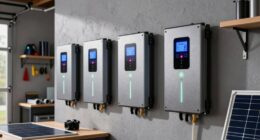

Integrating solar thermal collectors, photovoltaic panels, and heat pumps creates a highly efficient, renewable energy system that reduces your reliance on fossil fuels and cuts energy costs. Solar thermal systems provide direct heat, while PV panels generate electricity to power heat pumps, maximizing energy use throughout the year. This combination not only boosts sustainability but also offers long-term savings and resilience. Keep exploring to discover how this innovative setup can transform your energy approach.
Key Takeaways
- Combines solar thermal collectors and photovoltaic panels to maximize renewable energy capture and efficiency.
- Uses PV-powered heat pumps to transfer heat more efficiently, reducing overall energy consumption.
- Integrates smart controls for optimal operation based on sunlight availability and energy demand.
- Allows excess solar electricity to be stored, used, or fed back into the grid for added flexibility.
- Promotes sustainable, cost-effective energy solutions by reducing reliance on fossil fuels and lowering carbon footprint.
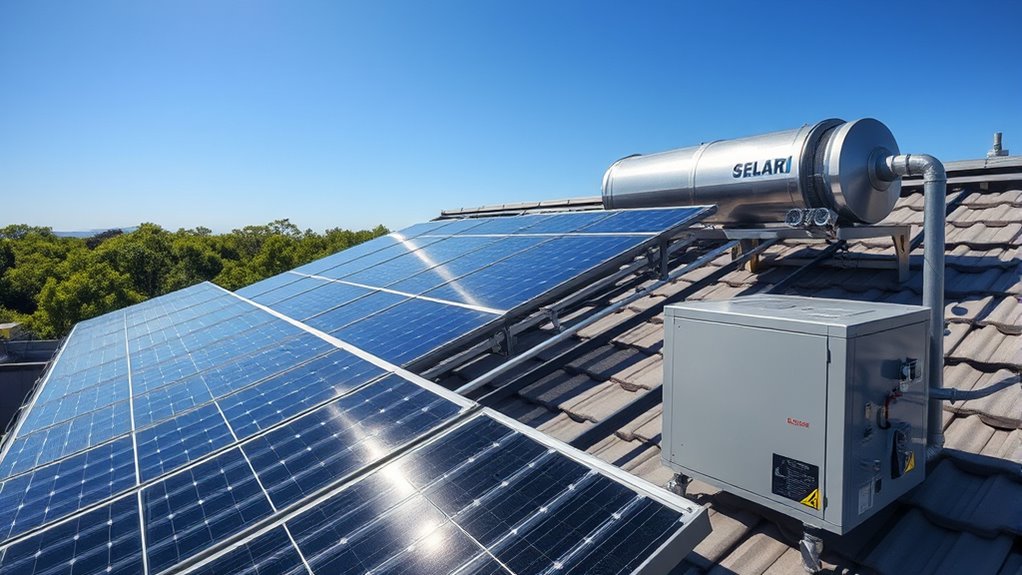
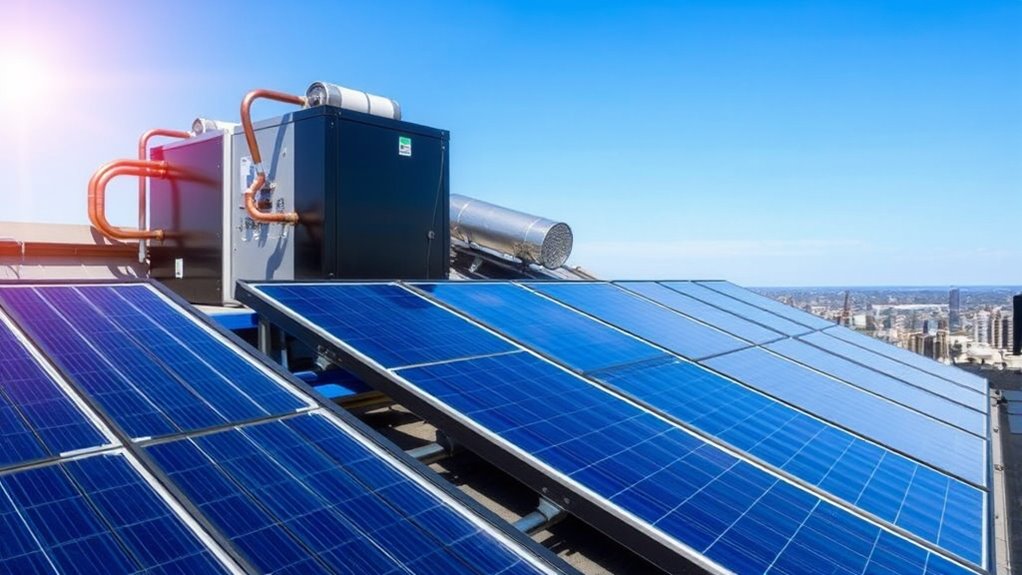
Have you ever considered how combining solar thermal and photovoltaic systems with heat pumps can boost your energy efficiency? This approach, known as solar integration, leverages the strengths of different renewable technologies to maximize your energy savings. By integrating these systems, you can harness sunlight more effectively, reducing reliance on fossil fuels and lowering your utility bills. Solar thermal collectors capture the sun’s heat directly for water or space heating, while photovoltaic panels convert sunlight into electricity. When paired with a heat pump, which uses electricity to transfer heat efficiently, this setup creates a highly effective and sustainable energy system for your home or business.
Combining solar thermal, photovoltaic systems, and heat pumps maximizes energy savings and sustainability.
The key advantage of solar integration lies in its ability to enhance energy use throughout the year. During sunny days, your photovoltaic panels generate electricity that can power your heat pump, making heating and cooling processes more efficient. Excess electricity can be stored or fed back into the grid, further enhancing your energy independence. Meanwhile, solar thermal collectors provide hot water and space heating directly, which reduces the load on your heat pump and minimizes energy consumption. This synergy ensures you’re making the most of the sun’s energy, regardless of weather conditions or seasonal changes.
Implementing solar thermal and photovoltaic systems alongside heat pumps also improves overall energy efficiency by reducing waste. Instead of relying solely on grid electricity or fossil fuels, you’re creating a self-sustaining loop that maximizes renewable energy use. The heat pump’s ability to transfer heat with less energy than traditional systems means you’re conserving power while maintaining comfort in your space. Combining these technologies results in a more resilient energy setup, capable of adjusting to varying demands without sacrificing performance.
Furthermore, solar integration simplifies energy management. Modern systems often come with smart controllers that monitor sunlight levels, energy production, and consumption. This allows you to fine-tune your setup for maximum efficiency, ensuring your heat pump operates only when needed and that your solar assets are utilized effectively. With these controls, you gain greater insight into your energy use, enabling you to reduce waste and lower costs. Over time, this integrated approach pays off by providing consistent savings and a smaller carbon footprint.
In addition, the integration of solar thermal and photovoltaic systems can boost energy independence, making your home less vulnerable to fluctuating energy prices and supply disruptions.
In essence, combining solar thermal and photovoltaic systems with heat pumps is a smart move for anyone looking to boost their energy efficiency. It’s a holistic solution that taps into renewable resources, minimizes waste, and delivers consistent performance. By embracing solar integration, you’re not just cutting costs—you’re actively contributing to a cleaner, more sustainable future while enjoying reliable, efficient energy at home or work.
solar thermal collectors for home
As an affiliate, we earn on qualifying purchases.
As an affiliate, we earn on qualifying purchases.
Frequently Asked Questions
What Are the Long-Term Maintenance Costs for These Systems?
You’ll find that the long-term maintenance costs for these systems are generally low. Component durability means you won’t need frequent replacements, and maintenance frequency is minimal, mostly involving inspections and cleaning. Regular upkeep helps prevent costly repairs and keeps the system running efficiently. Overall, investing in quality components reduces ongoing expenses, making these systems cost-effective over their lifespan. Proper maintenance guarantees reliable performance with manageable long-term costs.
How Do Weather Variations Affect System Performance?
Weather variations are like unpredictable actors on your energy stage. Cloud cover dims your solar panels’ performance, like a shadow over a shining star, while temperature fluctuations can make heat pumps work harder or easier, depending on the day. When clouds roll in or temperatures swing wildly, system efficiency dips temporarily. But with proper design and backup systems, you can keep your energy production steady, rain or shine.
Can These Systems Be Integrated With Existing Home Infrastructure?
Yes, you can integrate these systems with your existing home infrastructure, but you should consider system compatibility and retrofit challenges. Ensuring your current setup can support new solar components and heat pumps is essential. You might need upgrades or modifications, which could involve additional costs or technical adjustments. Consulting a professional helps you navigate these challenges smoothly, making sure the integration is efficient and effective for your energy needs.
What Is the Typical Lifespan of Solar Heat Pump Systems?
You can expect your solar heat pump system to last around 15 to 25 years, depending on system durability and maintenance. Technological advancements are continually improving lifespan and efficiency, so newer models may last longer. Regular upkeep, such as cleaning and inspections, helps maximize longevity. Investing in high-quality components and staying updated with the latest innovations can guarantee your system performs reliably for many years.
Are There Any Government Incentives for Installing These Systems?
Did you know that over 30% of renewable energy projects in your area qualify for government incentives? You can take advantage of government rebates and tax credits when installing solar thermal and photovoltaic systems with heat pumps. These incentives substantially reduce upfront costs, making eco-friendly options more affordable. Check with local authorities or energy programs to find the available rebates and tax credits tailored to your installation, saving you money while helping the environment.
photovoltaic solar panels for residential use
As an affiliate, we earn on qualifying purchases.
As an affiliate, we earn on qualifying purchases.
Conclusion
Imagine stepping outside on a bright, sunny day, feeling the warmth of the sun blend seamlessly with the cool breeze. By integrating solar thermal and photovoltaic systems with heat pumps, you harness that natural energy effortlessly, making your home more efficient. It’s like catching a perfect wave where the sun’s heat and electricity meet your needs, creating a sustainable harmony. Embrace this coincidence of nature and technology, and see your energy future shine brighter every day.
PV-powered heat pump system
As an affiliate, we earn on qualifying purchases.
As an affiliate, we earn on qualifying purchases.

EBL Solar AA Battery Rechargeable Batteries for Outdoor Solar Lights, 1300mAh NIMH Pre-Charged 1.2V Recharge up to 1200x Times for Garden Landscaping String Lights, Pack of 12
【Perfect Solar Batteries】 Exact size AA batteries designed for solar lights, outdoor garden lights, mouse, keyboards, TV remotes,…
As an affiliate, we earn on qualifying purchases.
As an affiliate, we earn on qualifying purchases.