
Heat pump defrost cycles kick in when outdoor coils get frosted in cold weather, which can block heat transfer and lower efficiency. Sensors detect the frost buildup and trigger the system to switch to defrost mode. During this cycle, the heat pump temporarily reverses to melt the frost, ensuring ideal performance. Understanding how these cycles work can help you spot issues and keep your system running smoothly—if you want to know more, keep exploring.

Get backup power and energy gear delivered free with Prime
- Fast, free delivery on millions of items
- Prime Video, Amazon Music and more included
- Member-only deals all year
Key Takeaways
- Frost forms on outdoor coils when temperatures drop, insulating coils and reducing heat transfer efficiency.
- Defrost cycles are automatically triggered by sensors detecting frost buildup, switching the system to melt ice.
- During defrost, the heat pump reverses operation, using hot refrigerant to clear frost from outdoor coils.
- Proper defrosting maintains system efficiency, prevents damage, and ensures consistent heating performance.
- Regular maintenance and sensor checks help optimize defrost cycles and prevent excessive frost accumulation.
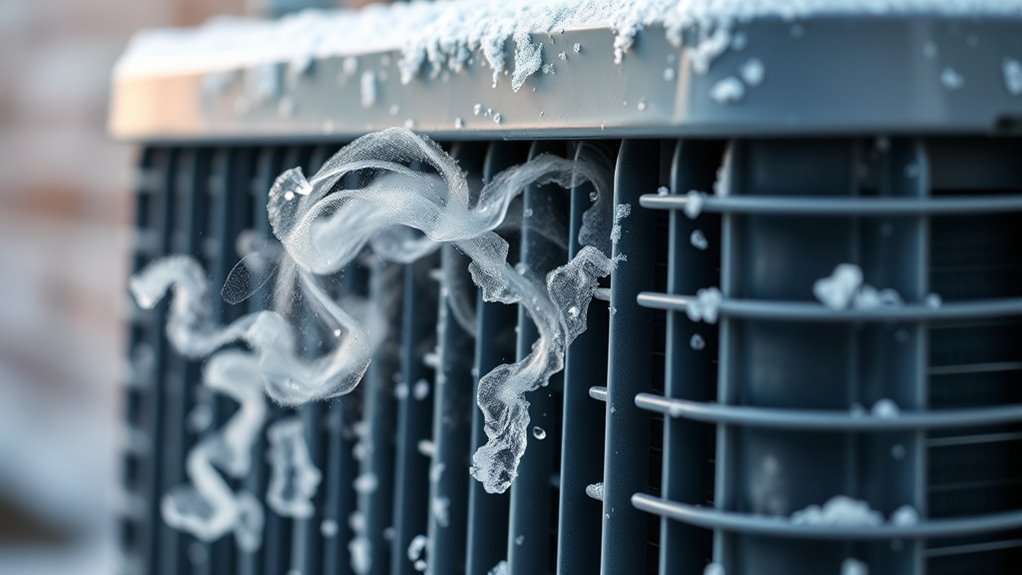
When outdoor temperatures drop, heat pumps can struggle with frost buildup on their outdoor coils, which can reduce efficiency and heating performance. This frost acts as an insulator, blocking heat transfer and forcing your system to work harder. To maintain ideal energy efficiency, your heat pump relies on defrost cycles that periodically melt away the frost. Understanding how these defrost cycles work can help you better appreciate their importance and ensure your system runs smoothly.
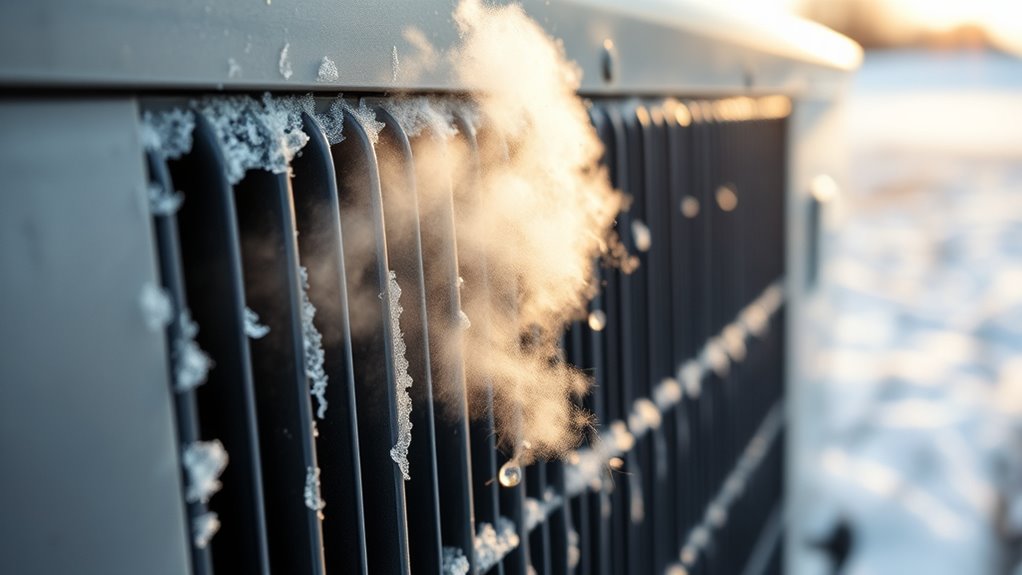
A heat pump’s defrost cycle is an automatic process triggered by sensors that detect frost accumulation. When frost reaches a certain thickness, the system switches from heating mode to defrost mode. During this phase, the heat pump temporarily reverses its operation, using the indoor coil as a condenser and the outdoor coil as an evaporator. This reversal causes hot refrigerant to flow through the outdoor coil, melting the frost. The cycle typically lasts a few minutes, enough to clear the frost without considerably affecting your indoor comfort. Proper maintenance of the system components can help ensure the defrost cycle operates efficiently and reliably.
These defrost cycles are essential for maintaining the system’s energy efficiency. Without them, frost buildup would insulate the outdoor coil, forcing the heat pump to work harder to extract heat from the cold air. This increased workload not only raises energy costs but also puts additional strain on the compressor and other components, leading to potential wear and tear. Regular maintenance tips can help guarantee your heat pump’s defrost system functions properly. For example, keeping the outdoor unit clear of debris, leaves, and snow allows sensors to accurately detect frost buildup. Checking the fan blades and coils for dirt or ice buildup can also improve defrost efficiency. Furthermore, scheduling professional inspections annually can help catch any issues early, such as refrigerant leaks or faulty sensors, that could compromise defrost cycles.
Regular maintenance ensures efficient defrost cycles and prolongs your heat pump’s lifespan.
Some modern heat pumps come with smart defrost controls, which optimize cycle timing based on real-time conditions, further enhancing energy efficiency. If you notice your system defrosts more often than usual or runs into problems, it’s a sign that maintenance may be needed. Properly functioning defrost cycles prevent excessive frost accumulation, ensuring your heat pump operates at peak efficiency even in cold weather. This not only conserves energy but prolongs the lifespan of your system, saving you money on repairs and replacements in the long run. Understanding why and how defrost cycles work empowers you to take better care of your heat pump, so you stay warm and comfortable no matter how low the outdoor temperature drops.
Frequently Asked Questions
How Can I Tell if My Heat Pump’s Defrost Cycle Is Working Properly?
You can tell if your heat pump’s defrost cycle works properly by checking defrost cycle indicators, like blinking lights or display messages, on your unit. During troubleshooting defrost issues, listen for the defrost mode activating and feel for warmer air coming from the vents, indicating ice melting. If these signs aren’t present or problems persist, it’s time to consult a technician to guarantee your system defrosts correctly.
What Are Common Signs of Defrost Cycle Malfunctions?
Your heat pump might be giving you a red flag when you notice constant ice buildup, strange noises, or the outdoor unit running continuously—these are common signs of defrost cycle malfunctions. Check defrost cycle indicators like blinking lights or error codes, and troubleshoot defrost issues promptly. If left unchecked, minor issues could snowball into major repairs, so stay vigilant and act swiftly to keep your system running smoothly.
Does Frequent Defrosting Reduce My Heat Pump’s Efficiency?
Yes, frequent defrost cycles can reduce your heat pump’s efficiency impact. When your system defrosts often, it spends more time melting ice rather than heating your space, which uses extra energy. This process can cause the heat pump to work harder, increasing energy bills and potentially shortening its lifespan. To minimize this, guarantee your system is well-maintained and that outdoor coils are clean, reducing unnecessary defrosting.
Can I Manually Override or Control the Defrost Cycle?
Coincidentally, you can often manually override or control the defrost cycle through your heat pump’s control options. Check your thermostat or system panel for a manual defrost button or setting, which lets you temporarily delay or initiate defrosting. Keep in mind, though, that overriding too often may impact efficiency. Always consult your user manual or a technician before making adjustments to ensure safe and proper operation.
How Does Outdoor Temperature Affect the Defrost Cycle Frequency?
Outdoor temperature directly impacts your heat pump’s defrost cycle frequency. When outdoor conditions are cold and humid, frost buildup on the outdoor coil occurs more quickly, prompting more frequent defrost cycles. Conversely, milder outdoor temperatures reduce frost accumulation, allowing longer periods between defrosts. Keep an eye on outdoor conditions to understand why your heat pump might be defrosting more often, ensuring it operates efficiently and prevents damage from excessive frost.
Conclusion
Understanding how heat pump defrost cycles work helps you appreciate their role in maintaining efficiency. Just like a skilled artist clears away smudges to reveal a perfect picture, these cycles remove frost buildup to keep your system running smoothly. Knowing why and how they happen allows you to better maintain your heat pump and avoid unexpected issues. With this knowledge, you’ll keep your home cozy and your system working like a well-oiled machine, no matter the weather.
Halloween Picks
halloween
As an affiliate, we earn on qualifying purchases.