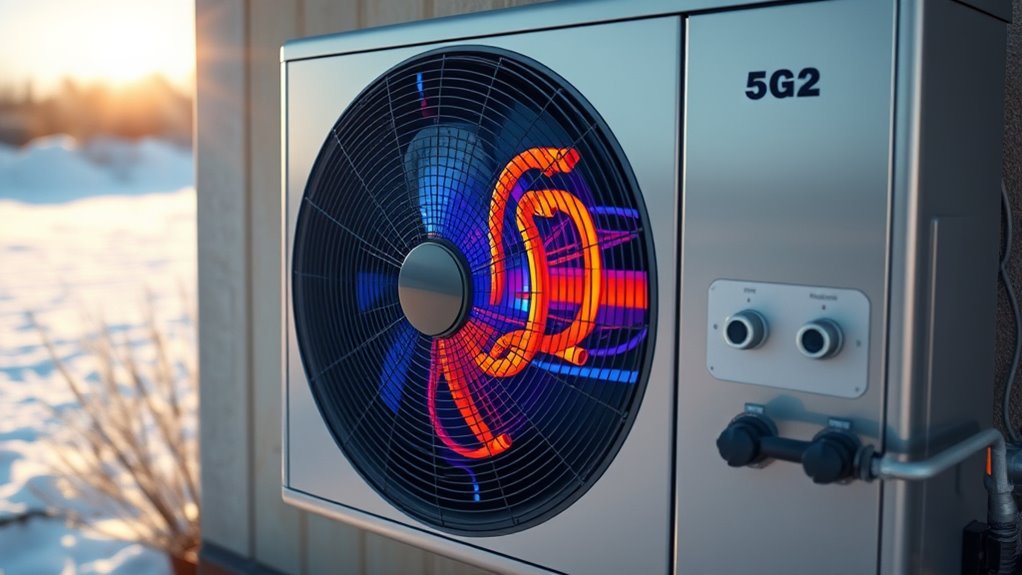
Your heat pump’s efficiency relies on how well it transfers heat between the inside and outside environments. When the refrigerant’s properties and heat exchanger design are optimized, they enable smoother phase changes and better thermal contact. This efficient heat transfer means less energy is wasted, increasing performance. By improving these components, you get more effective heating or cooling with less power. Keep exploring to discover how specific design choices boost your system’s overall energy savings.
Key Takeaways
- Efficient thermal transfer relies on optimal refrigerant properties, such as boiling point and heat capacity, to maximize heat exchange.
- Proper heat exchanger design enhances thermal contact, increasing the heat transfer rate and improving heat pump efficiency.
- The refrigerant’s phase change process must occur completely and rapidly for effective thermal transfer and system performance.
- Advances in heat exchanger technology and refrigerant chemistry work together to boost thermal transfer and overall efficiency.
- Maximizing thermal transfer minimizes energy losses, directly improving the heat pump’s energy efficiency and operational effectiveness.
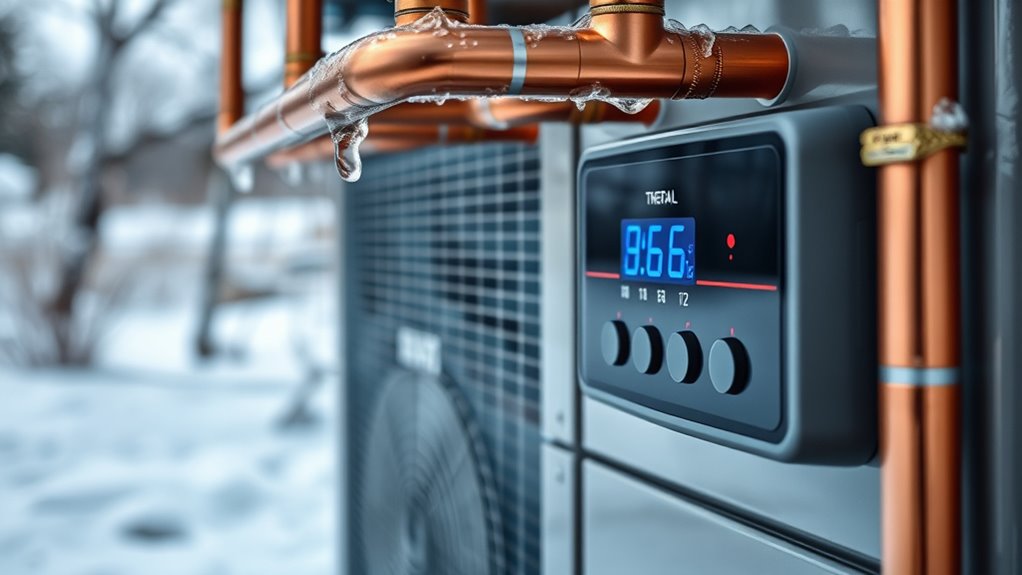
Heat pumps are an energy-efficient way to heat and cool your home by transferring thermal energy rather than generating it directly. Their effectiveness hinges on how well they can move heat between the inside and outside environments. At the core of this process is the refrigerant, a vital substance with specific properties that enable efficient heat transfer. The refrigerant’s properties, such as its boiling point, specific heat capacity, and pressure-temperature relationship, directly influence how effectively heat is absorbed and released during operation. A refrigerant with the right characteristics can maximize the heat pump’s performance by guaranteeing it transitions smoothly between phases, optimizing energy use, and maintaining steady operation across varying temperatures.
Equally important is the design of the heat exchanger, which serves as the physical interface where heat transfer occurs. A well-designed heat exchanger maximizes surface area and promotes efficient contact between the refrigerant and the air or water it interacts with. The materials used in construction, typically metals with high thermal conductivity like copper or aluminum, help facilitate rapid heat exchange. The design also considers flow rates and the configuration of coils or plates to reduce resistance and guarantee uniform heat distribution. When the heat exchanger is optimized, it minimizes energy losses and allows the refrigerant to absorb or release heat more effectively, directly improving the overall efficiency of the heat pump.
The interplay between refrigerant properties and heat exchanger design is essential. For example, a refrigerant with a low boiling point can operate efficiently at lower temperatures, making it suitable for colder climates. Meanwhile, an effective heat exchanger design ensures that this refrigerant’s phase changes occur rapidly and completely, avoiding partial vaporization or condensation that could reduce efficiency. In addition, refrigerant selection is critical, as different substances have varying environmental impacts and performance characteristics. When these elements are aligned, the heat pump can perform at its peak, providing consistent heating and cooling without excessive energy consumption.
In essence, your heat pump’s efficiency depends on selecting the right refrigerant with the appropriate properties and designing heat exchangers that facilitate ideal thermal transfer. Advances in refrigerant chemistry and heat exchanger technology continue to push the boundaries of what’s possible, making heat pumps more effective and environmentally friendly. By understanding and improving these core components, you can guarantee your system operates efficiently, saving energy and reducing your carbon footprint while maintaining comfortable indoor temperatures year-round.
Frequently Asked Questions
How Does Climate Affect Heat Pump Efficiency?
Climate variability and seasonal changes directly impact your heat pump’s efficiency. Colder temperatures make it harder for your heat pump to transfer heat, reducing its performance. In milder seasons, the system works more efficiently, saving you energy and money. You’ll notice better heating and cooling when weather is moderate, but during extreme cold or heat, your system needs to work harder, which can lower efficiency.
What Maintenance Improves Thermal Transfer Performance?
You can improve thermal transfer performance by regularly replacing your air filter and cleaning the coils. A clean air filter ensures unobstructed airflow, which helps the heat pump operate efficiently. Coil cleaning removes dirt and debris that can hinder heat exchange. These simple maintenance steps keep your system running smoothly, enhance energy efficiency, and extend the lifespan of your heat pump. Regular upkeep is key to maximum thermal transfer.
Are There Specific Heat Pump Models Better for Efficiency?
Yes, some heat pump brands are known for better efficiency ratings, making them more cost-effective and reliable. Look for models from reputable brands like Trane, Carrier, or Lennox, which consistently score high on efficiency tests. These brands often incorporate advanced technology and better thermal transfer features, helping you save on energy bills while maintaining ideal heating and cooling performance. Always compare their efficiency ratings before making a decision.
How Does Refrigerant Type Influence Thermal Transfer?
Refrigerant type directly influences thermal transfer by affecting refrigerant properties like pressure, boiling point, and heat capacity. When you choose a refrigerant with ideal transfer properties, you enhance transfer efficiency, leading to better system performance. The key factors to take into account are how refrigerant properties support transfer optimization, how they adapt to temperature variations, and how they contribute to maximizing heat exchange. Selecting the right refrigerant ensures your heat pump operates at peak efficiency.
Can Thermal Transfer Issues Cause System Breakdowns?
Thermal transfer issues can definitely cause system breakdowns. If thermal leaks occur, they reduce efficiency and strain components like the compressor, leading to wear and eventual failure. You might notice decreased heating or cooling performance, and over time, this stress can cause compressor wear to accelerate. Regular maintenance to identify and fix thermal leaks helps prevent these issues and prolongs your heat pump’s lifespan.
Conclusion
Understanding the link between heat pump efficiency and thermal transfer is key to optimizing energy use. Did you know that modern heat pumps can achieve efficiencies over 300%, meaning they transfer three times more heat than the electrical energy they consume? By maximizing thermal transfer, you can markedly reduce energy costs and environmental impact. Keep these principles in mind to make smarter, more sustainable choices for heating and cooling your home.