
Ductless mini-splits are an energy-efficient cooling solution because they target specific rooms, avoiding duct-related energy losses that can be up to 30%. They’re easy to install with minimal disruption, requiring only a small hole for the conduit. Plus, their zoning capabilities let you control temperatures in individual spaces for maximum comfort and savings. Keep going to discover how these systems can transform your climate control and save you money.
Key Takeaways
- Ductless mini-splits eliminate duct-related energy losses, leading to up to 30% more efficient cooling.
- They provide targeted climate control, reducing energy waste in unoccupied or less-used spaces.
- Quick, minimally invasive installation allows for flexible placement and zoning in various areas.
- Individual room controls enhance comfort and efficiency by cooling only occupied spaces.
- Their compact design and efficient operation support eco-friendly, cost-effective cooling solutions.
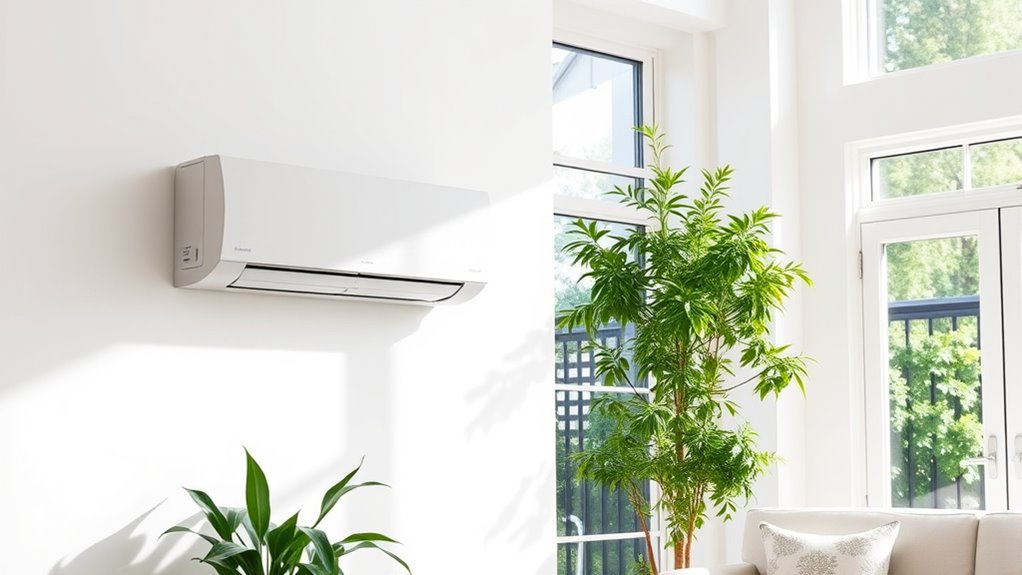
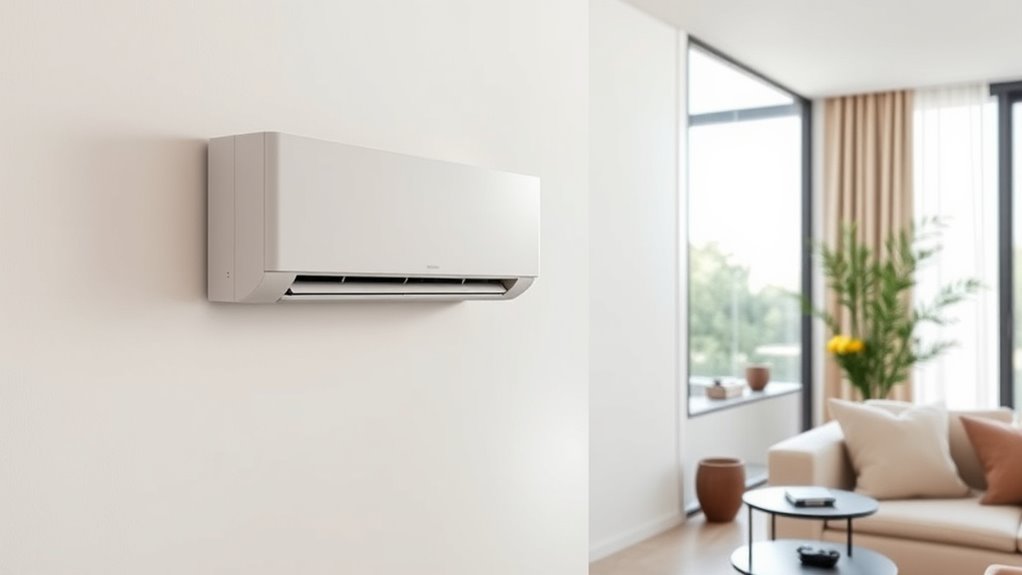
Ductless mini-splits are a versatile and energy-efficient way to heat and cool your home or office. These systems provide targeted climate control, allowing you to customize temperatures in individual rooms without wasting energy on unoccupied spaces. One of the biggest advantages is their impressive energy efficiency. Unlike traditional HVAC systems that rely on ductwork, ductless mini-splits eliminate energy losses associated with ducts, which can account for up to 30% of cooling and heating energy. By reducing these losses, they help you save on utility bills while maintaining consistent comfort. This efficiency is especially beneficial if you’re seeking to reduce your carbon footprint or upgrade an older, less efficient system.
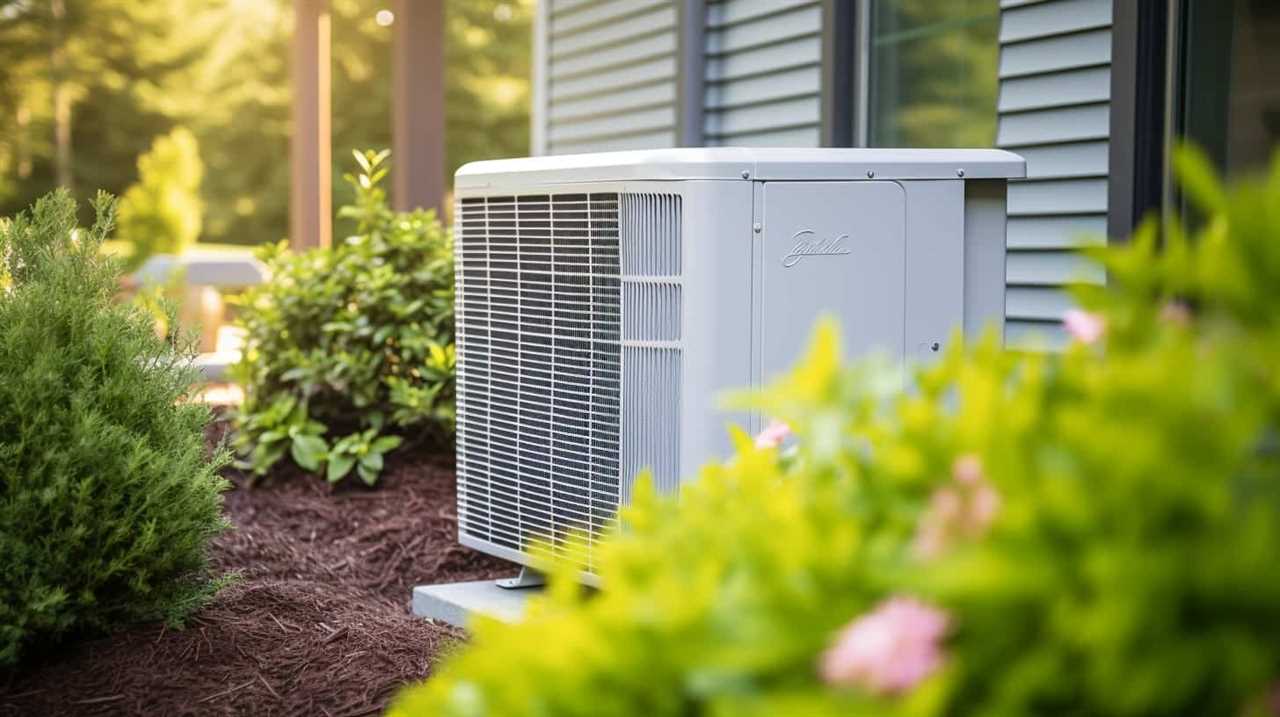
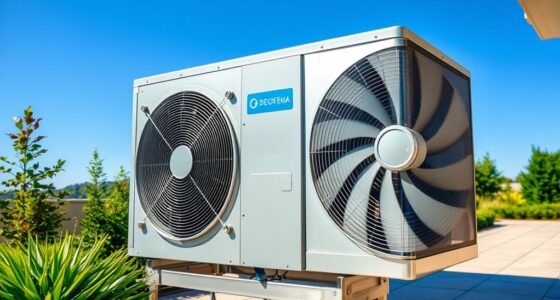
Installation benefits are another key reason to think about ductless mini-splits. They are straightforward to install compared to central systems, often requiring only a small hole in the wall for the conduit that connects the indoor and outdoor units. This means minimal disruption to your living space and a faster setup process. You don’t need to overhaul your existing ductwork or make major renovations, which keeps installation costs lower. Plus, because they’re compact and lightweight, mini-splits are flexible in terms of placement. You can install them in rooms where traditional systems might be impractical, such as in converted attics, garages, or small apartments.
The installation process itself offers additional benefits. It’s less invasive, with no need to tear down walls or ceilings, making it ideal for retrofitting older buildings. You can also choose to install multiple units throughout your space, giving you more control over individual room temperatures. This zoning capability not only improves comfort but also enhances energy efficiency—by heating or cooling only the rooms you use, you avoid wasting energy on unoccupied areas. Furthermore, many models are designed for quick installation by trained professionals, reducing downtime and inconvenience. Additionally, understanding the energy losses associated with ducts highlights the importance of ductless systems for maximizing efficiency and reducing waste.

Oylus Mini Split Ac/Heating System – 12000 BTU Ductless Mini Split Air Conditioner with Heat Pump, 19 SEER2 115V Energy Efficient Ac Unit Up to 750 Sq.Ft with Installation Kit
【Efficient Cooling & Heating】 – Stay comfortable all year round with 12,000 BTU cooling and 12,500 BTU heating….
As an affiliate, we earn on qualifying purchases.
As an affiliate, we earn on qualifying purchases.
Frequently Asked Questions
How Long Does Installation Typically Take?
Installation typically takes about 4 to 8 hours, depending on your home’s size and complexity. You should plan on a professional scheduling appointment that fits your availability, as the timeline can vary. During the installation, your technician will efficiently set up the indoor and outdoor units, ensuring everything works properly. You can usually start enjoying your new cooling system the same day, making it a quick and hassle-free upgrade.
Can Ductless Mini-Splits Be Used for Heating?
Yes, ductless mini-splits can definitely do double duty by providing both cooling and heating. You’ll love the energy efficiency and cost savings they offer year-round, making them a smart solution for your space. With their versatile design, you get cozy comfort in winter and cool relief in summer. So, you’re not just heating and cooling—you’re harnessing high-tech, high-efficiency comfort all season long.
What Is the Lifespan of a Ductless Mini-Split System?
A ductless mini-split system typically lasts 10 to 15 years with proper maintenance. You’ll find that its longevity is a good investment, especially since its energy efficiency can reduce your overall energy costs over time. When comparing costs, consider that while initial installation might be higher than traditional systems, the savings on energy bills and lower maintenance contribute to a better long-term cost comparison, making it an excellent choice for your home.
Are There Any Noise Concerns With Operation?
You won’t have to worry much about noise levels with ductless mini-splits, as their operating sound is typically very quiet. Most models feature advanced technology to minimize noise, making them suitable for bedrooms, offices, and living spaces. You might notice some faint sounds during operation, but overall, the noise levels are low and won’t disturb your daily activities. This quiet operation is one of the system’s key advantages.
How Do Maintenance Requirements Compare to Traditional Systems?
You’ll find that ductless mini-splits demand less maintenance than traditional systems, making your home quieter and more energy-efficient. Picture yourself enjoying consistent comfort with minimal upkeep—just occasional filter cleanings and inspections. Unlike bulky units needing frequent repairs, these sleek systems keep running smoothly with lower maintenance frequency, saving you time and money. Embrace the ease and energy savings, and your cooling experience becomes effortless and worry-free.
Oylus Mini Split Ac/Heating System – 18000 BTU Wall Mounted Mini Split Air Conditioner with Heat Pump, 19 SEER2 230V Energy Efficient Ductless Ac Unit Up to 1250 Sq (18000BTU, 19 SEER2)
【Efficient Cooling & Heating】 – Stay comfortable all year round with 18000 BTU cooling and 18400 BTU heating….
As an affiliate, we earn on qualifying purchases.
As an affiliate, we earn on qualifying purchases.
Conclusion
Now that you know the benefits of ductless mini-splits, imagine what they could do for your home comfort. But don’t wait too long—there’s a reason these systems are gaining popularity fast. Could this be the upgrade you’ve been searching for? Stay tuned, because the next move might just change everything. The secret to efficient cooling is closer than you think—are you ready to discover it?

Albott Mini Split AC/Heating System, 28,000 BTU ODU, 22 SEER2 3 Zone 12K+12K+12K BTU Ductless Inverter Heat Pump, WiFi Enabled with Pre-Charged Condenser & 16.4 Ft Line Set, 208-230V, Energy-Efficient
High Efficiency: This mini split ac delivers up to 22 SEER2 efficiency, reducing energy costs while providing stable…
As an affiliate, we earn on qualifying purchases.
As an affiliate, we earn on qualifying purchases.

Mini Split Wall Mounting Bracket Kit,Universal Air Conditioner Heat Pump System Unit 7000-18000 BTU, Mini Split-System Air Conditioners for Central AC/Heat Pumps Systems (White, 3" x 10 ft)
【Great Value TWO Kits】: For Mini Split Air Conditioners Mini Split Line Set Cover Kit: [10Ft Length, 3…
As an affiliate, we earn on qualifying purchases.
As an affiliate, we earn on qualifying purchases.