
If you’re looking for the best ERV systems for basements in 2026, I recommend considering the Aprilaire V22BEC for whole-house ventilation, the TwinFresh Comfo RB1-50-2 for ductless convenience, and the VENTS-US Frigate ERV 120s for reliable performance. These models offer great airflow, durability, and smart features that suit basement environments. Want to find out which one fits your needs perfectly? Keep exploring for detailed insights.
Key Takeaways
- Prioritize ERV systems with high energy recovery efficiency (72%+) and climate-specific features for optimal basement ventilation.
- Ensure compatibility with flexible installation options—wall, ceiling, or floor mounting—and support ductless operation.
- Choose units with durable, corrosion-resistant materials and weatherproof features for long-term basement use.
- Opt for smart-enabled ERVs with remote control, Wi-Fi connectivity, and compatibility with home automation platforms.
- Select models with appropriate airflow capacity (30-50 CFM) tailored to basement size and ventilation needs.
| Aprilaire V22BEC ERV for Whole-House Ventilation |  | Whole-House Efficiency | Application Type: Whole-house ventilation | Airflow Capacity: 120 CFM | Certification: ETL, UL, HVI | VIEW LATEST PRICE | See Our Full Breakdown |
| TwinFresh Comfo RB1-50-2 Ductless ERV Ventilation Fan |  | Compact Ductless | Application Type: Ductless room ventilation | Airflow Capacity: 30 CFM | Certification: Not specified | VIEW LATEST PRICE | See Our Full Breakdown |
| VENTS-US Frigate ERV 120s Whole House Ventilation Fan |  | High-Performance Ventilation | Application Type: Whole-house ventilation | Airflow Capacity: 162 CFM | Certification: HVI | VIEW LATEST PRICE | See Our Full Breakdown |
More Details on Our Top Picks
-
VENTS-US TwinFresh Comfo RB1-50-2 Ductless Energy Recovery Ventilator - 30 CFM w/Remote Control, Continuous Fresh Air Ventilation, and Improved Indoor Air Quality
- Energy-efficient Fresh Air: Provides up to 30 CFM with heat recovery
- Ductless Wall Installation: Fits walls 6–20 inches thick, ideal for small spaces
- Quiet, Efficient Motor: Reversible DC motor operates at 0.2 sones with low power
As an affiliate, we earn on qualifying purchases.
Aprilaire V22BEC ERV for Whole-House Ventilation
If you’re looking for a reliable, all-encompassing ventilation solution that works well in large homes, the Aprilaire V22BEC ERV is an excellent choice. Designed for homes up to 6,000 square feet, it efficiently exchanges stale indoor air with fresh outdoor air, reducing odors and pollutants. Its compact size allows versatile mounting options in attics, basements, or mechanical rooms. The system’s energy recovery core tempers incoming air using heat and moisture from outgoing air, lowering energy costs. Simple push-button controls and dual fan speeds make operation easy. Plus, its compatibility with select thermostats adds smart control, making it a practical, energy-efficient solution for thorough ventilation.
- Application Type:Whole-house ventilation
- Airflow Capacity:120 CFM
- Certification:ETL, UL, HVI
- Climate Suitability:All climates
- Filter Type:Filtered outdoor air
- Power Consumption:Approx. 95W
- Additional Feature:Compatible with smart thermostats
- Additional Feature:Templated mounting bracket
- Additional Feature:72% system efficiency
-
VENTS-US Frigate ERV 120s Energy Recovery Ventilator – Whole House Ventilation Fan with Freeze Protection and Dual Air Filtration – Up to 162 CFM
- HVI Certified Air Exchange: Ensures continuous fresh and stale air exchange
- Cold Climate Reliability: Anti-frost protection with fan cycling
- Three-Speed Control: Selects LOW, MED, or STANDBY modes
As an affiliate, we earn on qualifying purchases.
TwinFresh Comfo RB1-50-2 Ductless ERV Ventilation Fan
The TwinFresh Comfo RB1-50-2 Ductless ERV Ventilation Fan stands out for its energy-efficient, ductless design, making it an ideal choice for anyone seeking effective ventilation without the hassle of installing ductwork. It delivers up to 30 CFM of filtered, fresh air to rooms up to 500 sq ft, recovering up to 88% of heat or cooling to cut energy costs year-round. Its compact, wall-mounted design suits bedrooms, basements, or small spaces. With a quiet, energy-efficient motor, built-in humidity sensor, and simple remote control, it offers reliable, maintenance-free operation and better indoor air quality without extensive installation.
- Application Type:Ductless room ventilation
- Airflow Capacity:30 CFM
- Certification:Not specified
- Climate Suitability:All climates
- Filter Type:MERV 5 filters
- Power Consumption:4.5W
- Additional Feature:Ductless wall installation
- Additional Feature:Built-in humidity sensor
- Additional Feature:Wireless remote control
VENTS-US Frigate ERV 120s Whole House Ventilation Fan
Looking for a reliable whole-house ventilation system that keeps your indoor air fresh and clean? The VENTS-US Frigate ERV 120s offers just that. It’s HVI-certified, ensuring continuous, balanced air exchange with washable MERV 6 filters for cleaner air. Built to endure cold climates, it features electronic anti-frost protection and a corrosion-resistant steel casing. With up to 162 CFM of airflow at just 19 Watts, it’s energy-efficient and customizable with three speed settings. Easy to install using standard ducts, it also recovers heat and humidity with its advanced enthalpy core—helping you maintain comfortable indoor conditions effortlessly.
- Application Type:Whole-house ventilation
- Airflow Capacity:162 CFM
- Certification:HVI
- Climate Suitability:Cold climates
- Filter Type:Washable MERV 6 filters
- Power Consumption:Approx. 19W
- Additional Feature:Electronic anti-frost protection
- Additional Feature:Corrosion-resistant steel casing
- Additional Feature:Three-speed control
Factors to Consider When Choosing ERV for Basements
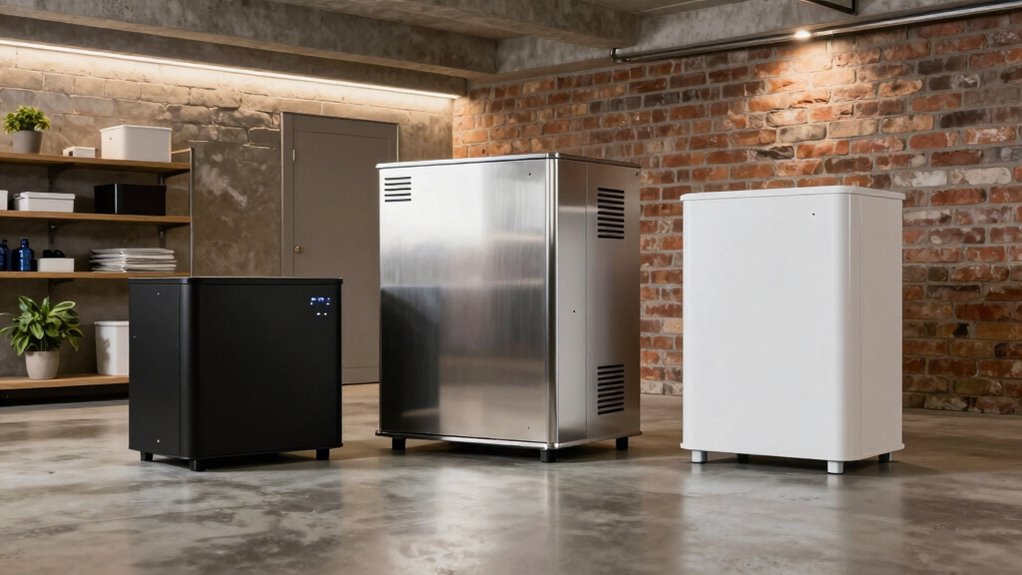
When selecting an ERV for your basement, I recommend considering how much space you have and what airflow capacity you need, as both impact performance. Climate factors and energy efficiency ratings should also guide your choice to guarantee the system works well year-round without wasting energy. Additionally, check if the installation options suit your setup to make the process smoother and more flexible.
Space Compatibility Needs
Choosing the right ERV for your basement starts with understanding how well it fits within your available space. You need to guarantee the unit’s dimensions align with your basement’s layout to make installation and maintenance straightforward. Consider whether it can be mounted on walls, ceilings, or floors, depending on the structural setup. It’s also important to check if the ERV’s ventilation capacity matches your basement’s size, ensuring effective air exchange. Additionally, evaluate if the control options and access points suit the limited space typically found in basements. In conclusion, confirm that the ERV is compatible with your existing ductwork or can be adapted to your specific spatial constraints. Proper space planning helps ensure your ERV functions efficiently without cluttering your basement.
Airflow Capacity Requirements
Selecting the right airflow capacity for your basement ERV is essential to guarantee proper ventilation without wasting energy or causing discomfort. The system’s capacity should match your basement’s size and ventilation needs to ensure effective air exchange. For spaces up to 500 square feet, around 30 CFM may be enough, but larger areas might need 50-100 CFM or more. Too little airflow can lead to poor air quality, stagnant air, and increased humidity, while too much can cause drafts and unnecessary energy use. It’s also important to follow baseline ventilation rates recommended by building codes or air quality guidelines. Proper airflow capacity balances ventilation, prevents mold growth, and keeps indoor air healthy, making your basement more comfortable and safer.
Climate Suitability Factors
Climate conditions play a pivotal role in determining the right ERV system for your basement, as different environments present unique challenges. In cold climates, I recommend an ERV with frost protection features to prevent freezing and guarantee consistent operation. If you live in a humid area, prioritize high moisture recovery efficiency to control indoor humidity and prevent mold growth. For hot and humid climates, look for an ERV that pre-cools incoming air, reducing the load on your air conditioning system. Seasonal variations also matter; they influence the ERV’s energy recovery performance, so choosing a system designed for your climate’s fluctuations is essential. By considering these factors, you’ll select an ERV that maintains comfort and indoor air quality year-round.
Energy Efficiency Ratings
When evaluating ERV systems for your basement, energy efficiency becomes a key factor in ensuring you get the most value and performance. Look for units with energy recovery efficiency of 72% or higher—these deliver better savings by effectively transferring heat and moisture between incoming and outgoing air. The core’s ability to temper air directly impacts overall efficiency, so prioritize models with high-quality cores. Certifications like HVI or UL verify that the system meets strict energy standards, giving you confidence in its performance. Also, consider the airflow capacity (measured in CFM) to match your basement’s ventilation needs without wasting energy. Ductless models or those with adjustable fan speeds can fine-tune energy use based on real-time demand, optimizing efficiency and comfort.
Installation Flexibility Options
Choosing an ERV system that fits your basement’s unique layout is vital for a smooth installation process. You want a unit that can be mounted on walls, ceilings, or floors to adapt to space constraints. Check if it includes a templated mounting bracket, which makes installing in tight or awkward corners easier. Support for flexible duct connections or ductless operation can considerably simplify setup, especially in confined areas. It’s also important to verify that the unit’s dimensions and weight match your available space and installation method. Additionally, look for adjustable mounting options to fine-tune airflow and noise levels, ensuring ideal performance in your basement environment. These flexibility features help guarantee your ERV installation is efficient and unobtrusive.
Humidity Control Features
In basement environments, controlling humidity levels is key to preventing mold, musty odors, and structural damage. ERVs with built-in humidity sensors automatically adjust ventilation rates based on moisture levels, ensuring ideal indoor air quality. This real-time response helps maintain a balanced humidity, reducing the need for separate dehumidifiers and saving energy. Effective humidity management also minimizes condensation on walls and floors, preserving the structural integrity of your basement. Additionally, proper humidity regulation reduces mold spores, dust mites, and allergens, creating a healthier environment. When choosing an ERV, look for systems with advanced humidity control features to keep moisture levels in check effortlessly. This not only protects your space but also contributes to a safer, more comfortable basement environment.
Maintenance and Durability
Ensuring your ERV system will stand up to the damp basement environment requires paying close attention to its construction and maintenance features. I recommend choosing units with corrosion-resistant materials like stainless steel or coated steel, which resist rust and moisture damage. Regularly inspecting and replacing filters, such as MERV 5 or MERV 6, helps maintain peak performance and indoor air quality. Look for systems with sealed, easy-to-access components, making maintenance straightforward and reducing downtime. Durability certifications and weatherproof features are also essential, as they guarantee the unit can handle humidity and damp conditions over time. Additionally, safety features like anti-frost protection and humidity sensors contribute to reliable operation, extending the life of your ERV and keeping your basement healthy.
Smart Control Compatibility
Smart control compatibility is a crucial factor to consider when selecting an ERV for your basement, as it allows you to manage and monitor the system remotely with ease. I recommend guaranteeing the ERV works seamlessly with smart thermostats or home automation systems, making control straightforward. Look for models that support connectivity via Wi-Fi, Zigbee, or Z-Wave, so integration is simple. A dedicated app or platform is essential for scheduling, adjusting settings, and receiving maintenance alerts. Compatibility with voice assistants like Alexa, Google Home, or Apple HomeKit adds convenience through voice control. Finally, check if the system offers firmware updates and customization options through its smart interface—this guarantees your ERV remains efficient and adaptable over time.
Frequently Asked Questions
How Often Should ERV Systems in Basements Be Maintenance Checked?
I recommend checking your ERV system in the basement at least once every six months. Regular inspections help guarantee filters are clean, vents are unobstructed, and there’s no buildup of dirt or mold. If you notice unusual noises or reduced airflow, it’s a good idea to inspect it sooner. Routine maintenance keeps your system running efficiently, improves indoor air quality, and extends its lifespan, saving you money in the long run.
Can ERV Systems Help Reduce Mold Growth in Basements?
Think of an ERV system as a invigorating gust of fresh air for your basement. Yes, it can markedly reduce mold growth by controlling humidity and improving air quality. By constantly cycling out damp, stale air and bringing in dried, filtered air, it creates an environment less welcoming for mold spores. Regular maintenance ensures it works efficiently, turning your basement into a healthier space free from mold worries.
Are There Energy-Efficient ERV Options for Small Basement Spaces?
Yes, there are energy-efficient ERV options perfect for small basement spaces. I recommend looking for compact models with high-efficiency motors and smart controls, which help reduce power consumption. Some units also feature adjustable settings to optimize airflow without wasting energy. By choosing an ERV designed for small areas, you’ll improve ventilation and indoor air quality while keeping energy costs low, ensuring a healthier, more comfortable basement environment.
What Is the Average Lifespan of Basement ERV Systems?
The average lifespan of basement ERV systems is about 10 to 15 years. I’ve found that proper maintenance, like regular filter changes and inspections, can extend their durability. If you keep up with these tasks, your system can perform efficiently for years longer. I recommend scheduling routine check-ups to guarantee peak operation and catch any issues early. Proper care truly makes a difference in longevity.
Do ERV Systems Require Professional Installation or Can DIY Be Sufficient?
Sure, you can try installing an ERV system yourself—if you enjoy puzzles, patience, and risking your basement’s airflow. But honestly, these systems are complex and require precise ductwork and electrical connections. I’d recommend hiring a professional unless you’re confident with home HVAC work. A pro guarantees proper installation, saves time, and keeps your basement’s air quality excellent. Trust me, it’s worth the investment.
Conclusion
Choosing the right ERV for your basement means considering your home’s needs, your budget, and your air quality goals. Whether you prioritize whole-house coverage, ductless convenience, or reliable performance, each of these top systems offers something unique. So, weigh your options carefully, think about your priorities, and select an ERV that guarantees fresh air, improves comfort, and enhances your home’s health. Because the right system isn’t just an investment; it’s a step toward better living.