The evolution of air conditioning technology has led you to smarter, more energy-efficient systems. Modern units now feature control systems you can manage remotely, learning your preferences for automatic comfort. Eco-friendly refrigerants reduce environmental impact, while inverter technology cuts energy use and maintains steady temperatures. Improvements in air filtration enhance indoor air quality, supporting health and wellness. As these innovations grow, you’ll discover how future-ready climate control continues to prioritize sustainability and your comfort seamlessly.
Key Takeaways
- Transition from basic cooling systems to smart thermostats with remote control and adaptive learning features.
- Shift to eco-friendly refrigerants like HFOs reduces environmental impact and supports sustainability.
- Adoption of inverter technology improves energy efficiency and maintains consistent indoor temperatures.
- Integration of advanced air filtration systems enhances indoor air quality and promotes health.
- Overall industry progress toward smarter, greener, and more efficient climate control solutions.
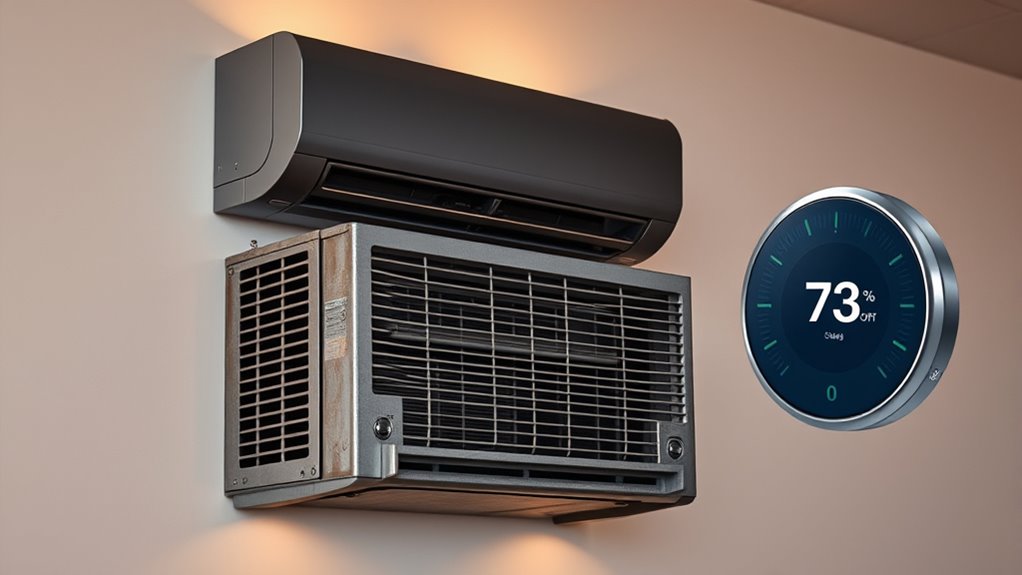
The evolution of air conditioning technology has transformed how we stay comfortable indoors, shifting from simple cooling methods to sophisticated systems that improve energy efficiency and air quality. Today, you benefit from smart thermostats, which allow you to control your system remotely, set schedules, and optimize energy use with ease. These devices learn your preferences over time, adjusting temperatures automatically to save energy without sacrificing comfort. By integrating smart thermostats into your cooling setup, you can monitor your home’s climate from your phone, making adjustments on the fly and reducing unnecessary energy consumption. This not only keeps your space comfortable but also lowers your utility bills and your environmental footprint.
Smart thermostats let you control your home’s climate remotely, saving energy and reducing bills effortlessly.
Along with smarter controls, the industry has made significant strides toward eco-friendly refrigerants. Traditional refrigerants, like chlorofluorocarbons (CFCs) and hydrochlorofluorocarbons (HCFCs), have been linked to ozone depletion and global warming. Recognizing these issues, manufacturers now prioritize eco-friendly refrigerants such as hydrofluoroolefins (HFOs) and other low-global warming potential (GWP) options. These refrigerants are designed to provide the same cooling efficiency but with less environmental impact. When you upgrade your system or maintain your current one, choosing units that utilize these eco-friendly refrigerants guarantees you’re contributing to a healthier planet while enjoying reliable indoor climate control.
Technology advancements haven’t stopped there. Modern air conditioning units are more energy efficient, with inverter technology that adjusts compressor speed based on your cooling needs. This means you use less electricity and experience fewer temperature fluctuations. Coupled with smart thermostats, these systems create a seamless, energy-conscious environment. Additionally, manufacturers are developing systems with better filtration systems that improve air quality, removing allergens and pollutants to promote healthier indoor air. These innovations also support emotional regulation, helping you feel more relaxed and comfortable in your environment.
In essence, you now have access to HVAC systems that are smarter, greener, and more efficient than ever before. The integration of smart thermostats and eco-friendly refrigerants exemplifies how innovation continues to shape the industry. These developments make it easier for you to stay comfortable while reducing your carbon footprint. As technology progresses, expect even more intelligent and sustainable solutions to become standard, giving you greater control over your indoor environment and its impact on the planet. The evolution of air conditioning technology is not just about comfort—it’s about creating smarter, more responsible ways to cool our homes and workplaces.

Instant Hot Water Recirculating Pump Kit with Built-in Timer – Compatible with Watts 0955805 & Grundfos 595916 Systems, Includes 2 Brass Sensor Valves (595926), 4 Supply Lines, and 4 Adapters
INSTANT HOT WATER DELIVERY:The hot water recirculating pump kit ensures immediate hot water at your faucets, reducing wait...
As an affiliate, we earn on qualifying purchases.
Frequently Asked Questions
How Do Smart Thermostats Improve Energy Efficiency?
Smart thermostats improve energy efficiency by learning your schedule and adjusting temperatures accordingly, which reduces unnecessary energy consumption. They allow you to set specific preferences for comfort, ensuring your space remains comfortable without wasting energy. With features like remote control and real-time data, you can optimize usage from anywhere. This helps lower your utility bills while maintaining user comfort, making your home both smarter and more energy-efficient.
What Are the Latest Eco-Friendly Refrigerant Options?
Your quest for eco-friendly cooling can lead you to refrigerant alternatives like hydrofluoroolefins (HFOs) and natural options like R-290 and R-600a, which are revolutionizing the industry. These refrigerant options drastically reduce environmental impact, making your air conditioning system greener and more sustainable. By choosing these eco-friendly refrigerants, you contribute to a healthier planet, ensuring that your cooling needs don’t come at the expense of the environment’s future.
How Does Air Conditioning Impact Indoor Air Quality?
Air conditioning improves indoor air quality by filtering out dust, allergens, and pollutants through air purification systems. It also helps maintain ideal humidity levels with humidification control, preventing mold growth and dryness. By regulating temperature and moisture, your AC creates a healthier, more comfortable environment. Regular maintenance ensures these features work effectively, reducing respiratory issues and enhancing overall air quality in your space.
Are There Silent Air Conditioning Units Available?
Yes, silent air conditioning units are available, designed specifically for noise reduction and silent operation. You’ll find models with advanced insulation and quieter fans that minimize sound, making them perfect for bedrooms or offices. These units operate smoothly without disturbing your environment, allowing you to enjoy cooling comfort and peace. Look for ACs marketed as ultra-quiet or whisper-quiet, and you’ll experience a invigorating atmosphere without the noise.
What Future Innovations Are Expected in Air Conditioning Technology?
Future innovations in air conditioning technology will focus on smart grid integration and renewable energy compatibility, making your system more efficient and eco-friendly. You’ll likely see units that automatically adjust based on energy availability, reducing costs and emissions. Smart sensors and AI will optimize cooling, while seamless integration with renewable sources like solar power will lower your carbon footprint. These advancements aim to make your comfort sustainable and energy-smart.

Eastman 3/4 Inch Nevercold Universal Hot Water Recirculation Pump Kit, Brass, 70600
ON DEMAND HOT WATER: The Nevercold recirculating pump system is specially designed for operation on your water heater...
As an affiliate, we earn on qualifying purchases.
Conclusion
As you can see, air conditioning has come a long way, transforming comfort in homes and workplaces. Did you know that modern systems are now up to 30% more energy-efficient than those from just a decade ago? This progress not only helps save you money but also reduces environmental impact. With ongoing innovations, future ACs will likely be even smarter and greener, making staying cool easier and more sustainable for everyone.

Rinnai RL75IN Tankless Hot Water Heater, 7.5 GPM, Natural Gas, Indoor Installation
Original Design: Tankless hot water heater's Circ-Logic technology offers recirculation patterns that match your habits; For the latest...
As an affiliate, we earn on qualifying purchases.

ZeroPone Hot Water Recirculating Pump, Water Circulator Pump, 120W 110V Automatic Circulating Pump Stainless Steel Head NPT 3/4" w/NPT 1/2" Adapter,15-9S Dual Control for Electric Water Heater System
【Premium Material】- The recirculating pump uses heavy-duty stainless steel pump head, aluminum pump housing and PP impeller, featuring...
As an affiliate, we earn on qualifying purchases.