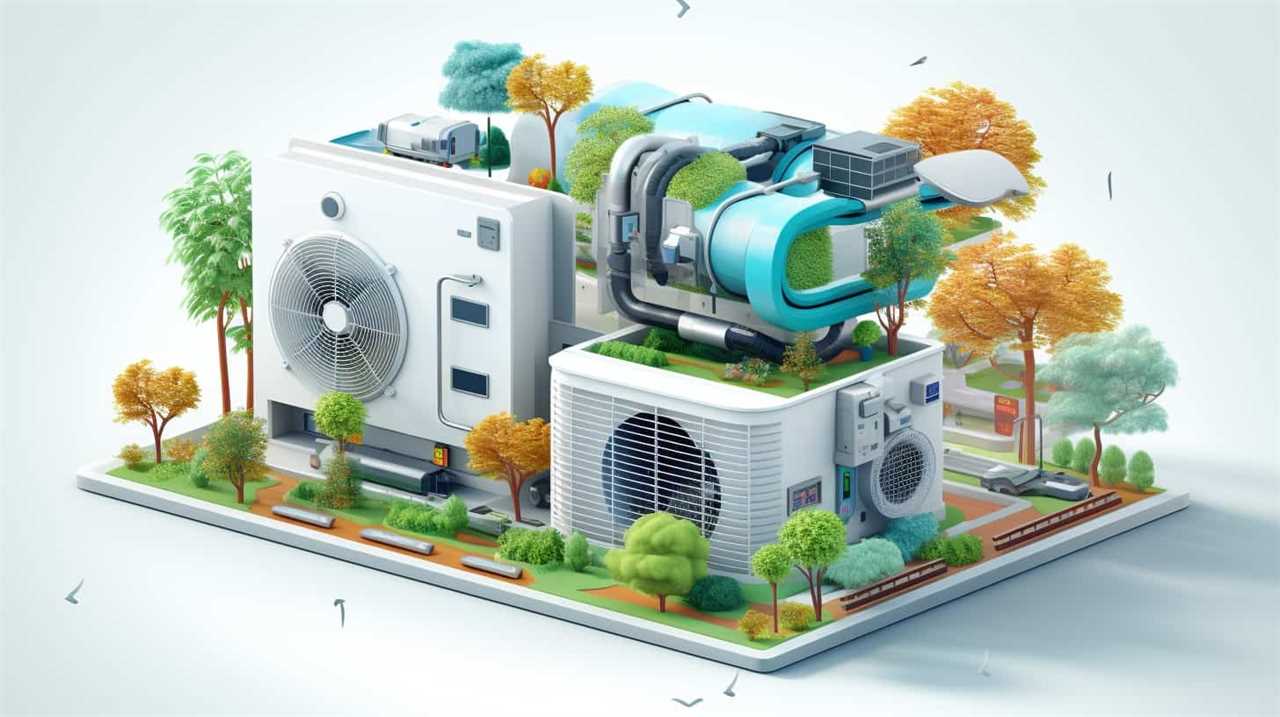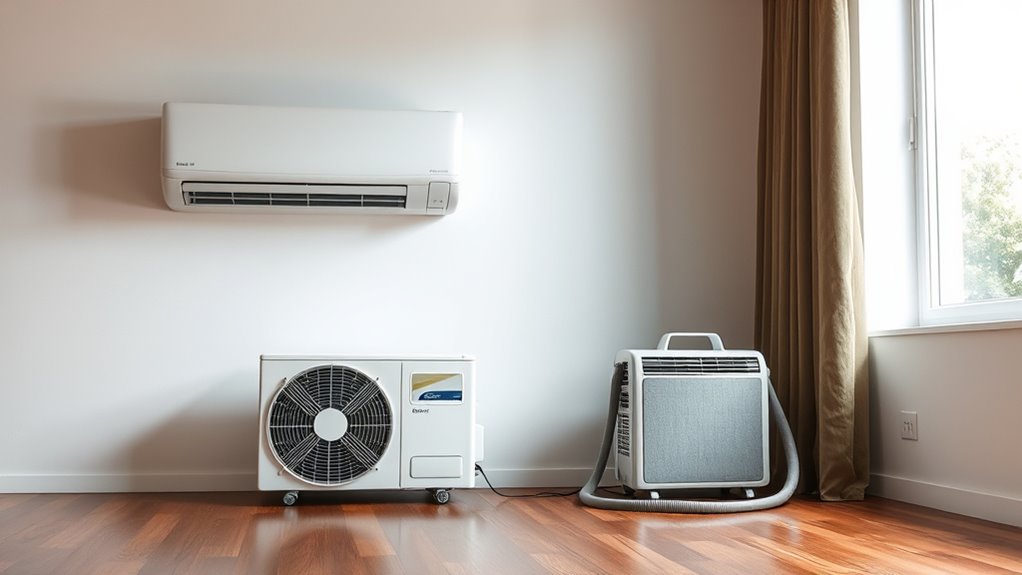

If you’re choosing between a heat pump and a portable AC unit, consider your needs. Heat pumps are fixed, energy-efficient systems that provide both cooling and heating, making them ideal for continuous use and long-term savings. Portable AC units are portable, easy to install, and suited for temporary cooling in specific rooms. To understand which option fits your home and budget best, keep exploring the key differences and benefits.

Get backup power and energy gear delivered free with Prime
- Fast, free delivery on millions of items
- Prime Video, Amazon Music and more included
- Member-only deals all year
Key Takeaways
- Heat pumps provide efficient, whole-home heating and cooling, while portable AC units are best for individual room cooling.
- Heat pumps have higher upfront costs but lower operating expenses; portable units are cheaper initially but less cost-effective long-term.
- Installation of heat pumps requires professional setup and ductwork, whereas portable units are easy to move and set up without professional assistance.
- Heat pumps operate quietly and efficiently with regular maintenance, while portable ACs may produce noise and need filter cleaning.
- Heat pumps are fixed installations offering consistent comfort; portable units offer flexibility but less overall coverage.
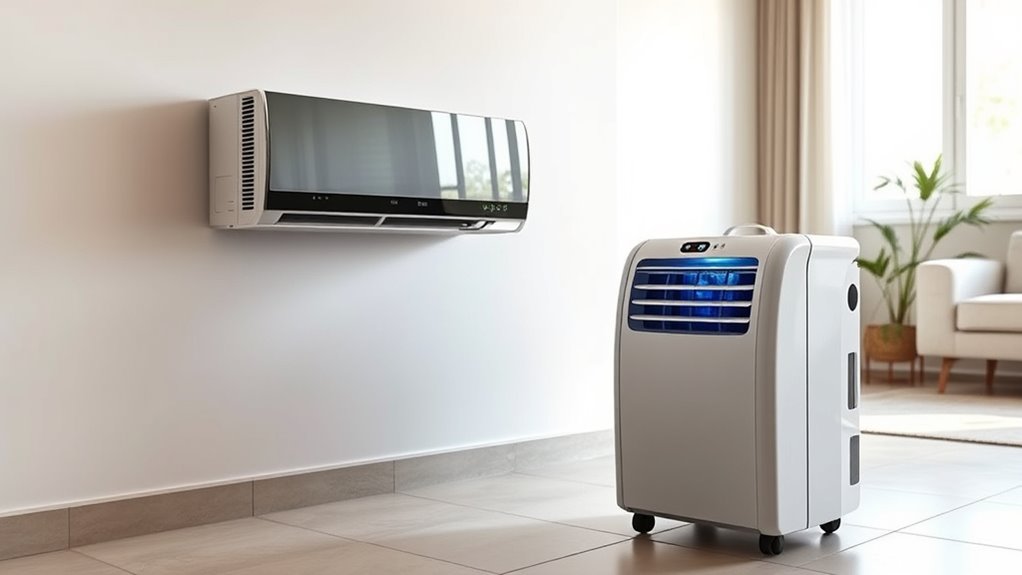
When it comes to cooling your home, choosing between heat pump air conditioners and portable AC units can be confusing. Both options effectively lower indoor temperatures, but they differ markedly in terms of energy efficiency and installation process. Understanding these differences helps you make an informed decision that suits your needs and budget.
Heat pump air conditioners are known for their high energy efficiency. They work by transferring heat between the indoors and outdoors, which allows them to provide cooling in summer and heating in winter. Because they move heat rather than generate it, they consume less electricity compared to traditional cooling units. This makes them a cost-effective choice over time, especially if you’re looking to reduce energy bills. Additionally, modern heat pumps are equipped with advanced technology that optimizes their operation, further improving their efficiency. However, their energy efficiency depends on proper sizing and maintenance, so it’s essential to select a unit suitable for your home’s size and to keep up with regular service.
Heat pump air conditioners are highly energy-efficient, providing cooling and heating by transferring heat between indoors and outdoors.
The installation process for heat pump air conditioners tends to be more involved. They require professional installation because they need to be connected to existing ductwork or have new ductwork installed if your home isn’t already equipped. This process involves outdoor and indoor units, refrigerant lines, and electrical wiring, which can take several hours or even days depending on your home’s complexity. While the upfront installation cost might be higher, the long-term savings on energy bills often justify the investment. If you’re considering a heat pump, be prepared for a more extensive setup process, but know that once installed, they operate quietly and efficiently. Proper sizing and maintenance are crucial for ensuring optimal performance and longevity.
On the other hand, portable AC units shine in their ease of setup and flexibility. You simply plug them in, vent the exhaust hose through a window or wall, and they’re ready to cool. Their installation process is minimal, requiring no professional help, which makes them ideal for renters or those who want a temporary cooling solution. However, portable units tend to be less energy-efficient than heat pumps, especially if used continuously over long periods. They also typically have higher operating costs because they generate heat rather than transfer it, leading to increased electricity consumption. Despite this, their portability allows you to move them from room to room, offering targeted cooling without the need for permanent installation.
energy-efficient heat pump air conditioner
As an affiliate, we earn on qualifying purchases.
As an affiliate, we earn on qualifying purchases.
Frequently Asked Questions
Which Unit Has Lower Long-Term Operating Costs?
A heat pump air conditioner typically has lower long-term operating costs compared to a portable AC unit. This is because heat pumps are more energy-efficient, using less electricity to cool and heat your space. Additionally, they generally have lower maintenance costs, since they’re built for durability and longer use. You’ll save money over time with a heat pump, especially if you need year-round climate control, making it a smarter investment.
How Do Installation Requirements Differ Between the Two?
Installing a heat pump is like assembling a complex puzzle; it requires more planning. You’ll need to handle outdoor unit placement, electrical wiring, and possibly ductwork, making installation more complex and space-demanding. Portable AC units, in contrast, are like plug-and-play devices—small, self-contained, and easy to set up with minimal space requirements. You can usually install a portable unit yourself, saving time and effort.
Can Portable Units Be Used for Heating?
Yes, portable units can be used for portable heating, making them versatile for year-round comfort. Many models include a heating function that provides portable heating, which is convenient for supplemental warmth. However, consider energy efficiency, as portable heating can consume more power compared to dedicated heat pumps. If you need efficient, portable heating, look for models with high energy efficiency ratings to keep costs manageable while staying warm.
Which System Is More Environmentally Friendly?
You’ll find heat pump air conditioners more environmentally friendly because they use refrigerants with lower recyclability concerns and operate efficiently by transferring heat rather than generating it. Portable AC units, on the other hand, often rely on refrigerants with higher environmental impacts and consume more energy, which increases their carbon footprint. Choosing a heat pump can help reduce your environmental impact, especially if it uses eco-friendly refrigerants.
Are There Differences in Noise Levels During Operation?
You’ll notice a noise difference between these systems, with heat pump air conditioners generally operating quieter than portable units. The sound insulation in heat pumps helps reduce noise during operation, making them less disruptive. Portable AC units tend to be noisier because their compressors and fans sit close to you, and they lack dedicated sound insulation. If noise is a priority, a heat pump might be the better choice for a quieter environment.
portable air conditioner with exhaust hose
As an affiliate, we earn on qualifying purchases.
As an affiliate, we earn on qualifying purchases.
Conclusion
Ultimately, choosing between a heat pump air conditioner and a portable unit is like selecting the right tool for your needs. Both have their unique charm and quiet strengths, quietly working behind the scenes to keep you comfortable. Consider your space, budget, and lifestyle, and you’ll find a solution that feels just right. After all, finding the perfect climate control isn’t about perfection, but about creating a cozy haven where you can truly relax and breathe easy.
As an affiliate, we earn on qualifying purchases.
portable AC unit for single room
As an affiliate, we earn on qualifying purchases.
As an affiliate, we earn on qualifying purchases.
Halloween Picks
halloween
As an affiliate, we earn on qualifying purchases.