To reduce humidity while cooling with your heat pump, activate its dehumidification mode, which runs the compressor and fan to extract moisture from the air without overly cooling your space. You can also improve moisture control by using fans, keeping vents unobstructed, and using exhaust fans in kitchens and bathrooms. Proper sealing, insulation, and occasional use of dedicated dehumidifiers can further enhance comfort. Continue exploring to learn more effective strategies for maintaining ideal indoor humidity levels.
Key Takeaways
- Activate heat pump dehumidification mode to condense and drain excess moisture during cooling periods.
- Improve air circulation and ensure vents are unobstructed for even moisture removal.
- Use exhaust fans in kitchens and bathrooms to vent moisture outside effectively.
- Seal leaks and insulate to prevent external humidity infiltration, aiding dehumidification efforts.
- Consider dedicated dehumidifiers in high-humidity areas for additional moisture control alongside the heat pump.
When it comes to maintaining a comfortable indoor environment, managing humidity levels is vital, and heat pumps offer an effective solution. These systems are designed not only to cool your home but also to control moisture, making your living space more comfortable and healthier. To achieve ideal humidity levels, you need to understand dehumidification strategies and moisture control techniques that work in tandem with your heat pump.
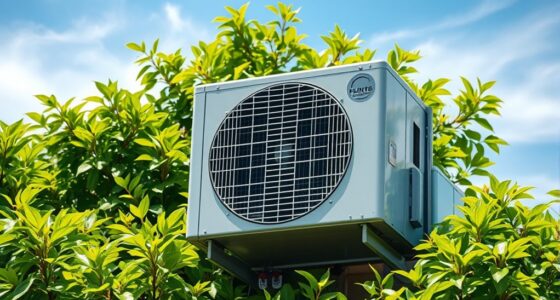
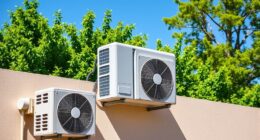
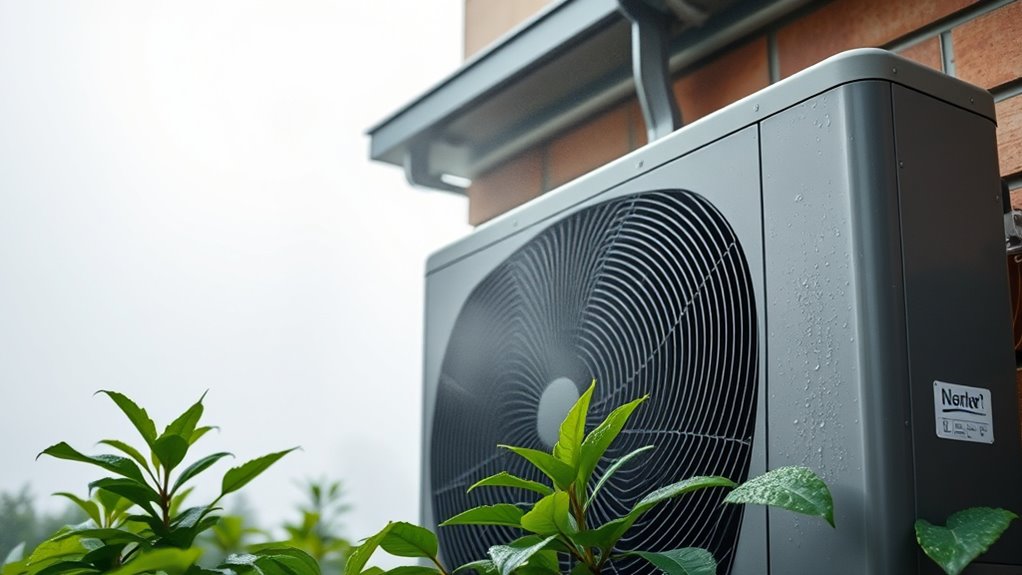
Most heat pumps come equipped with a dehumidification mode, which kicks in during high humidity days. This mode works by running the compressor and fan at optimized settings to extract excess moisture from the air without overly cooling your space. As the refrigerant absorbs heat from indoor air, it also condenses moisture out of the air, which is then drained away. By utilizing this built-in feature, you effectively reduce indoor humidity levels, preventing mold growth and musty odors while maintaining a comfortable temperature.
Most heat pumps dehumidify by running the compressor and fan to remove excess moisture without overcooling your space.
To maximize moisture control, you should also consider additional dehumidification strategies. For example, improving air circulation with fans or ensuring that vents are unobstructed helps distribute dry air evenly throughout your home. Using exhaust fans in kitchens and bathrooms further reduces moisture generated from cooking and bathing. These moisture control techniques complement your heat pump’s capabilities, ensuring that humidity doesn’t build up in specific areas.
Another effective moisture control technique involves sealing leaks and insulating your home properly. When your house is well-insulated and airtight, humidity infiltrates less, and your heat pump doesn’t have to work as hard to maintain ideal conditions. This not only enhances energy efficiency but also stabilizes indoor humidity levels. Installing a dedicated dehumidifier in particularly humid areas can provide additional control, especially during peak summer months. These units can be programmed to operate independently or alongside your heat pump, giving you precise humidity management.
Regular maintenance also plays a vital role. Cleaning or replacing filters ensures the system runs efficiently, while checking the condensate drain prevents water buildup that could lead to mold or damage. Additionally, selecting a heat pump with a high contrast ratio can improve its ability to handle varying light conditions, which can be beneficial in maintaining clear visibility and overall comfort. By keeping your heat pump in prime condition, you ensure it continues to perform dehumidification strategies effectively.
Frequently Asked Questions
Can Heat Pumps Dehumidify Effectively in High Humidity Climates?
Yes, heat pumps can dehumidify effectively in high humidity climates. They often include humidity sensors that automatically adjust operation to maintain comfort. For enhanced dehumidification, you can integrate a dedicated dehumidifier with your heat pump system. This combination ensures ideal moisture control while cooling, preventing excess humidity buildup. By using humidity sensors and dehumidifier integration, you keep your indoor air comfortable and dry, even during humid summer days.
What Settings Optimize Humidity Control During Cooling?
If you want ideal humidity control, set your heat pump to dehumidification modes and trust the humidity sensors. These sensors detect moisture levels precisely, prompting the system to adjust accordingly. Keep an eye on those settings—small tweaks make a big difference. When humidity sensors signal high moisture, switch to dehumidification mode, and let your heat pump do the work. This balance keeps your space comfortable and dry, no surprises needed.
Do Heat Pumps Require Additional Equipment for Moisture Removal?
You don’t usually need extra equipment for moisture removal if your heat pump has moisture sensors and dehumidification modes. These features help your system detect humidity levels and activate dehumidification when needed. Make sure your heat pump’s controls are set to these modes, especially during humid seasons. If your unit lacks these options, you might consider a dedicated dehumidifier, but most modern heat pumps handle moisture efficiently on their own.
How Does Outdoor Temperature Affect Humidity Reduction?
A stitch in time saves nine, and outdoor temperature greatly impacts humidity reduction. When it’s hot outside, your heat pump can remove more moisture, helping prevent indoor mold. Cooler outdoor air makes dehumidification less effective, so proper ventilation strategies become essential. You might need additional equipment if humidity remains high, especially during humid seasons. Keep an eye on outdoor conditions to maintain a comfortable, mold-free indoor environment.
Are There Maintenance Tips to Improve Dehumidification?
To enhance dehumidification, regularly maintain your heat pump by changing air filters every 1-3 months to guarantee proper airflow. Additionally, clear the condensate drain to prevent water buildup that hampers humidity removal. Keep the outdoor unit clean and free of debris, and schedule professional checkups annually. These simple steps help your system operate efficiently, reducing indoor humidity and maintaining a comfortable, dry environment.
Conclusion
As you step into a cooler, drier home, you can almost feel the humidity melt away like morning fog lifting. Your heat pump not only chills the air but also whispers away excess moisture, leaving a invigorating, crisp atmosphere behind. With every inhale, you’re embraced by a comfortable, balanced environment—a calm oasis amid the summer heat. Trust your heat pump to keep your space perfectly dry and inviting, turning every day into a breath of fresh air.