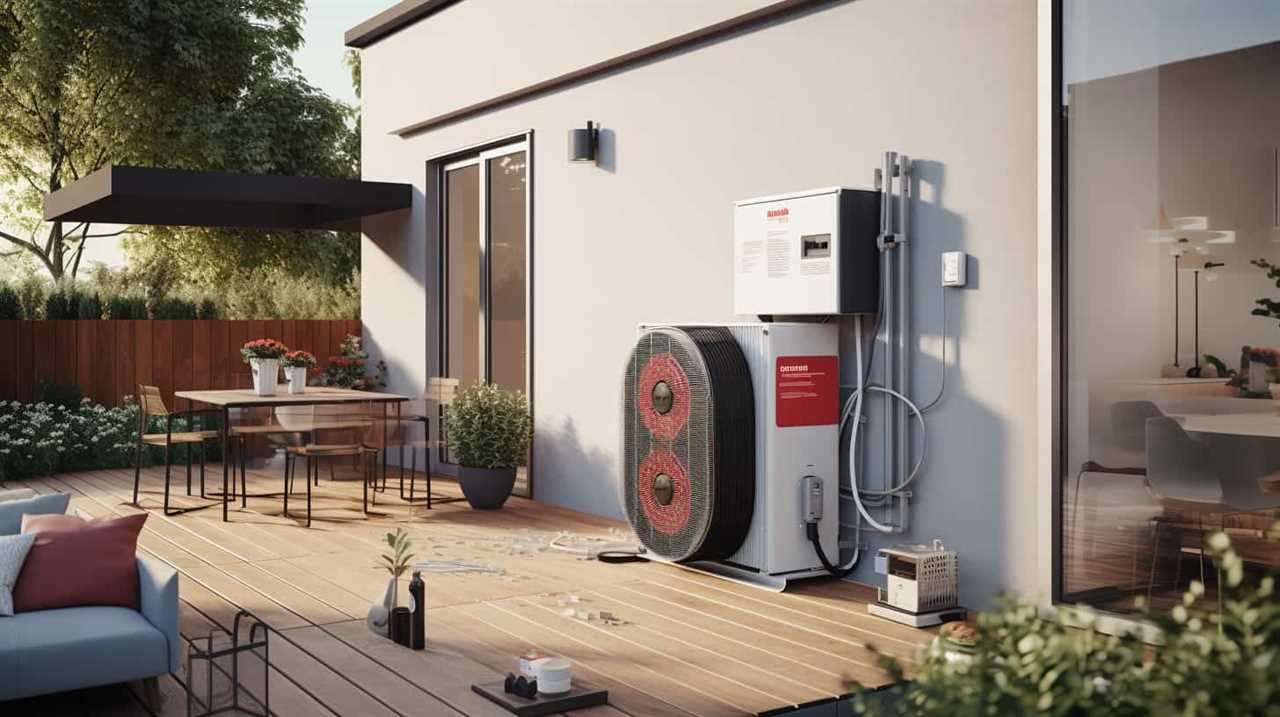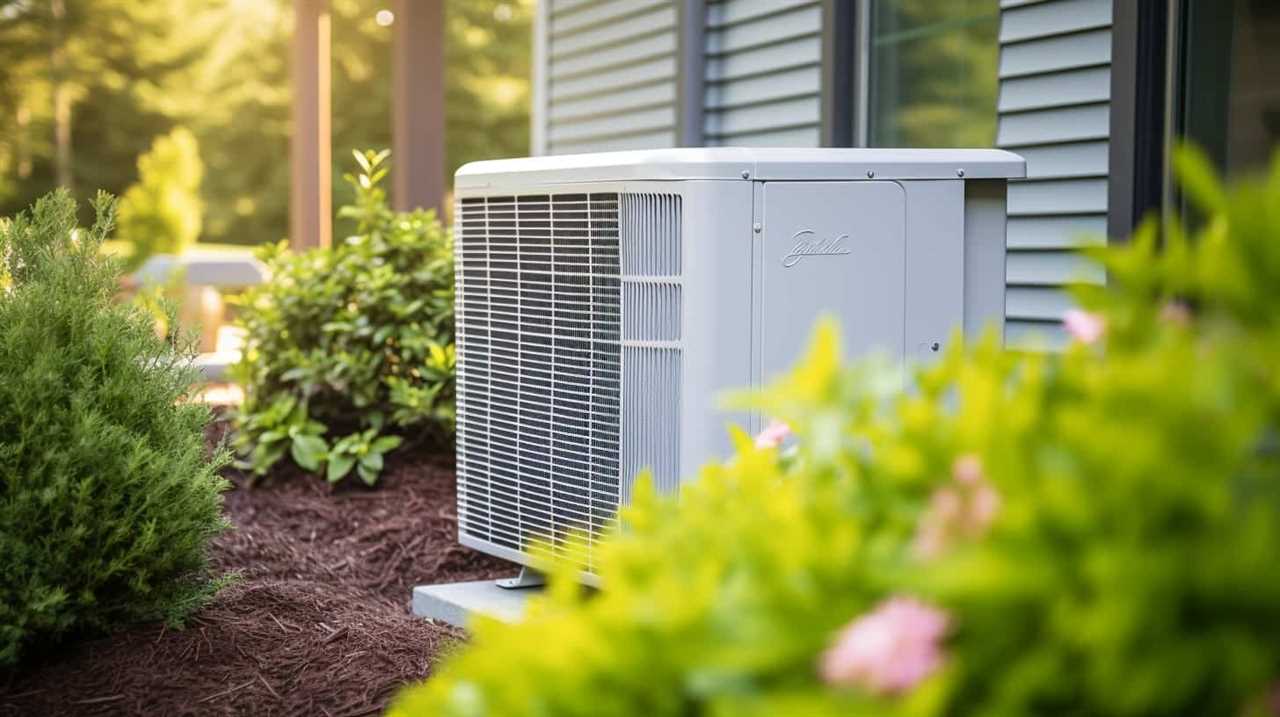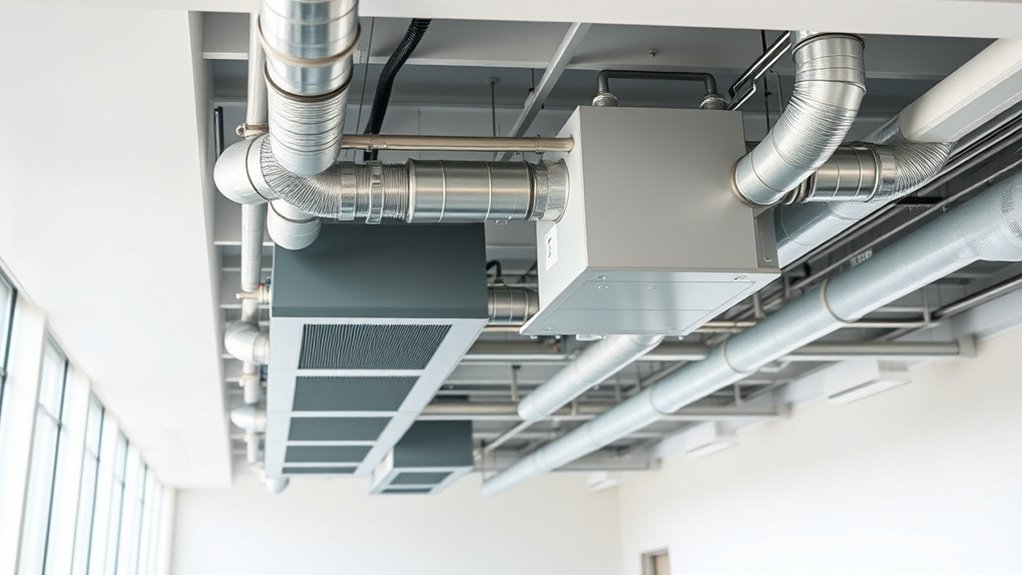

The future of air conditioning is shifting towards Variable Refrigerant Flow systems, which offer greater energy efficiency, flexibility, and precise control. You’ll benefit from smarter operation that adjusts capacity based on real-time needs, reducing energy use and your utility bills. These systems integrate advanced controls, IoT technology, and support renewable energy sources, making your climate control more sustainable and adaptable. Keep exploring to discover how VRF systems are shaping smarter, greener buildings.
Key Takeaways
- VRF systems will become more integrated with IoT and smart building technology for enhanced automation.
- Advances will focus on increased energy efficiency and reduced environmental impact through smarter modulation.
- Future VRF solutions will support seamless integration with renewable energy sources and smart grids.
- Predictive maintenance and real-time system monitoring will improve reliability and lifespan.
- Greater customization and adaptability will enable VRF systems to serve diverse building types and user preferences.
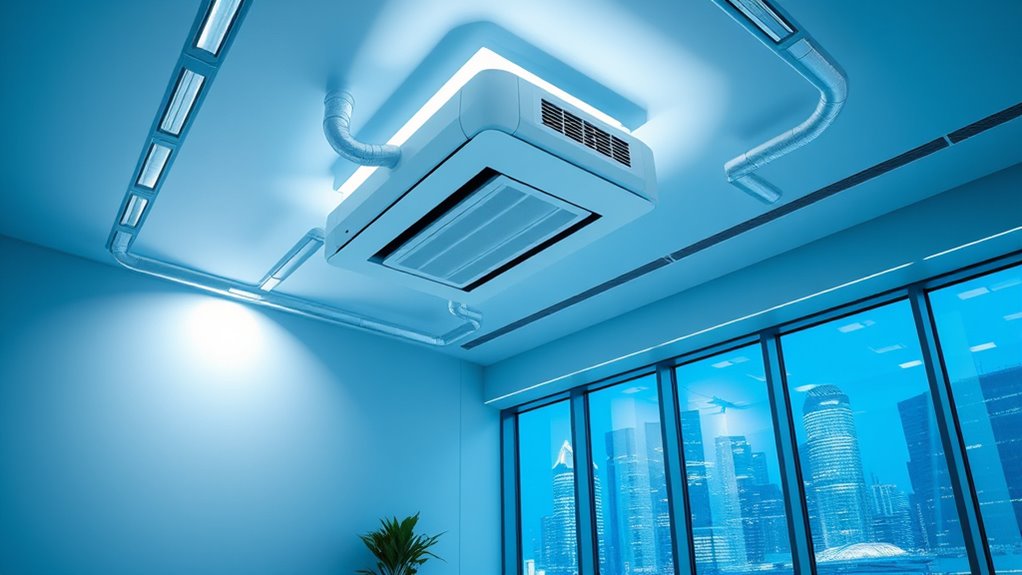
As climate change accelerates and energy efficiency becomes a top priority, the future of air conditioning is shifting toward smarter, greener technologies. One of the most promising advancements is the adoption of Variable Refrigerant Flow (VRF) systems. These systems are designed to optimize energy efficiency by adjusting cooling and heating output based on real-time demand, helping you save money and reduce your carbon footprint. Unlike traditional HVAC units that operate at full capacity regardless of actual needs, VRF systems use sophisticated controls to modulate refrigerant flow to different zones within a building. This smart integration allows for precise temperature control and minimizes energy waste, making VRF systems an ideal choice for modern, eco-conscious spaces.
VRF systems optimize energy use and reduce carbon footprint with smart, adaptable climate control.
With VRF technology, you gain the ability to manage multiple indoor units from a single outdoor compressor, creating a highly flexible and efficient climate control solution. This flexibility means you can customize comfort levels in different rooms or zones, ensuring everyone’s needs are met without overworking the system. The smart integration of sensors, controllers, and IoT connectivity further enhances this adaptability. You can remotely monitor and adjust settings via smartphone apps or building management systems, giving you complete control over your energy consumption. This level of automation not only improves comfort but also reduces operational costs over the long term.
Energy efficiency is at the core of VRF systems, thanks to their ability to modulate compressor speed and refrigerant flow dynamically. This means they consume less electricity compared to traditional systems, especially during partial load conditions when full capacity isn’t needed. As a result, you’ll see lower utility bills and a smaller environmental impact. Additionally, VRF systems often incorporate inverter technology, which helps maintain consistent temperature levels while operating at variable speeds—further boosting efficiency. Because they are designed to operate efficiently across a wide range of conditions, VRF systems are well-suited to diverse building types, from commercial offices to residential complexes.
The integration of smart technology in VRF systems also enhances maintenance and troubleshooting. You receive real-time alerts about system performance and potential issues, allowing you to address problems proactively. This predictive maintenance reduces downtime and extends the lifespan of your equipment. As the technology continues to evolve, expect even more seamless integration with renewable energy sources and smart grid systems, further pushing the boundaries of energy efficiency and sustainability.

The 07K506 VRF air-conditioning system design and construction and installation
As an affiliate, we earn on qualifying purchases.
As an affiliate, we earn on qualifying purchases.
Frequently Asked Questions
How Do VRF Systems Compare in Initial Installation Costs?
You’ll find that VRF systems typically have higher initial installation costs compared to traditional HVAC setups. The cost comparison stems from installation complexity, as VRF systems require more intricate piping and wiring, along with specialized equipment. While the upfront expense is greater, these systems often save money in the long run through improved energy efficiency. So, consider the long-term benefits against the initial investment when evaluating VRF system installation.
Are VRF Systems Suitable for Residential vs. Commercial Buildings?
You’ll find VRF systems are like a superhero for commercial buildings, offering unmatched zoning flexibility and energy efficiency, making them perfect for large-scale spaces. For residential use, they work well if you want tailored comfort and lower energy bills, but the installation costs and complexity might be overkill for smaller homes. So, yes, VRF systems suit both, but their superpowers shine brightest in commercial settings.
What Maintenance Is Required for VRF Air Conditioning Units?
You need to regularly check your VRF system for refrigerant leaks and guarantee they’re repaired promptly to maintain efficiency. Change filters as recommended, usually every few months, to keep airflow ideal. Keep an eye on the outdoor units for debris buildup and clean them as needed. Routine inspections by a professional can help identify issues early, preventing costly repairs and ensuring your VRF system runs smoothly.
Can VRF Systems Integrate With Smart Home Technology?
Yes, VRF systems can integrate with smart home technology, offering smart home compatibility and seamless automation integration. You can control your VRF units remotely via apps or voice commands, making it easier to set schedules, adjust temperatures, and optimize energy efficiency. Make certain your system is compatible with your smart home platform and consult a professional for proper setup, so you enjoy a fully integrated, convenient climate control experience.
What Are the Environmental Impacts of VRF Refrigerants?
You might worry about VRF refrigerants harming the environment, but they actually have lower global warming potential compared to traditional systems. While refrigerant leakage can occur, modern VRF systems are designed to minimize this risk, reducing environmental impact. By choosing efficient, well-maintained units, you help cut down on emissions and protect the planet, making VRF systems a more eco-friendly option for cooling and heating needs.

AIRZONE – Aidoo WiFi Control for Air Conditioning – Compatible with GREE VRF AZAI6WSCGR2 – Remote AC Control and App Scheduling – Works with Google Home and Alexa
SMART CONTROL FOR GREE VRF: Turn your GREE VRF into a smart device with Aidoo AZAI6WSCGR2 by Airzone….
As an affiliate, we earn on qualifying purchases.
As an affiliate, we earn on qualifying purchases.
Conclusion
As you step into the future, imagine a world where VRF systems are like the gentle breeze of a summer evening—adaptive, efficient, and perfectly in tune with your needs. Just as a skilled conductor guides an orchestra to harmony, these systems orchestrate comfort with precision. Embracing VRF technology means embracing sustainability and innovation, shaping a cooler, greener world. The path ahead is clear, and the future of air conditioning is ready to unfold before your eyes.

Apollo SCD40 NDIR CO2 Sensor Breakout Board with Stemma QT Connectors – Carbon Dioxide, Temperature & Humidity Sensor Module for Indoor Air Quality, Smart Home, HVAC, Environmental & IoT Projects
VERSATILE CONNECTIVITY: Features two STEMMA QT connectors for plug-and-play connections and standard header holes for soldering and breadboard…
As an affiliate, we earn on qualifying purchases.
As an affiliate, we earn on qualifying purchases.
predictive maintenance VRF
As an affiliate, we earn on qualifying purchases.
As an affiliate, we earn on qualifying purchases.