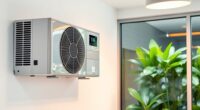
Heat pumps keep your indoor environment comfortable by automatically adjusting heating, cooling, and humidity levels based on your settings and outside conditions. They monitor your space constantly and respond to changes, preventing temperature swings and maintaining steady comfort. Zoning systems allow you to customize temperatures in different areas, while smart controls make it easy to fine-tune settings. To discover how these features work together to create a cozy, energy-efficient home, explore further.
Key Takeaways
- Heat pumps automatically adjust heating and cooling output based on indoor conditions for consistent comfort.
- Zoning systems enable personalized temperature control in different areas of a building.
- They monitor outdoor weather and indoor humidity to optimize performance and maintain ideal conditions.
- Smart controls allow users to set and modify temperature and humidity levels remotely.
- Continuous system adjustments prevent temperature swings, ensuring a stable and comfortable indoor environment.

Heat pumps are transforming indoor comfort by providing efficient heating and cooling in a single system. Instead of juggling multiple units or systems, you get a streamlined solution that adapts to your needs seamlessly. One way heat pumps achieve this is through zoning systems, which allow you to customize the temperature in different areas of your home. With zoning, you no longer have to heat or cool unused spaces, saving energy and ensuring each room maintains the perfect temperature. Imagine being able to set the living room to a cozy 72°F while keeping the bedrooms cooler or warmer, depending on your preference. This targeted approach not only boosts comfort but also reduces your energy bills by avoiding unnecessary heating or cooling.
Beyond temperature control, heat pumps excel at humidity control, which is essential for maintaining a comfortable indoor environment. High humidity can make a space feel stuffy and damp, while low humidity can cause dryness and discomfort. Your heat pump works to balance moisture levels automatically, removing excess humidity during the summer and adding moisture during colder months if needed. This regulation helps prevent mold growth, allergens, and respiratory issues, making your home healthier. When the air feels just right—neither too humid nor too dry—you experience a more comfortable space that promotes well-being and relaxation.
The active operation of a heat pump means it constantly monitors your indoor environment, adjusting its output to keep temperatures steady. Its intelligent system detects fluctuations caused by outdoor weather changes or daily activities, then responds promptly to maintain your desired settings. This responsiveness ensures that you don’t experience sudden temperature swings, keeping your environment consistently comfortable. Plus, because heat pumps are highly efficient, they use less energy to achieve these adjustments, which benefits both your wallet and the environment.
Additionally, some advanced heat pump models come equipped with smart controls, allowing you to customize zoning and humidity settings from your phone or a central thermostat. This level of control gives you the flexibility to fine-tune your home’s climate with ease, whether you’re adjusting for seasonal changes or personal preferences. As a result, you gain greater comfort, energy savings, and convenience—all from a single, integrated system. To conclude, heat pumps maintain comfortable indoor temperatures through sophisticated zoning systems and humidity control, ensuring every part of your home feels just right. Their active, responsive operation makes it easy to enjoy a cozy, healthy environment year-round. GMC tuning

30 Pint Dehumidifier for Basement, 2500 Sq. Ft Dehumidifiers for Home with Drain Hose, 3 Modes, Smart Humidity Control, 24H Timer, 0.52 Gal Water Tank, for Whole House, Bedroom, Bathroom, Garage, Rv
Powerful 30-Pint Moisture Removal for Spaces up to 2500 Sq. Ft: High humidity can make rooms feel damp,...
As an affiliate, we earn on qualifying purchases.
Frequently Asked Questions
How Energy-Efficient Are Heat Pumps Compared to Traditional HVAC Systems?
Heat pumps are more energy-efficient than traditional HVAC systems, leading to significant cost savings on your energy bills. They transfer heat rather than generate it, consuming less electricity. Additionally, their lower energy use reduces environmental impact by decreasing greenhouse gas emissions. You’ll notice both financial benefits and a smaller carbon footprint over time, making heat pumps a smart, eco-friendly choice for maintaining comfortable indoor temperatures.
Can Heat Pumps Effectively Operate in Extremely Cold Weather?
Yes, heat pumps can effectively operate in extremely cold weather thanks to frost resilience and cold climate adaptation features. Modern heat pumps are designed to extract heat even at low temperatures, ensuring efficient performance. Advanced models use enhanced refrigerants and defrost cycles that prevent frost buildup, allowing you to stay warm without sacrificing energy efficiency. With proper installation and maintenance, they remain reliable and effective in harsh winter conditions.
What Maintenance Is Required to Keep a Heat Pump Running Efficiently?
Think of your heat pump like a vintage radio needing tuning. You should regularly replace filters to keep airflow clean and efficient. Additionally, schedule refrigerant checks to ensure the system has the right level of coolant. Regular maintenance prevents breakdowns, improves energy efficiency, and extends the lifespan of your heat pump. Keep up with these simple tasks, and your system will run smoothly through cold and warm seasons alike.
Are Heat Pumps Suitable for Both Heating and Cooling All Home Types?
Yes, heat pumps suit most home types, offering zoning flexibility and retrofit options. They efficiently heat and cool your space, adapting to your needs. Whether you have a small apartment or a large house, heat pumps provide a versatile solution. Their ability to be integrated into existing systems makes them ideal for upgrades, ensuring comfortable indoor temperatures year-round without major overhauls.
How Long Does a Typical Heat Pump Installation Process Take?
Imagine your home wrapped in cozy warmth or invigorating coolness; a typical heat pump installation takes about one to two days. You’ll want to contemplate the installation timeline, which includes site assessment, system setup, and the permitting process. While this can vary based on your home’s complexity, most installations are quick, efficient, and cause minimal disruption, so you can enjoy the comfort sooner.

Waykar 158 Pints Crawl Space Dehumidifier with Remote Control and Pump, Dual Duct HVAC Commercial Whole-House Dehumidifier for Basement, Industry Water Damage Unit - 5-Year Quality Coverage
【158 Pint Crawl Space Dehumidifier】The Waykar whole-house dehumidifier extracts up to 158 pints of water per day (under...
As an affiliate, we earn on qualifying purchases.
Conclusion
Did you know heat pumps can save you up to 50% on energy costs? By efficiently heating and cooling your home, they keep your indoor environment consistently comfortable year-round. With their ability to work in extreme temperatures, you won’t have to worry about chilly winters or scorching summers. Investing in a heat pump not only enhances your comfort but also benefits your wallet and the environment. Stay cozy all year long with this smart, energy-efficient solution.

ALORAIR Whole House Dehumidifier, 90 PPD Commercial Grade Whole Home Dehumidifiers for Garages, Water Damage Restoration, 2300 Sq.Ft dehumidifiers for Crawl Space
Energy Efficient Whole House Dehumidifier: 90 pints per day at AHAM condition, 70 Pint at DOE, up to...
As an affiliate, we earn on qualifying purchases.

5000 Sq.Ft Energy Star Most Efficient 2024 Dehumidifier,DECIUU Max 100 Pint Dehumidifier for Basement with Drain Hose,Intelligent Humidity Control for Home Bathroom Garage Bedroom
Most Efficient 2024 Energy Star Dehumidifier: Tired of battling stubborn humidity? Our ENERGY STAR certified dehumidifier removes 70...
As an affiliate, we earn on qualifying purchases.