

To supplement your heat pump, use passive climate control techniques like thermal mass and natural ventilation. Building with materials such as concrete or stone helps absorb and release heat gradually, stabilizing indoor temperatures. Open windows and vents promote cross-ventilation, cooling your space naturally. Combining these strategies reduces energy use and enhances comfort. Their integration can make a significant difference—keep exploring how these methods work together for even better results.
Key Takeaways
- Incorporate thermal mass materials like concrete or brick to store and gradually release heat, stabilizing indoor temperatures.
- Use natural ventilation strategies such as cross-ventilation and stack effect to enhance airflow and reduce cooling loads.
- Implement shading devices and optimal building orientation to minimize heat gain and support passive cooling efforts.
- Combine passive strategies with insulation to improve overall thermal performance and reduce reliance on heat pumps.
- Design for environmental integration, leveraging prevailing winds and outdoor conditions to naturally regulate indoor climate.
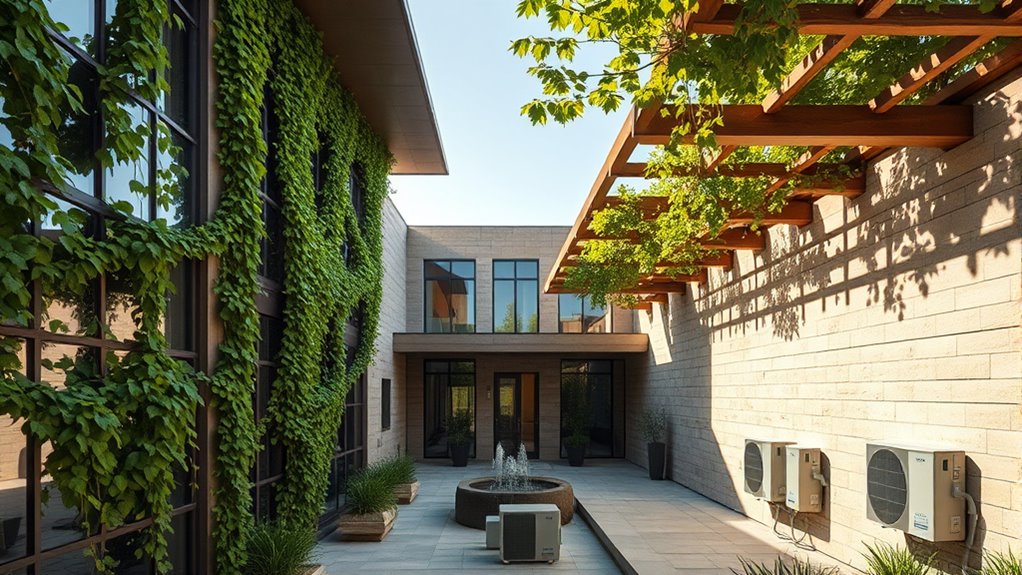
Have you ever wondered how buildings stay comfortable without relying on energy-intensive systems? The answer often lies in passive climate control techniques that harness natural forces and design strategies. Two key elements in this approach are thermal mass and natural ventilation, both of which can considerably reduce the need for active heating and cooling.
Thermal mass refers to the ability of a material to absorb, store, and release heat slowly. When you incorporate materials like concrete, brick, or stone into your building’s design, they act as thermal batteries, evening out temperature fluctuations. During the day, these materials absorb excess heat as the sun shines, preventing indoor temperatures from rising too quickly. At night, when outdoor temperatures drop, the stored heat is gradually released, maintaining a more consistent indoor climate. This process minimizes the reliance on mechanical heating or cooling systems, especially in climates with substantial temperature swings. By thoughtfully selecting and positioning thermal mass, you can create a stable indoor environment that feels comfortable year-round.
Natural ventilation, on the other hand, involves designing your building to maximize airflow without mechanical aid. It’s about harnessing prevailing winds, stack effect, and architectural features to promote air movement. When you open windows, vents, or strategically place openings, you allow fresh air to flow through the space, flushing out stale indoor air and reducing indoor temperatures naturally. Properly designed cross-ventilation lets cool breezes enter while warm, stale air exits, creating a cooling effect that can often negate the need for air conditioning. Additionally, stack ventilation uses differences in indoor and outdoor air temperatures to induce airflow, pulling cooler air in from lower openings and pushing warmer air out through higher vents. By integrating natural ventilation into your building’s design, you greatly improve indoor air quality and comfort without consuming energy.
Both thermal mass and natural ventilation work best when combined with other passive strategies, such as shading devices, appropriate building orientation, and insulation. These techniques work together to reduce the demand on heat pumps, making your overall energy consumption more efficient. Think of thermal mass as the building’s heat buffer and natural ventilation as its air purifier, both operating passively and continuously. Incorporating passive climate control techniques can significantly enhance your building’s sustainability and resilience by leveraging natural forces to maintain a comfortable environment. When used correctly, they can help you achieve a comfortable indoor environment that responds intelligently to the changing outdoor conditions. This approach not only cuts energy bills but also reduces your carbon footprint, making your home or building more sustainable and resilient over time.

Thermal Stresses and Temperature Control of Mass Concrete
As an affiliate, we earn on qualifying purchases.
As an affiliate, we earn on qualifying purchases.
Frequently Asked Questions
Can Passive Techniques Fully Replace Heat Pumps?
Passive techniques can’t fully replace heat pumps, but they considerably reduce energy use. You can use solar shading to prevent heat gain in summer and maximize it in winter, while thermal mass absorbs and releases heat to stabilize indoor temperatures. These methods work best alongside heat pumps, helping you save energy and cut costs. Relying solely on passive techniques isn’t enough for year-round comfort, but they’re excellent supplementary strategies.
What Are the Initial Costs for Passive Climate Control?
Initial costs for passive climate control depend on your home’s needs, but you’ll likely spend on insulation improvements and solar shading. Upgrading insulation can range from a few hundred to several thousand dollars, depending on size and materials. Solar shading options like awnings or reflective window films typically cost a few hundred dollars. While these investments can be significant upfront, they reduce energy bills long-term and improve comfort without ongoing expenses.
How Effective Are Passive Methods in Extreme Climates?
Think of passive methods like a sturdy shield against the elements. In extreme climates, thermal insulation acts as a warm blanket, retaining heat during cold spells, while natural ventilation opens like a gust of fresh air, cooling when it’s hot. These techniques can be quite effective, but you’ll need to tailor them carefully—adding extra layers or strategic openings—to guarantee comfort when weather gets harsh.
Do Passive Techniques Require Regular Maintenance?
Passive techniques generally require minimal maintenance, but you should follow a regular maintenance schedule to guarantee long-term durability. For example, cleaning vents or shading devices prevents blockages and damage, extending their effectiveness. By performing simple upkeep, you help these methods work efficiently over time, reducing energy costs and reliance on active systems. Proper maintenance keeps your passive techniques reliable and durable, making them a smart, long-lasting addition to your climate control strategy.
Can Passive Strategies Be Combined With Existing HVAC Systems?
Yes, you can combine passive strategies with existing HVAC systems. You might use thermal mass to absorb and release heat, reducing reliance on your heater or AC. Natural ventilation allows fresh air and cooling when needed, lowering energy costs. Integrating these passive methods helps optimize comfort and efficiency, making your system more sustainable. Just guarantee proper design so passive techniques complement your HVAC setup effectively.

Weiworld 4 Inch Square Passive Air Vent, Adjustable Airflow Ventilation Kit with Extendable Duct – Natural Fresh Air Exchange for Home, Bedroom, Attic (No Motor)
Passive Fresh Air Ventilation – Save energy and cost, because it does not need electricity and has no…
As an affiliate, we earn on qualifying purchases.
As an affiliate, we earn on qualifying purchases.
Conclusion
By combining passive climate control techniques with heat pumps, you can reduce energy consumption markedly—up to 30% according to recent studies. This means not only saving money on your bills but also lowering your carbon footprint. Implementing simple strategies like natural ventilation and shading can make a big difference in maintaining comfortable indoor temperatures. So, start integrating these passive methods today to create a more sustainable and efficient heating and cooling system for your home.

Assessing the Performance of Passive Houses in Mediterranean Climate Regions
As an affiliate, we earn on qualifying purchases.
As an affiliate, we earn on qualifying purchases.

Mealworm Breeding Kit – 4-Layer Self-Sifting Farm, Micro-Mesh Lifecycle Bin, Easy-Harvest Drawer System, Ventilated Reptile Food Colony, Compact Indoor Habitat | for Bearded Dragon
Sustainable Cleaning Solution: This mealworm breeding kit incor porates a multi-layer design and mesh filter to separate waste…
As an affiliate, we earn on qualifying purchases.
As an affiliate, we earn on qualifying purchases.