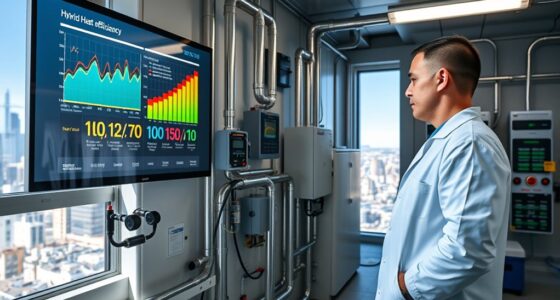
When comparing air-source and geothermal heat pumps, you’ll find that air-source systems are cheaper to install upfront and easier to set up, but they tend to cost more to maintain over time. Geothermal units have higher initial costs due to underground installation but typically last longer and save money on energy and repairs in the long run. If you’d like to understand how these factors impact your budget and comfort, there’s more to explore.
Key Takeaways
- Air-source heat pumps have lower upfront installation costs due to simpler setup requirements.
- Geothermal systems require higher initial investment but offer lower long-term energy and maintenance expenses.
- Maintenance costs are generally higher for air-source units because of outdoor exposure; geothermal systems are more protected.
- Geothermal systems last longer and tend to be more durable, reducing replacement costs over time.
- Overall, air-source systems provide quicker returns, while geothermal offers greater savings in energy and maintenance over its lifespan.
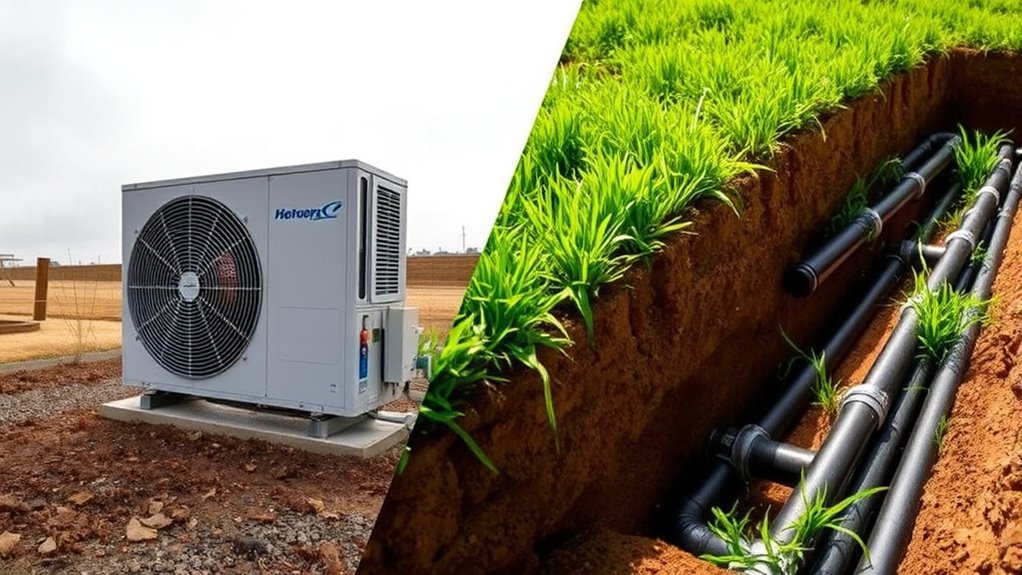
When choosing a heating and cooling system, understanding the cost differences between air-source and geothermal heat pumps is essential. One of your primary considerations will be the initial installation costs. Air-source heat pumps are generally more affordable upfront because they are simpler to install. They typically require less excavation and fewer specialized components, which keeps installation costs lower. On the other hand, geothermal heat pumps involve installing underground loops or wells, making the setup more complex and time-consuming. This results in higher installation expenses, often several times more than air-source systems. While the initial investment for a geothermal system can seem steep, many homeowners find that the long-term savings offset the upfront costs.
Beyond installation, maintenance expenses also markedly influence your overall costs. Air-source heat pumps tend to have higher ongoing maintenance needs because they are exposed to outdoor elements like dust, debris, and weather changes. Over time, components such as filters, coils, and fans may require regular servicing or replacement, adding to your expenses. Geothermal systems, in comparison, are mostly located underground or within a building, shielded from weather conditions. This protective environment generally leads to lower maintenance costs. You might still need periodic checks of the underground loops or pumps, but overall, maintenance expenses tend to be lower for geothermal heat pumps over their lifespan.
Maintenance costs are generally lower for geothermal systems due to their protected underground or indoor placement.
Additionally, advances in predictive analytics and monitoring technology can help optimize the performance of both systems, potentially reducing costs further. When evaluating these systems, consider that the higher initial costs of geothermal heat pumps are often balanced out by their lower operating and maintenance expenses. They tend to be more durable, with underground components that typically last for decades, reducing long-term repair and replacement costs. Conversely, air-source heat pumps offer a quicker return on investment due to their lower installation costs, but you should be prepared for potentially higher maintenance and energy bills over time, especially in extreme weather conditions.
Ultimately, your decision hinges on weighing these upfront expenses against long-term savings. If you’re looking for a more affordable and quicker installation, an air-source heat pump might suit your needs. However, if you want a system with lower maintenance costs and greater energy efficiency in the long run, investing in a geothermal heat pump could be the smarter choice. Understanding these cost differences helps you make an informed decision that aligns with your budget and long-term comfort goals.

From Zero To Heat Pump Hero: Maximise Comfort and Efficiency: Your Guide to Understanding Your Air Source Heat Pump
As an affiliate, we earn on qualifying purchases.
As an affiliate, we earn on qualifying purchases.
Frequently Asked Questions
How Long Does It Take to Recoup the Initial Investment?
You’ll typically recoup your initial investment in a geothermal heat pump within 5 to 10 years, depending on your local energy costs and usage. The payback period varies based on factors like installation costs and climate. Although geothermal systems cost more upfront, they usually save you money long-term through lower energy bills. With proper maintenance, you can enjoy significant savings and a quicker return on your investment.
Are Maintenance Costs Different Between the Two Systems?
You might be surprised, but maintenance costs differ more than you’d expect. Air-source systems usually require more frequent upkeep due to outdoor components exposed to weather. Meanwhile, geothermal heat pumps tend to have lower maintenance costs thanks to their underground installation, which also boosts system longevity. So, if you’re looking for a system with fewer surprises and longer-lasting performance, geothermal options could be the smarter choice.
Which System Is More Environmentally Friendly Long-Term?
You’ll find geothermal heat pumps more environmentally friendly long-term because they utilize renewable energy from the ground, markedly reducing your carbon footprint. Unlike air-source systems, geothermal units operate with less energy and emit fewer greenhouse gases. Their efficiency means lower emissions over time, making them a sustainable choice. By investing in geothermal, you’re supporting cleaner energy use, helping to combat climate change while enjoying consistent, eco-friendly heating and cooling for years to come.
How Do Local Climate Conditions Affect System Efficiency?
You might be surprised how climate variability and seasonal fluctuations impact your system’s efficiency. In colder climates, air-source heat pumps struggle to keep up, losing efficiency during harsh winters. Conversely, geothermal systems remain stable regardless of weather, thanks to consistent underground temperatures. Your local climate directly influences performance — so, choosing the right system means understanding how seasonal changes can either boost or hinder efficiency.
Can Existing Ductwork Support a Geothermal Heat Pump?
Your existing ductwork might support a geothermal heat pump, but duct compatibility is essential. You need to check if your ducts are properly sized and sealed; otherwise, retrofit challenges could arise. If your ducts are incompatible or outdated, you might need to upgrade or modify them, which can increase installation costs. Consulting an HVAC professional can help determine if your current duct system is suitable for a geothermal system.
Geothermal Heat Pump Systems (Green Energy and Technology)
As an affiliate, we earn on qualifying purchases.
As an affiliate, we earn on qualifying purchases.
Conclusion
So, after all that, it’s funny how the cheaper upfront air-source heat pumps end up costing you more in the long run, isn’t it? While geothermal systems seem pricey at first, they often save you money and hassle over time. You’d think choosing the cheaper option would be smarter, but sometimes, investing a little more upfront actually pays off in comfort and savings. Who knew the real winner was patience and a bit of irony?

VIVOHOME 110V 1/3 HP 4CFM Single Stage Rotary Vane Air Vacuum Pump and R134a AC Manifold Gauge Set Kit with Leak Detector Carry Bag for HVAC Air Conditioning Refrigeration Recharging ETL Listed
HIGH-PERFORMANCE 4 CFM VACUUM PUMP: Single-stage rotary vane pump delivers fast, deep evacuation for automotive and home HVAC…
As an affiliate, we earn on qualifying purchases.
As an affiliate, we earn on qualifying purchases.

Sediment Buster – Water Heater Tool UL Verified V699054 – Flushes, Cleans, Drains, Breaks Up Sediment Clogs from Electric or Gas Water Heaters – Easy to Use
UL Verified V699054 for heat & pressure
As an affiliate, we earn on qualifying purchases.
As an affiliate, we earn on qualifying purchases.