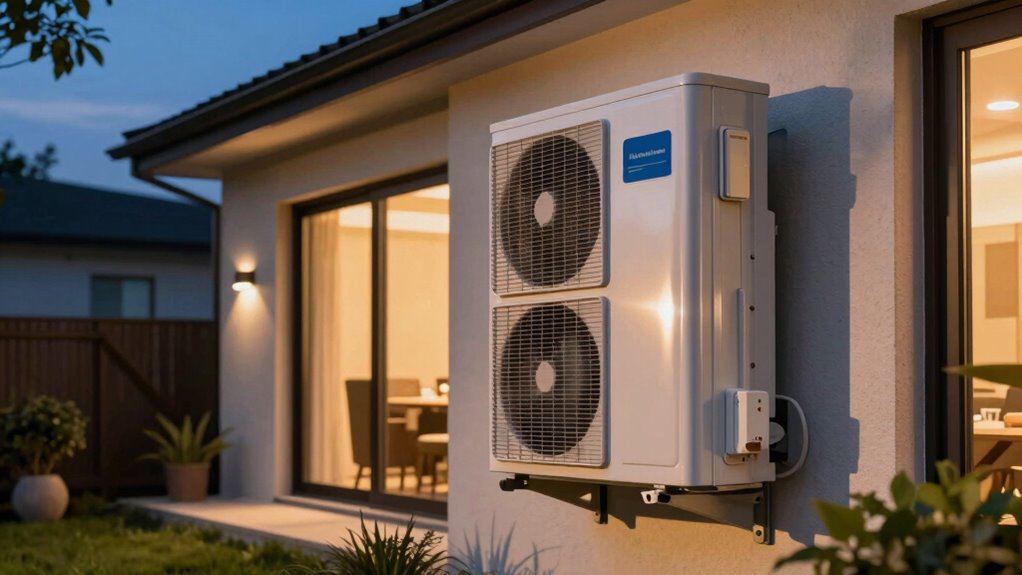
Installing a heat pump in your rental property can definitely save you money over time. While the upfront costs range from $3,000 to $8,000, these investments can be offset by energy savings of 30% or more, reducing monthly bills by $60 or more. Better efficiency and incentives make it worth considering. With proper insulation and location factors in mind, you’ll see long-term benefits. Keep exploring to learn how to maximize these savings even further.
Key Takeaways
- Heat pumps offer energy savings of 30% or more, reducing monthly utility bills significantly over time.
- Higher upfront costs can be offset by long-term savings and available rebates or incentives.
- Proper insulation and passive design enhance efficiency, increasing cost-effectiveness in rental properties.
- Savings depend on local climate, energy rates, and property specifics, influencing overall financial benefits.
- Long-term reductions in energy costs can improve property value and attract tenants.

Are you looking for ways to cut costs on your rental property’s energy bills? Installing a heat pump could be a smart move, but it’s essential to understand whether the savings outweigh the initial investment. The key lies in energy efficiency and how much you’re willing to spend upfront. While heat pumps tend to have higher installation costs compared to traditional heating and cooling systems, their long-term savings can be significant. They use electricity more efficiently, providing both heating and cooling from a single unit, which can reduce your energy consumption and monthly bills.
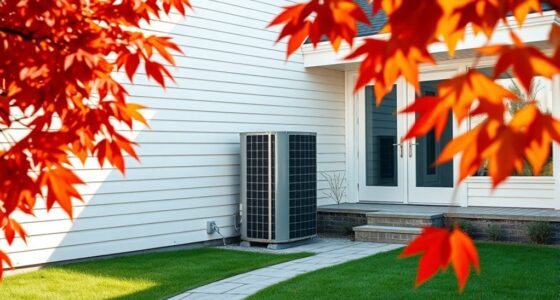
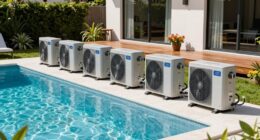
Installing a heat pump can save you money long-term with efficient heating and cooling from a single unit.
When considering these systems, you’ll want to evaluate the installation costs carefully. Heat pumps are more expensive initially, often costing between $3,000 to $8,000 depending on the size and type. However, many property owners find that the energy efficiency of heat pumps compensates for this upfront expense over time. Because they transfer heat rather than generate it, they can deliver up to three times more energy than they consume, leading to lower utility bills. This efficiency is particularly advantageous if your rental property is located in moderate climates, where the heat pump can operate most effectively year-round.
The math behind potential savings is compelling. For example, if your current heating system costs $200 a month in energy bills, switching to a heat pump with a high SEER (Seasonal Energy Efficiency Ratio) and HSPF (Heating Seasonal Performance Factor) rating could cut that cost by 30% or more. That’s $60 or more saved every month, translating into hundreds of dollars annually. Over a decade, these savings add up, making the initial installation costs more palatable. Plus, many regions offer rebates or incentives for installing energy-efficient systems, further reducing your upfront costs.
Keep in mind that the actual savings depend on your property’s size, insulation quality, and local energy rates. Proper insulation and sealing can boost overall energy efficiency, making your heat pump work less hard and saving you even more money. Additionally, understanding the Free Floating concept can provide insights into how natural landscaping and design choices can further enhance energy efficiency and reduce reliance on mechanical systems. A well-designed landscape can serve as a form of passive solar design, helping to improve overall home comfort and reduce heating and cooling needs. Incorporating energy-efficient upgrades can also complement your heat pump investment and maximize savings.
Furthermore, consulting with reputable providers who specialize in Gold IRA markets can ensure you’re getting the most reliable and cost-effective solutions for your property. In the end, while the initial investment in a heat pump might seem steep, the ongoing savings on energy bills, combined with improved energy efficiency, can make it a worthwhile choice for rental property owners. Just be sure to weigh installation costs against your long-term goals and local climate conditions to see if the math adds up for your specific situation.

My Efficient Electric Home Handbook: How to slash your energy bills, protect your health & save the planet
As an affiliate, we earn on qualifying purchases.
As an affiliate, we earn on qualifying purchases.
Frequently Asked Questions
How Long Does It Take to See Savings After Installing a Heat Pump?
You’ll typically see savings within the first year after installing a heat pump, thanks to improved energy efficiency. As you compare costs, you’ll notice lower utility bills, especially during heating and cooling seasons. Your cost comparison will show that the initial investment pays off quickly, often in just a few months to a year. Keep in mind, the exact timeline depends on your local energy rates and usage patterns.
Are There Tax Incentives for Installing a Heat Pump in Rental Properties?
Yes, you can benefit from tax incentives when installing a heat pump in your rental property. Imagine slashing upfront costs with available tax credits, making the investment more affordable. You might also explore financing options that ease cash flow. These incentives vary by location, so check local and federal programs. Acting now means you’ll start saving on energy bills sooner while taking advantage of money-saving opportunities designed for property owners like you.
How Does the Climate Affect a Heat Pump’s Efficiency and Savings?
Climate greatly impacts your heat pump’s efficiency and savings. In milder climates, your heat pump works more effectively, saving you money and maintaining good indoor air quality. However, in colder weather, it may struggle, increasing noise levels and reducing efficiency, which can cut into your savings. To maximize benefits, consider climate-specific models, and guarantee your unit operates quietly to keep indoor air comfortable without disturbing tenants.
What Maintenance Is Required to Keep the Heat Pump Cost-Effective?
To keep your heat pump cost-effective, you should perform routine inspections and replace filters regularly, about every 1-3 months. These simple maintenance tasks guarantee peak efficiency and prevent costly repairs. Check for any debris or obstructions around the unit, and keep the outdoor coils clean. Proper maintenance not only extends your heat pump’s lifespan but also maintains its energy-saving performance, helping you save money over time.
Can a Heat Pump Replace Both Heating and Cooling Systems Effectively?
Surprisingly, your heat pump can replace both heating and cooling systems effectively. You just need to guarantee HVAC compatibility and factor in installation costs, which can seem high initially. But once installed, it offers year-round comfort and energy savings. While it might seem too good to be true, modern heat pumps are designed to handle both functions efficiently, making them a smart, cost-effective choice for your rental property.

TOSOT 36,000BTU Tri 3 Zone Mini Split Air Conditioner with Heat Pump, 21 SEER2, 230V, Wifi-Enabled Ductless Inverter Split System with 16.4ft Copper Line Set, 12,000+12,000+12,000 BTU, Cosmo Series
Individual Temp. Control: Manage temperatures in three spaces using one 36,000 BTU outdoor unit with three 12,000 BTU…
As an affiliate, we earn on qualifying purchases.
As an affiliate, we earn on qualifying purchases.
Conclusion
So, is a heat pump truly the hero your rental needs? The numbers tell a compelling story: lower energy bills, increased comfort, and a greener footprint. It’s like planting a seed that grows savings year after year. Don’t let the opportunity slip through your fingers—embrace the future of heating. After all, isn’t a smarter, more efficient home the kind of investment that pays dividends in comfort and cash? The choice is clear; the future is warm and wise.

VIVOHOME 110V 1/3 HP 4CFM Single Stage Rotary Vane Air Vacuum Pump and R134a AC Manifold Gauge Set Kit with Leak Detector Carry Bag for HVAC Air Conditioning Refrigeration Recharging ETL Listed
HIGH-PERFORMANCE 4 CFM VACUUM PUMP: Single-stage rotary vane pump delivers fast, deep evacuation for automotive and home HVAC…
As an affiliate, we earn on qualifying purchases.
As an affiliate, we earn on qualifying purchases.

Attic Stairway Insulation Cover – Premium Energy Saving Attic Stairs Door Ladder Insulator Pull Down Tent with Zipper 25 in x 54 in x 11In (Attic Cover)
【Attic Insulation Cover】Attic Door Insulation Cover works during the entire year, hot summers and cold winters; Creates a…
As an affiliate, we earn on qualifying purchases.
As an affiliate, we earn on qualifying purchases.