Switching to a heat pump water heater is a smart move if you’re looking to boost energy efficiency and save money. These units use electricity to move heat rather than generate it directly, which means they consume less power and cut your utility bills. They can be installed in conditioned spaces for better performance and are often eligible for rebates. Knowing the right setup and maintenance tips can maximize their benefits—more details ahead to help you make an informed choice.
Key Takeaways
- Heat pump water heaters move heat using electricity, consuming less energy than traditional models.
- They offer significant long-term cost savings through higher efficiency and utility rebates.
- Proper installation location and ventilation optimize performance and extend lifespan.
- Ensuring your electrical system supports the unit prevents safety issues and maximizes efficiency.
- Regular maintenance maintains efficiency, prolongs lifespan, and sustains energy savings over time.
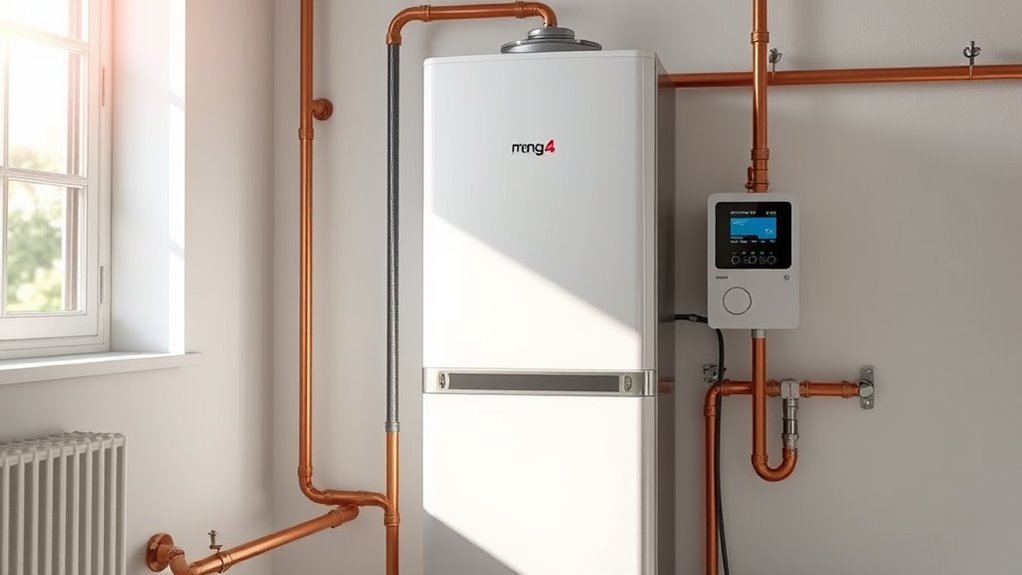
Heat pump water heaters are an energy-efficient alternative to traditional water heating systems, using electricity to move heat instead of generating it directly. This means they consume less power while providing the same amount of hot water, resulting in significant cost savings over time. If you’re considering upgrading, understanding the financial benefits can motivate you to make the switch. While the upfront cost might be higher than conventional models, the savings on your energy bills can offset this investment within a few years. Plus, many utility programs and rebates are available to help reduce the initial purchase price, making the transition even more affordable.
Heat pump water heaters save energy and money by efficiently providing hot water.
When it comes to installation, there are some tips that can guarantee you maximize the efficiency and longevity of your heat pump water heater. First, choose a location with good airflow and away from heat sources like dryers or ovens, as proper ventilation is vital for peak performance. Installing the unit in a conditioned space, such as a garage or utility room, can also improve efficiency, especially in colder climates where heat pump performance might decline. Be sure to check the manufacturer’s specifications for clearance requirements; adequate space around the unit allows for proper air circulation, which is essential for efficient operation.
Another important installation tip is to verify your home’s electrical system can support the water heater’s power needs. You might need to upgrade your circuit breaker or wiring to handle the added load safely. Consulting a professional electrician can prevent potential issues down the line and help you avoid code violations. Additionally, placing the unit close to the point of use can cut down on energy losses associated with long pipe runs, further enhancing cost savings.
Regular maintenance is also key to keeping your heat pump water heater running efficiently. Clean the air filters periodically, and check for any obstructions around the unit. Proper maintenance not only prolongs the lifespan of your investment but also helps sustain those cost-saving benefits over the years. Overall, with careful planning and installation, a heat pump water heater can be a smart, eco-friendly upgrade that cuts your energy bills and reduces your carbon footprint. By choosing the right location, ensuring proper electrical support, and following installation tips, you set yourself up for a more efficient and cost-effective hot water solution that benefits your home and your wallet.
Frequently Asked Questions
How Long Is the Typical Lifespan of a Heat Pump Water Heater?
A heat pump water heater typically lasts 10 to 15 years, depending on durability factors like usage, maintenance, and water quality. You should consider replacement timelines around this period, especially if you notice decreased efficiency or frequent repairs. Regular maintenance can extend its lifespan, but eventually, it’s wise to plan for a replacement to ensure continued energy savings and reliable hot water supply.
Can Heat Pump Water Heaters Be Installed Outdoors?
Yes, you can install heat pump water heaters outdoors, but you need to take into account weather conditions. Outdoor installation is possible if the unit is designed for it and has proper weatherproofing. Extreme cold or exposure to harsh elements may impact performance, so verify the location offers some shelter or insulation. Always check the manufacturer’s guidelines to confirm outdoor suitability and maintain efficiency.
What Maintenance Is Required for Optimal Performance?
Think of your heat pump water heater as a loyal guardian, needing regular care to stay strong. You should perform regular filter maintenance and check refrigerant levels to keep it running efficiently. Keep the area around it clear for proper airflow, and inspect for any leaks or unusual noises. By staying attentive, you guarantee your water heater remains a reliable, energy-efficient hero in your home, saving you money and energy over time.
Are Heat Pump Water Heaters Suitable for Large Households?
Yes, heat pump water heaters are suitable for large households. They efficiently handle higher household capacity, providing enough hot water for multiple users. While they may have higher initial energy consumption compared to traditional models, their energy-efficient operation saves you money over time. Just guarantee the unit’s capacity matches your household needs, and you’ll enjoy reliable hot water with lower energy costs.
How Do Initial Installation Costs Compare to Traditional Water Heaters?
Sure, the initial costs for heat pump water heaters might make you think twice—they’re usually pricier than traditional models. The cost comparison reflects higher purchase prices and more complex installation, which involves specialized setup. While the installation complexity can seem intimidating, the long-term energy savings often outweigh the upfront investment. So, yes, initial costs are higher, but with proper planning, you could save money in the long run.
Conclusion
Switching to a heat pump water heater is like giving your home a gentle nudge toward a more efficient future. While the upfront investment might seem a tad lofty, the long-term savings and eco-friendly benefits make it a wise choice. Think of it as a subtle upgrade that quietly works behind the scenes, helping you save energy and reduce costs without any fuss. Embrace this gentle shift for a smarter, greener home—your wallet and the planet will thank you.