Geothermal heat pumps in commercial buildings use the stable underground temperature to efficiently provide heating and cooling. They operate by circulating water-based fluids through underground loops, reducing energy costs and environmental impact. This technology offers long-term savings, low emissions, and supports sustainability goals. Plus, upgrades in system design make them highly durable and reliable. If you’re interested, exploring further will reveal how these systems can maximize your building’s efficiency and eco-friendliness.
Key Takeaways
- Geothermal heat pumps utilize underground temperature stability to efficiently heat and cool commercial buildings.
- They reduce operational costs and energy consumption through ground source technology.
- Installation involves underground loops, configured horizontally or vertically based on site conditions.
- These systems offer long-term durability, often lasting over 25 years, with environmental benefits like zero onsite emissions.
- Growing awareness and rising energy costs make geothermal heat pumps a sustainable, cost-effective solution for commercial properties.
Geothermal heat pumps are an energy-efficient way to heat and cool your home by tapping into the steady temperature of the earth beneath the surface. When it comes to commercial buildings, this ground source technology becomes even more valuable, offering substantial savings and sustainability benefits. By utilizing the consistent temperature underground, these systems provide a reliable source of heating in winter and cooling in summer, reducing dependence on traditional HVAC methods that rely heavily on fossil fuels or electricity. The core advantage lies in their ability to transfer heat rather than generate it, making them remarkably energy efficient.
In commercial settings, the scale and demand for climate control mean that energy efficiency isn’t just a bonus — it’s a necessity. Ground source technology maximizes efficiency because it leverages the earth’s natural thermal stability. Unlike air-source heat pumps that have to combat external weather extremes, geothermal systems operate in a more stable environment, which translates into lower energy consumption. This stability reduces the workload on the system’s compressor and other components, leading to decreased operational costs over time. As a result, your building can experience significant reductions in energy bills, especially over the long term.
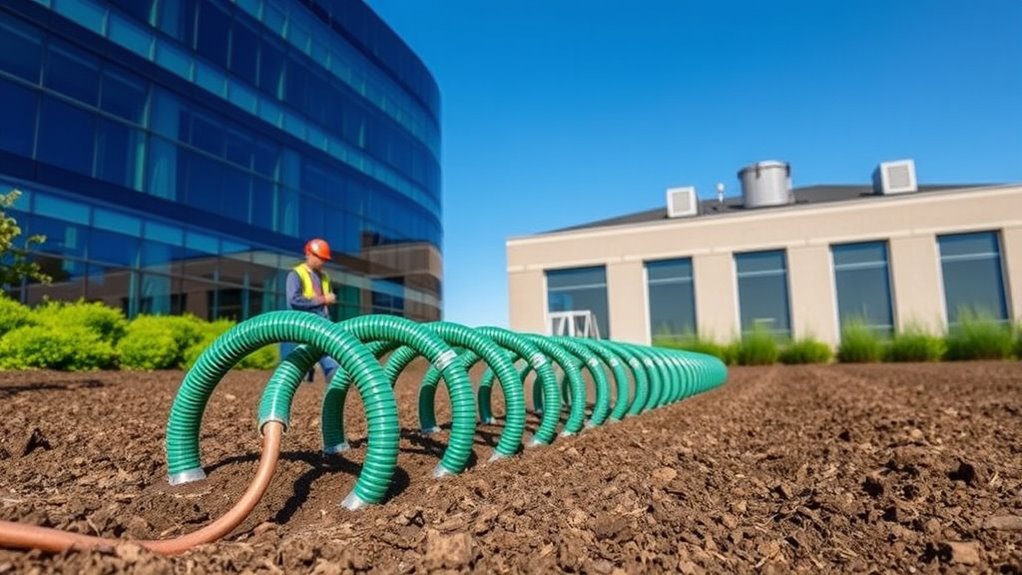
Implementing geothermal heat pumps in a commercial building involves installing a network of underground loops, which serve as the heat exchange medium. These loops can be configured in different ways, such as horizontal or vertical arrays, depending on the available land and soil conditions. Once installed, the system continuously circulates a water-based fluid through these loops, capturing or releasing heat to maintain a comfortable indoor environment. Because ground source technology is highly durable, these systems tend to last much longer than traditional HVAC units — often 25 years or more, with the underground loops capable of lasting even longer. Additionally, the efficiency of these systems is further enhanced by advancements in system design and installation techniques, ensuring optimal performance and longevity.
Beyond energy efficiency, geothermal heat pumps also contribute to a greener footprint for your building. They produce no onsite emissions, reduce reliance on grid electricity, and qualify for various incentives and rebates in many regions. This eco-friendly approach aligns well with sustainability goals and can enhance your building’s reputation. Overall, embracing ground source technology in a commercial setting not only improves operational efficiency but also demonstrates a commitment to environmental responsibility. As energy costs continue to rise and climate consciousness grows, geothermal heat pumps stand out as a smart, forward-thinking investment for any commercial property owner.

Ground Source Heat Pumps: Design of Geothermal Systems for Commercial & Institutional Buildings
As an affiliate, we earn on qualifying purchases.
As an affiliate, we earn on qualifying purchases.
Frequently Asked Questions
What Is the Typical Lifespan of a Geothermal Heat Pump?
A geothermal heat pump typically lasts about 20 to 25 years, thanks to its system longevity and component durability. You can expect the underground loops to last even longer, often 50 years or more, with proper maintenance. Regular inspections and timely repairs help guarantee your system performs efficiently over its lifespan. Investing in quality components can markedly extend the overall durability and reliability of your geothermal system.
How Much Space Is Required for Installation?
You’ll need about 1,000 to 2,500 square feet for installation space, depending on system size. Before installation, a thorough site assessment is essential to determine the right amount of space and suitable soil conditions. This assessment helps identify the best location for ground loops, ensuring efficient system operation. Keep in mind, more space may be required for additional components or future expansion plans.
Are There Government Incentives for Commercial Geothermal Projects?
Think of government incentives as a secret weapon opening financial benefits for your geothermal project. Yes, there are often government incentives available for commercial geothermal projects, helping you reduce upfront costs and boost long-term savings. These incentives can include tax credits, rebates, and grants, making the investment more affordable. By leveraging these programs, you maximize your project’s financial benefits, turning a smart choice into an even smarter one.
What Are the Maintenance Needs for Geothermal Systems?
You need to regularly inspect your geothermal system for corrosion prevention and guarantee fluid filtration is maintained. Change filters as recommended, usually annually, and monitor for any leaks or unusual noises. Routine checks on pumps and valves help prevent breakdowns, while cleaning and flushing the system keep the fluid clean and efficient. Proper maintenance extends your system’s lifespan, maximizes energy savings, and reduces costly repairs over time.
How Does Climate Affect Geothermal Heat Pump Efficiency?
Imagine your geothermal system as a thermometer in your backyard—climate zone and temperature fluctuations greatly influence its efficiency. In stable, moderate climates, it works smoothly, like a well-oiled machine. But in areas with extreme cold or heat, the system has to work harder, similar to a car engine revving in cold weather. Understanding your climate zone helps optimize your system’s performance and energy savings.
horizontal underground loop geothermal heat pump
As an affiliate, we earn on qualifying purchases.
As an affiliate, we earn on qualifying purchases.
Conclusion
By choosing geothermal heat pumps, you’re investing in efficiency, sustainability, and cost savings. You’re reducing your carbon footprint, lowering energy bills, and enhancing building comfort. You’re embracing innovative technology, supporting environmental health, and securing long-term benefits. With geothermal heat pumps, you’re not just making a smart choice – you’re making a difference. So, take action today, harness the Earth’s energy, and lead your commercial building toward a greener, more sustainable future.

Heating and Cooling with Ground-Source Heat Pumps in Cold and Moderate Climates: Fundamentals and Basic Concepts
As an affiliate, we earn on qualifying purchases.
As an affiliate, we earn on qualifying purchases.

The Complete Guide to HVAC Energy Efficiency: Reduce Energy Use, Cut Costs & Improve System Performance (HVAC Books Series)
As an affiliate, we earn on qualifying purchases.
As an affiliate, we earn on qualifying purchases.