To measure COP and EER for geothermal heat pumps, you need to record the heat output and electrical input during typical operating conditions for COP, and cooling capacity versus power consumption for EER. Use precise instruments like watt meters and flow meters, following established standards such as AHRI or ASHRAE. Ensuring controlled environment and consistent testing conditions is vital for accurate results. If you keep exploring, you’ll learn how to optimize your system for peak efficiency.
Key Takeaways
- Measure heat output and electrical input during typical operation using accurate instruments like watt meters and flow meters.
- Follow standardized testing procedures such as AHRI or ASHRAE for consistent and reliable COP and EER measurements.
- Record system performance under controlled conditions, considering outdoor temperatures and load to reflect real-world efficiency.
- Calculate COP by dividing heat delivered by electrical energy consumed; compute EER as BTUs of cooling per watt-hour used.
- Ensure measurements are taken over time to assess performance stability and identify potential efficiency issues.
Understanding how to precisely gauge Coefficient of Performance (COP) and Energy Efficiency Ratio (EER) is essential for evaluating the efficiency of heating and cooling systems. These performance metrics help you determine how well your geothermal heat pumps operate, allowing you to make informed decisions about energy efficiency and cost savings. Knowing how to interpret COP and EER provides a clearer picture of a system’s true capabilities, so you can compare different units and maximize your setup. Accurate measurement of these metrics can lead to significant energy savings and better system performance.
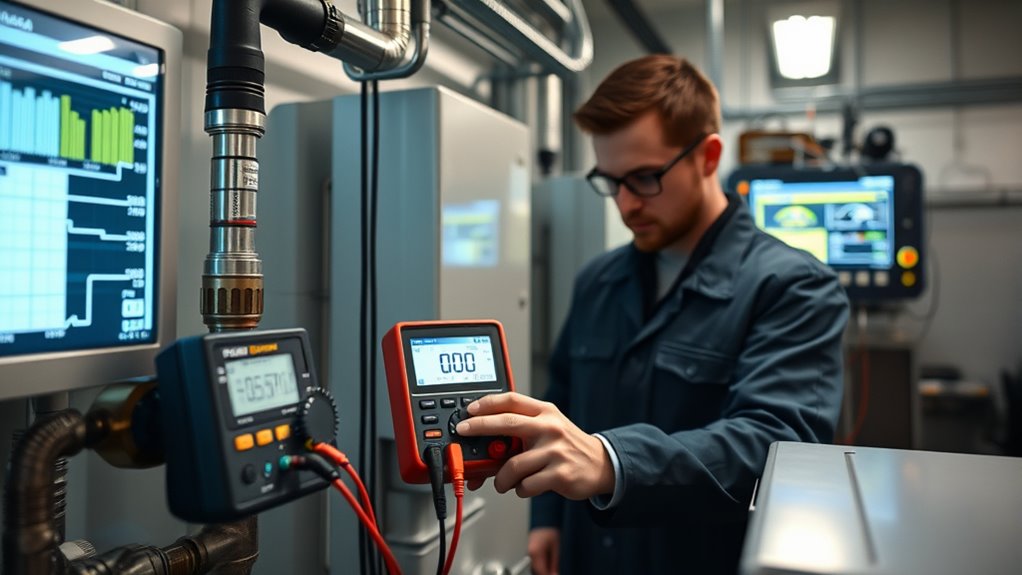
COP measures the ratio of heat output to electrical energy input. If your geothermal heat pump has a COP of 4.0, it means that for every unit of electricity consumed, it produces four units of heat. This metric is most relevant during heating seasons, where higher COP values indicate better energy efficiency. To reliably measure COP, you need to record the actual heat delivered by the system and the electrical energy it consumes under specific operating conditions. This involves using precise instruments like watt meters and flow meters to monitor power consumption and heat transfer rates. Keep in mind that COP varies with outdoor temperatures and system load, so measurements should reflect typical operating conditions for a realistic evaluation.
EER, on the other hand, applies mainly to cooling performance. It calculates the ratio of cooling output (measured in British thermal units or BTUs) to the electrical energy used (in watt-hours). For example, an EER of 16 means your unit produces 16 BTUs of cooling per watt-hour of electricity. To determine EER accurately, you must measure the cooling capacity and energy consumption under controlled conditions, often specified by standards like AHRI or ASHRAE. Proper testing involves running the system at a consistent indoor and outdoor temperature and ensuring stable operational parameters. Monitoring these metrics over time can help you identify whether your geothermal heat pump maintains high energy efficiency throughout the cooling season.
Understanding how to measure and interpret COP and EER is fundamental for evaluating your geothermal heat pump’s performance. These metrics are critical performance indicators that reveal the system’s efficiency and effectiveness, guiding you toward energy savings and maximum operation. When you know how to accurately evaluate these metrics, you can compare different models, identify potential issues, and make improvements to enhance energy efficiency. Additionally, standardized testing procedures ensure consistency and reliability in these measurements. Overall, mastering the measurement of COP and EER empowers you to ensure your geothermal system performs at its best, delivering reliable heating and cooling while minimizing energy costs.
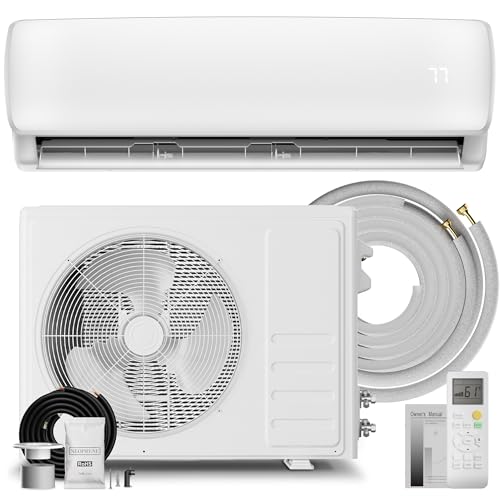
MEPTY 9000BTU Mini Split AC/Heating System, 19 SEER2 Energy Efficient Mini Split Air Conditioner with Heat Pump, 110V Cools Up to 450sq.ft, Ductless Inverter AC Unit with Pre-Charged Condenser
⭐Advanced Energy Saving: Advanced inverter technology with leading 19 SEER2 rating delivers superior performance through ensuring that the...
As an affiliate, we earn on qualifying purchases.
Frequently Asked Questions
How Does Soil Type Affect Geothermal Heat Pump Efficiency?
Soil type critically impacts your geothermal heat pump’s efficiency because higher soil conductivity, like in sandy or gravelly soils, allows better heat transfer, boosting performance. Conversely, clay or rocky soils with low conductivity hinder heat exchange, reducing efficiency. Your installation variability also matters—properly installing loops in ideal soil conditions ensures consistent performance. Understanding these factors helps you maximize your system’s COP and EER.
What Impact Does Climate Have on COP and EER Ratings?
You’ll love how climate variability and seasonal fluctuations play a starring role in your geothermal heat pump’s COP and EER ratings. When winter’s chill hits or summer’s swelter arrives, these ratings can dip or soar, proving that climate truly isn’t just a backdrop but a direct influencer. So, prepare for performance swings, and remember—your heat pump’s efficiency isn’t just about technology, it’s about riding the climate rollercoaster.
Can Geothermal Systems Maintain Performance Over the Long Term?
You can trust that geothermal systems maintain performance over the long term if you guarantee proper ground loop design and refrigerant cycle maintenance. Regular inspections and quality installation help prevent issues like leaks or inefficiencies. A well-designed ground loop offers stable temperature exchange, supporting consistent COP and EER ratings. By prioritizing these factors, your geothermal system will deliver reliable, energy-efficient heating and cooling for years to come.
How Do Installation Variables Influence Measurement Accuracy?
Think of installation variables as the silent puppeteers behind measurement accuracy; they pull strings that can distort your results. You must guarantee proper installation accuracy and precise measurement calibration to get reliable COP and EER readings. Any deviation—whether in piping, sensor placement, or system setup—can skew data, making your performance assessment less trustworthy. Pay close attention to these details to maintain measurement integrity and truly gauge your geothermal heat pump’s efficiency.
Are There Industry Standards for Testing Geothermal Heat Pump Efficiency?
Yes, there are industry standards for testing geothermal heat pump efficiency. You should rely on standardized testing procedures, like those from AHRI or ASTM, to guarantee accurate and comparable results. These benchmarks help you evaluate performance consistently across different systems. By following these established standards, you can confidently assess the efficiency of your geothermal heat pump and make informed decisions based on reliable data.
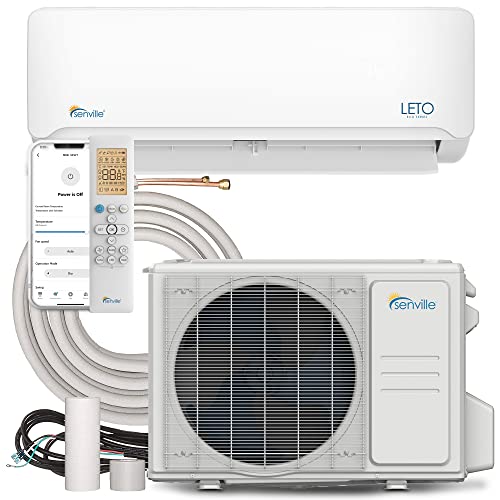
Senville LETO Series Mini Split Air Conditioner Heat Pump, 12000 BTU 110/120V, Inverter, Works with Alexa, SEER2 20.8, 1 Ton, White
Alexa Enabled Mini Split AC/Heating System: Integrate with voice control or app, allowing you to adjust your mini...
As an affiliate, we earn on qualifying purchases.
Conclusion
Measuring COP and EER helps you understand your geothermal heat pump’s efficiency. Did you know that, on average, these systems can reach COP values of 3 to 5? That means for every unit of electricity you use, you get 3 to 5 units of heat energy. By precisely evaluating these metrics, you can guarantee ideal performance and savings. Keep tracking these figures regularly to maximize your system’s efficiency and enjoy long-term energy savings.

DELLA Motto Series Mini Split AC, 208-230V 17.5 SEER2 Cools up to 550 Sq.Ft, 12000 BTU Air Conditioner & Heater with 1 Ton Pre-Charged Heat Pump, Works with Alexa and WiFi
QUIET OPERATION & INSTALLATION: This system mandates professional installation as it's not a DIY mini split AC. This...
As an affiliate, we earn on qualifying purchases.

Nexaro 12000BTU Mini Split Air Conditioner& Heater, 17 SEER2 𝟏𝟏𝟓𝐕 Wall-Mounted AC Unit Cools Rooms up to 750 Sq. Ft, Energy Efficient Inverter AC with Heat Pump
𝗜𝗻𝘁𝗲𝗹𝗹𝗶𝗴𝗲𝗻𝘁 𝗜𝗻𝘃𝗲𝗿𝘁𝗲𝗿 𝗘𝗳𝗳𝗶𝗰𝗶𝗲𝗻𝗰𝘆: Enjoy significant energy savings year-round with advanced inverter technology. This AHRI Certified system precisely adjusts...
As an affiliate, we earn on qualifying purchases.