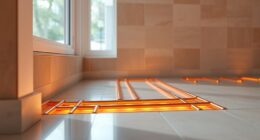
When designing and installing horizontal ground loops, assess your site’s soil type, moisture, and stability to determine the best trench layout and depth—typically 4-6 feet deep. Choose durable pipe materials like HDPE and plan for proper spacing to prevent thermal interference. Guarantee your loops are laid out evenly with consistent trenching techniques, considering soil conductivity and shielding from surface disturbances. Proper flow rates, insulation, and regular maintenance optimize your system’s performance; exploring these points further will guide you to a reliable setup.
Key Takeaways
- Proper trench spacing (typically 3-4 feet apart) prevents thermal interference between loops.
- Ensure consistent trench depth (usually 4-6 feet) for optimal pipe burial and system efficiency.
- Select high-quality, corrosion-resistant pipe materials like HDPE for durability underground.
- Calculate loop length accurately based on heating load, soil thermal properties, and pipe diameter.
- Maintain minimum distances from electrical cables and other underground utilities to prevent interference.
Assessing Site Terrain and Soil Conditions

Before installing a horizontal ground loop, you need to carefully evaluate the site terrain and soil conditions. Soil permeability plays a vital role in this process because it determines how well heat transfers between the ground and your loop. High-permeability soils, like sand or gravel, allow groundwater to flow freely, aiding heat exchange, while low-permeability soils, such as clay, restrict flow and can impact efficiency. You should also observe the natural groundwater flow patterns, as significant flow can influence heat transfer rates and the loop’s longevity. Conducting soil tests and visual inspections helps you understand these factors, ensuring your system is designed for maximum performance. Proper assessment prevents future issues and maximizes the efficiency of your horizontal ground loop system. Additionally, understanding the thermal properties of the soil can help predict the system’s overall heat transfer capability and long-term stability. Recognizing the groundwater flow patterns is essential because it can significantly enhance or hinder the heat exchange process over time. To further optimize system design, evaluating soil stability is also crucial to prevent ground movement that could disrupt the installation. Incorporating knowledge about soil composition can provide insights into potential challenges and help select appropriate installation techniques. Moreover, assessing the soil’s moisture content can influence the effectiveness of heat transfer and should be considered during site evaluation.
Determining the Appropriate Loop Length and Layout

Choosing the right loop length and layout is essential to guarantee your ground source heat pump operates efficiently. Proper loop length calculation assures adequate heat exchange, preventing issues like insufficient capacity or excessive energy use. For layout optimization, consider factors like available space, soil conditions, and shading. Visualize a neatly arranged series of trenches, each carefully spaced to maximize contact with the ground. Proper sizing is critical to ensure the system’s long-term performance and energy efficiency. Additionally, understanding soil thermal properties can influence the optimal depth and spacing of the trenches to enhance heat transfer. Proper loop configuration can also help prevent potential problems such as loop freezing or inefficiency, which are closely related to the loop layout and ground conditions. It is also important to consider loop configuration to optimize heat transfer efficiency and system longevity. – Evenly spaced trenches for consistent heat transfer – Maintaining proper depth for soil temperature stability – Avoiding crossing or overlapping loops – Ensuring accessible entry and exit points – Planning for future system expansion. Considering ground loop materials can also impact durability and performance over time.
Selecting the Right Pipe Material and Diameter
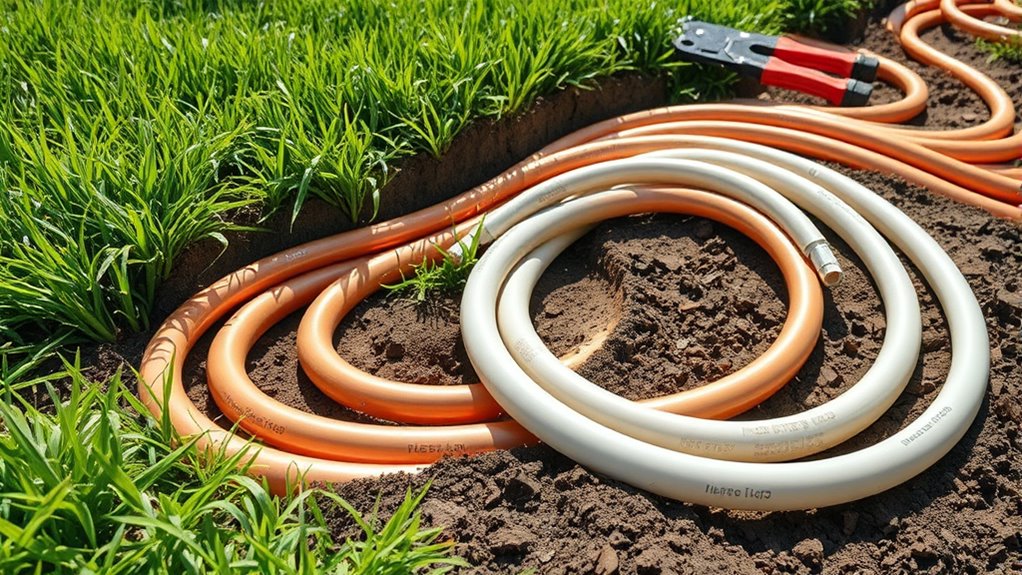
How do you select the right pipe material and diameter for your ground loop? First, choose pipe materials resistant to pipe corrosion, such as high-density polyethylene (HDPE), which withstands soil conditions and prevents leaks. Avoid materials prone to cracking or degradation over time. Next, consider pipe diameter; larger diameters reduce flow turbulence, ensuring efficient heat transfer and consistent flow, but they may increase installation costs. A common choice is ¾-inch or 1-inch pipes, balancing flow capacity and practical installation. Keep in mind that smaller diameters can cause flow turbulence, reducing system efficiency. Selecting the correct material and diameter is vital for long-term durability and maximum performance of your ground loop system.
Establishing Optimal Pipe Depth and Burial Technique

To optimize your horizontal ground loop, you need to take into account soil thermal conductivity, which affects how well heat transfers through the ground. You should also follow trenching depth guidelines to protect the pipe and ensure efficiency, while selecting appropriate backfill materials to prevent shifting or damage. Getting these factors right will help you establish the best pipe depth and burial technique for reliable performance.
Soil Thermal Conductivity
Understanding soil thermal conductivity is essential for establishing the best pipe depth and burial technique in horizontal ground loop systems. This property determines how well heat transfers between the ground and the fluid in your loops, influenced by soil properties. Higher thermal conductivity means better heat transfer, allowing shallower burial depths. Conversely, low thermal conductivity requires deeper placement for efficient performance. Visualize the soil as a layered landscape:
- Moist, clay-rich layers that retain heat
- Sandy soils that transfer heat quickly
- Rocky patches that hinder heat flow
- Organic matter-rich zones with variable conductivity
- Compact, dense soils that resist heat transfer
Knowing these soil characteristics guides your decisions, ensuring ideal depth and burial technique for maximum efficiency. Proper understanding prevents underperformance and extends system lifespan. Recognizing soil heterogeneity can further improve your system’s design by accounting for variations in soil composition across the installation site. Additionally, soil thermal properties can vary significantly even within small areas, so conducting site-specific tests can lead to more precise system planning. Awareness of soil moisture content is also important, as it influences thermal conductivity and overall heat transfer efficiency. It is also beneficial to consider how soil compaction affects heat transfer, as compacted soils may reduce thermal conductivity and require adjustments in installation depth. Conducting a soil test provides valuable data to tailor your installation approach effectively.
Trenching Depth Guidelines
Establishing the correct trenching depth is crucial for maximizing the efficiency and longevity of your horizontal ground loop system. Typically, trenches should be at least 4 to 6 feet deep to ensure ground loop durability and consistent thermal exchange. Deeper trenches help protect pipes from seasonal temperature fluctuations and surface disturbances, enhancing system reliability. Proper depth also contributes to installation safety by reducing the risk of accidental damage during landscaping or other activities. Use a laser level or measuring tape to maintain uniform depth along the entire trench. Avoid shallow trenches, which can compromise system performance and increase the risk of pipe exposure. Maintaining the correct trenching depth also helps prevent damage from external factors that can affect the system over time. Selecting the appropriate trenching technique can further improve installation efficiency and safety. Additionally, understanding the ground conditions of your site can influence the required trenching depth and method, ensuring optimal system performance. Consistent, appropriate trench depth is essential for a successful installation that performs efficiently and remains durable over time.
Backfill Material Selection
What backfill material you choose can considerably impact the longevity and efficiency of your horizontal ground loop system. Selecting the right material guarantees ground stability and proper soil compaction around the pipes. You want a material that supports the pipe and minimizes movement, preventing future damage or inefficiency. Consider these options:
- Clean, screened gravel for excellent drainage and stability
- Well-compacted soil with low moisture content
- Crushed rock that provides firm support
- Non-organic, inert fill to prevent decay
- Consistent soil mixture to avoid shifting or settling
Proper backfill minimizes soil settlement and maintains uniform ground stability. Achieving ideal soil compaction around the pipes reduces the risk of air gaps and movement, ensuring long-term system performance and durability.
Planning for Proper Fluid Circulation and Flow Rate
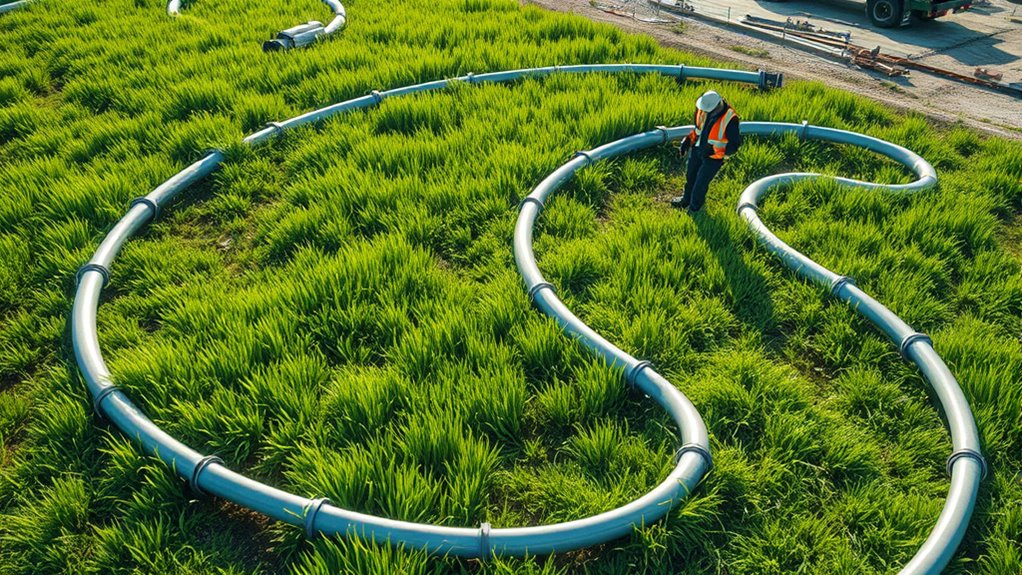
Have you considered how essential proper fluid circulation and flow rate are to the efficiency of a horizontal ground loop system? Understanding fluid flow dynamics helps guarantee your system operates smoothly and avoids issues like uneven heating or cooling. Proper flow rate depends on factors like loop length, pipe diameter, and geothermal load. To optimize this, you need to select the right pump; pump selection is critical because it determines how effectively fluid circulates without causing excessive energy use or pressure drops. Monitoring flow rates during installation ensures the system maintains consistent circulation. By planning for appropriate flow dynamics and choosing the correct pump, you improve system performance, increase longevity, and maximize energy efficiency. Proper planning now saves you trouble and expense later.
Ensuring Adequate Spacing and Avoiding Interference

To guarantee your horizontal ground loop system functions effectively, you must pay close attention to spacing and avoid interference between loops. Proper loop spacing ensures each loop operates independently, preventing heat transfer issues. To achieve this, consider:
- Maintaining a minimum distance between loops based on soil type and system size
- Keeping loops far enough apart to prevent thermal interference
- Avoiding crossing or overlapping loops at any point
- Using consistent spacing to simplify installation and future maintenance
- Ensuring nearby electrical cables or metal objects don’t cause interference avoidance issues
Incorporating Insulation and Freeze Protection Measures

Choosing the right insulation material is vital to protect your ground loop from temperature fluctuations. You should also consider effective freeze prevention strategies to keep the system operational during cold weather. Implementing these measures guarantees your ground loop remains efficient and durable over time.
Insulation Material Selection
What factors should you consider when selecting insulation materials for horizontal ground loops to guarantee both effective thermal performance and freeze protection? First, prioritize thermal insulation qualities that minimize heat loss, ensuring energy efficiency. Next, evaluate material durability to withstand soil conditions, moisture, and potential mechanical stresses. Consider the material’s resistance to degradation over time, which maintains insulation integrity. Additionally, examine installation ease, ensuring the material can be properly applied around the loops. Keep in mind environmental factors like soil acidity or alkalinity that could affect material longevity. Visualize insulation options like these:
- Rigid foam boards with sturdy, moisture-resistant surfaces
- Closed-cell spray foam offering seamless coverage
- Insulation wraps with reinforced outer layers
- Insulating sleeves designed for underground use
- Durable, weather-resistant pipe insulation materials
Freeze Prevention Strategies
Effective freeze prevention for horizontal ground loops hinges on combining proper insulation with additional protective measures. Insulating the pipes reduces heat loss, helping maintain the geothermal heat necessary for efficient operation. During cold weather, insulation minimizes the risk of freezing, especially in areas where groundwater might cool rapidly. Incorporating freeze protection devices, such as heat tracers or automatic valves, provides extra security. If your system uses evaporative cooling, ensure that water sources are protected from freezing to maintain efficiency. Proper design considers the depth of the loops, ensuring they’re below the frost line, and using insulation materials suited for outdoor exposure. These strategies work together to prevent freezing, allowing your geothermal heat system to operate reliably and efficiently year-round.
Managing Environmental Impact and Regulatory Compliance

Managing environmental impact and regulatory compliance is essential to ensuring that horizontal ground loop systems operate sustainably and legally. You must understand and adhere to environmental regulations and permitting requirements to prevent legal issues and environmental harm. Think about:
Prioritize environmental compliance and sustainable practices to protect ecosystems and ensure legal system operation.
- Conducting thorough site assessments to minimize disruption
- Ensuring proper permits are obtained before installation
- Avoiding contamination of groundwater sources
- Preserving local flora and fauna during drilling
- Monitoring system operation to prevent environmental degradation
Installing and Testing the Ground Loop System
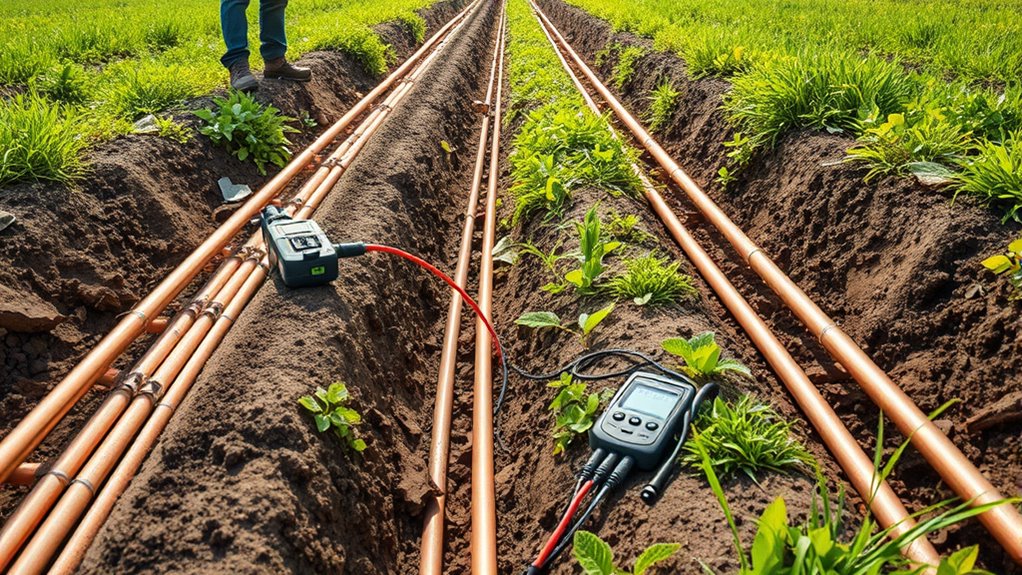
After confirming all environmental regulations and permits are in place, you can proceed with installing the ground loop system. Begin by carefully laying out the trenches, considering soil stability to prevent shifting or collapse during installation. Pay attention to soil properties like thermal conductivity, as it influences heat transfer efficiency. Use appropriate trench depths and spacing to optimize thermal performance and reduce soil disturbance. Once installed, test the system’s continuity and insulation resistance to ensure there are no leaks or faults. Verify proper loop circulation by monitoring flow rates. Document the installation process thoroughly, noting soil conditions and any deviations from your plan. Proper testing guarantees your ground loop functions efficiently and safely before you finalize the system.
Maintaining and Monitoring System Performance

You should regularly inspect your system to catch issues early and guarantee everything runs smoothly. Using data logs helps you track performance trends and spot anomalies quickly. Consistently monitoring these aspects keeps your ground loop system efficient and reliable.
Subheading 1: Regular System Inspections
Regular system inspections are essential to guarantee your horizontal ground loop geothermal system operates efficiently and reliably. By regularly checking, you can identify issues that affect ground loop efficiency and prevent costly repairs. During inspections, focus on visual signs of corrosion prevention, such as rust or leaks around fittings and pipes. Confirm the loop is free of debris and that connections remain tight. Listen for unusual noises and monitor pressure levels to catch early problems. Visualize a technician walking along the loop, inspecting fittings, testing pressure, and checking for corrosion. Regular inspections help maintain ideal performance, extend system life, and safeguard your investment. Staying proactive ensures your system runs smoothly and keeps energy costs low.
Subheading 2: Data Logging and Analysis
Implementing data logging and analysis techniques allows you to continuously monitor your horizontal ground loop system’s performance. By capturing real-time data on variables like temperature, flow rate, and pressure, you can identify issues early and maximize efficiency. Data acquisition tools help track thermal conductivity variations, ensuring the system maintains ideal heat transfer. Regular analysis reveals trends that inform maintenance needs and system adjustments. Use the table below to understand key parameters to monitor:
| Parameter | Why It Matters |
|---|---|
| Temperature | Indicates heat exchange efficiency |
| Flow Rate | Ensures proper fluid circulation |
| Thermal Conductivity | Affects heat transfer performance |
| Pressure | Detects blockages or leaks |
| System Load | Helps optimize energy use |
Consistent data analysis keeps your system running smoothly and efficiently.
Frequently Asked Questions
How Does Climate Variation Affect Ground Loop Efficiency?
Climate impact profoundly influences ground loop efficiency, causing fluctuations across seasons. Warmer temperatures can reduce heat exchange efficiency, while colder months enhance it, leading to efficiency fluctuations. You’ll notice that seasonal climate variations affect your ground loop system’s performance, so it’s important to take into account local climate when designing and installing. Properly accounting for climate impact guarantees ideal efficiency year-round, minimizing energy costs and maintaining system reliability despite climate variations.
What Are Cost Implications of Different Pipe Materials?
When comparing pipe materials for ground loops, you’ll find that material costs vary considerably, impacting your overall budget. Durable pipes like high-density polyethylene (HDPE) may cost more upfront but offer better longevity, reducing replacement costs. Cheaper options might save money initially but could wear out faster, increasing long-term expenses. Considering pipe durability helps you balance initial costs with future maintenance, ensuring a cost-effective and reliable ground loop system.
Can Existing Structures Interfere With Loop Installation?
Existing structures can definitely interfere with loop installation, creating structural interference that complicates the process. You might face installation challenges like limited space or the need to work around concrete slabs, foundation walls, or other obstacles. These issues could require additional planning, modifications, or specialized equipment, which may increase both time and costs. To minimize problems, assess the site carefully beforehand and consider alternative routing options.
How Long Does a Typical Ground Loop System Last?
Think of your ground loop system as a sturdy garden fence—built to last. Typically, it can serve you for 25 to 50 years, provided you prioritize corrosion prevention and follow a regular maintenance schedule. Like checking for rust and repairing loose posts, inspecting your system guarantees longevity. Proper care keeps your investment working smoothly, so you enjoy consistent performance without unexpected repairs or replacements down the line.
What Are the Best Practices for System Decommissioning?
When decommissioning your ground loop system, follow proper procedures to minimize environmental impacts. Start by disconnecting and safely removing the loops, ensuring any refrigerants or fluids are properly contained. Document all decommissioning procedures for future reference. Avoid leaving materials that could harm the environment, and consider recycling or disposing of components responsibly. Proper decommissioning safeguards the environment and guarantees compliance with regulations, prolonging the system’s integrity and reducing potential liabilities.
Conclusion
By carefully planning and installing your horizontal ground loop, you guarantee reliable, efficient geothermal performance for years to come. Yes, it might seem intimidating at first, but taking the time to get it right saves you money and frustration later. Don’t let fear of complexity hold you back—your investment in proper design and installation means a greener, more cost-effective heating and cooling solution that truly pays off. Trust the process, and enjoy the long-term benefits.