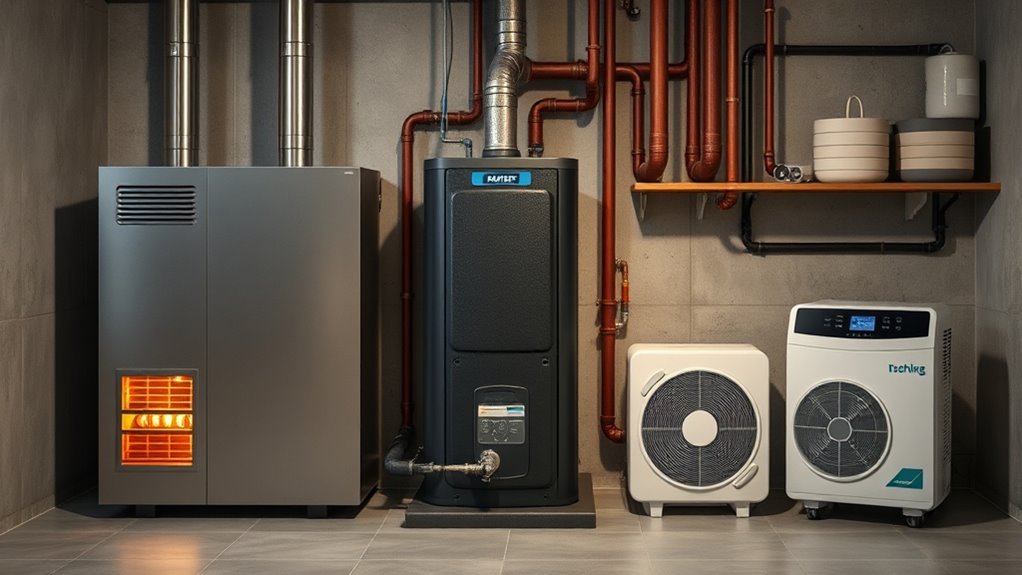
Choosing between furnaces, boilers, and heat pumps depends on your budget, climate, and energy goals. Furnaces are typically more affordable to install and provide fast heat, ideal for quick warming. Boilers offer steady, quiet heat and work well in colder climates, while heat pumps are energy-efficient and can cool your home too. To understand which system best suits your needs and long-term savings, explore the details you’ll find below.
Key Takeaways
- Furnaces are more affordable and quicker to install, ideal for homes with existing ductwork, while boilers require specialized setup and are more costly upfront.
- Boilers provide steady, even heat quietly, whereas furnaces offer rapid heating; heat pumps are efficient in moderate climates and offer cooling.
- Heat pumps use electricity and are environmentally friendly, especially geothermal systems, while furnaces and boilers rely on fossil fuels, impacting costs and emissions.
- In cold climates, geothermal heat pumps perform well, but air-source heat pumps may need auxiliary heating, unlike boilers and furnaces suited for extreme cold.
- Although initial costs for boilers and heat pumps are higher, their energy efficiency can lead to long-term savings and environmental benefits.

Choosing the right home heating system is essential for comfort and efficiency, especially as seasons change. When comparing furnaces, boilers, and heat pumps, you need to weigh how each option impacts your energy efficiency and installation costs. Your choice can considerably influence your monthly energy bills and upfront expenses, so it’s important to evaluate the pros and cons carefully.
Furnaces are a common choice and tend to be more affordable in terms of installation costs. They operate by blowing heated air through ducts to warm your home quickly. Modern furnaces, especially high-efficiency models, can provide excellent energy efficiency, reducing your heating costs over time. However, they rely on fossil fuels like natural gas or oil, which contribute to environmental concerns and may lead to higher fuel prices. If you’re looking for rapid heating and existing ductwork, a furnace might be a practical option, but keep in mind that maintenance and repairs can add to ongoing costs.
Furnaces are affordable, quick to heat, but rely on fossil fuels and may incur ongoing maintenance costs.
Boilers, on the other hand, heat water and distribute it through radiators or underfloor systems. They often have higher installation costs compared to furnaces because they require specialized setup and sometimes additional modifications to your home’s infrastructure. Despite the higher upfront investment, boilers can be very energy-efficient, especially condensing models that extract more heat from fuel. They also provide consistent, even heat and tend to operate quietly. If you value comfort and long-term savings, a high-efficiency boiler can be a worthwhile choice, but you should weigh the initial investment against potential energy savings over the years.
Heat pumps present a different approach. They work by extracting heat from the outside air (air-source) or ground (geothermal) and transferring it indoors. Although their installation costs can be higher initially—particularly for geothermal systems—they offer excellent energy efficiency, especially in moderate climates. Heat pumps can also work for cooling in the summer, making them a versatile all-in-one solution. Their efficiency means lower operating costs, and they use electricity, which can be greener if your power grid is clean. Additionally, renewable energy sources like geothermal heat pumps can further enhance environmental benefits. However, in very cold climates, traditional air-source heat pumps may struggle to keep up unless paired with auxiliary heating systems.

Westinghouse Natural Gas Tankless Water Heater Indoor Installation Max 7.9 GPM 180,000 BTU, WIFI Enable Temp Self Modulating Non Condensing High Efficiency for House or Commercial, APOLO Performance
【On-Demand Efficiency】 Westinghouse tankless water heater works only needed, saving energy and costs. Compact yet powerful for whole-home...
As an affiliate, we earn on qualifying purchases.
Frequently Asked Questions
Which Heating System Is Most Environmentally Friendly?
Heat pumps are the most environmentally friendly option for home heating because they use renewable options like ambient air or ground sources, reducing emission impacts considerably. Unlike furnaces and boilers that often burn fossil fuels, heat pumps operate efficiently and produce fewer greenhouse gases. By choosing a heat pump, you’re supporting cleaner energy use and minimizing your carbon footprint, making it a smarter, greener choice for sustainable living.
How Do Installation Costs Vary Between Systems?
Installation costs vary considerably between systems. Heat pumps generally have higher upfront expenses due to their advanced technology and need for specialized installation. Furnaces usually cost less initially, but boiler installation can be more expensive because of complex plumbing requirements. You should consider these upfront expenses alongside long-term savings. Factors like home size and existing infrastructure influence costs, so getting detailed quotes helps you choose the most cost-effective option for your budget.
What Maintenance Is Required for Each Heating Type?
You’ll need to regularly replace filters for furnaces and heat pumps to maintain airflow and efficiency, typically every 1-3 months. Boilers require less frequent maintenance, mainly system inspections and occasional flushing to prevent sediment buildup. For all systems, annual professional inspections are vital to ensure safe operation, check for leaks, and optimize performance. Proper maintenance extends system lifespan and keeps your home heating reliable and efficient.
Which System Offers the Best Energy Efficiency?
Imagine a warm, cozy home where efficiency meets savings. Heat pumps typically offer the best energy efficiency, especially in moderate climates, because they transfer heat rather than generate it. Their lower operating costs, combined with a longer system lifespan, make them an attractive choice. When comparing costs, keep in mind that heat pumps usually have higher upfront costs but save money over time through reduced energy bills.
Are There Health Considerations With Each Heating Option?
You should consider indoor air quality and allergic reactions when choosing a heating system. Furnaces, especially gas ones, can release pollutants or carbon monoxide if not properly maintained, affecting your health. Boilers generally have less impact on air quality, but dust can circulate. Heat pumps usually have better indoor air quality because they don’t produce combustion byproducts. Regular maintenance and air filters are essential for all systems to minimize health risks.
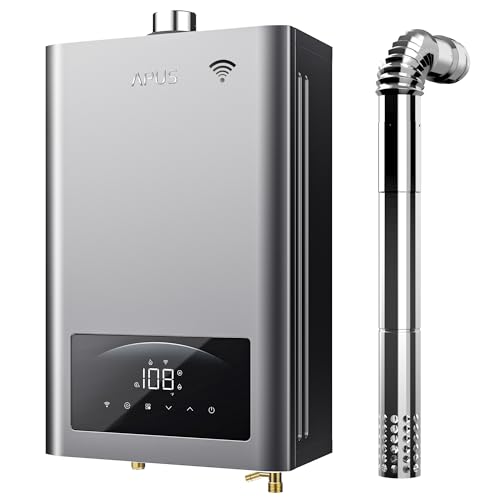
APUS Tankless Water Heater Propane, 140,000 BTU Indoor Installation Up to 6.8 GPM, Zero Cold Water Technology for Instant Hot Water on Demand, Smart Wi-Fi App Control
Instant Hot Water: This upgraded smart propane tankless water heater delivers consistent performance with its 140,000 BTU burner...
As an affiliate, we earn on qualifying purchases.
Conclusion
Choosing the right heating system depends on your home’s needs and your personal preferences. Whether you opt for a furnace, boiler, or heat pump, remember that no one-size-fits-all solution exists. Do your homework, weigh the pros and cons, and select what feels right for your situation. Think of it as finding the perfect fit—like a key in a lock—so your home stays warm and cozy all winter long.

23000 BTU Mini Split AC & Heat Pump, 230v Energy Efficient Wall-Mounted Ductless Air Conditioner with WiFi Control, r32 Eco-Friendly Refrigerant, Cools/Heats Up to 1500 Sq.Ft, Quiet Operation
Powerful Cooling & Heating - This 23000 BTU mini split system delivers reliable cooling (63-90℉) and heating (32-80℉)...
As an affiliate, we earn on qualifying purchases.
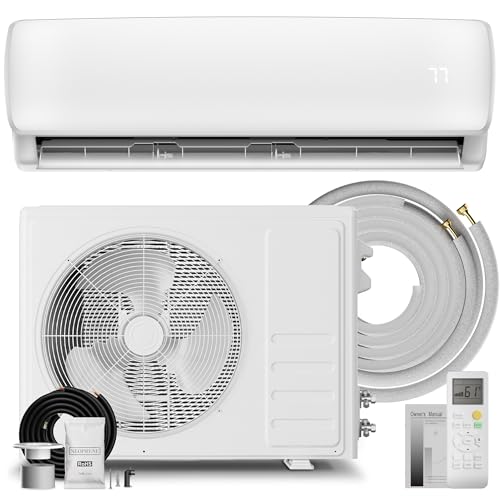
MEPTY 9000BTU Mini Split AC/Heating System, 19 SEER2 Energy Efficient Mini Split Air Conditioner with Heat Pump, 110V Cools Up to 450sq.ft, Ductless Inverter AC Unit with Pre-Charged Condenser
⭐Advanced Energy Saving: Advanced inverter technology with leading 19 SEER2 rating delivers superior performance through ensuring that the...
As an affiliate, we earn on qualifying purchases.