Choosing the right heat pump depends on matching its size and efficiency to your home’s specific needs. Smaller spaces benefit from compact, high-efficiency units, while larger homes require more powerful systems with higher capacity. Factors like insulation, layout, and climate influence your choice. Proper sizing guarantees ideal comfort and energy savings. If you want to find the perfect fit for your home, you’ll discover key tips and considerations ahead.
Key Takeaways
- Accurately size the heat pump based on your home’s square footage, insulation, and layout for optimal efficiency.
- Match the unit’s capacity (BTUs or tonnage) to your home’s heating and cooling load requirements.
- Consider higher SEER and HSPF ratings for better energy efficiency, especially in larger or more complex homes.
- Plan installation complexity, such as ductwork or zoning needs, which vary with home size and structure.
- Ensure proper assessment and professional guidance to prevent undersizing or oversizing, maximizing comfort and savings.

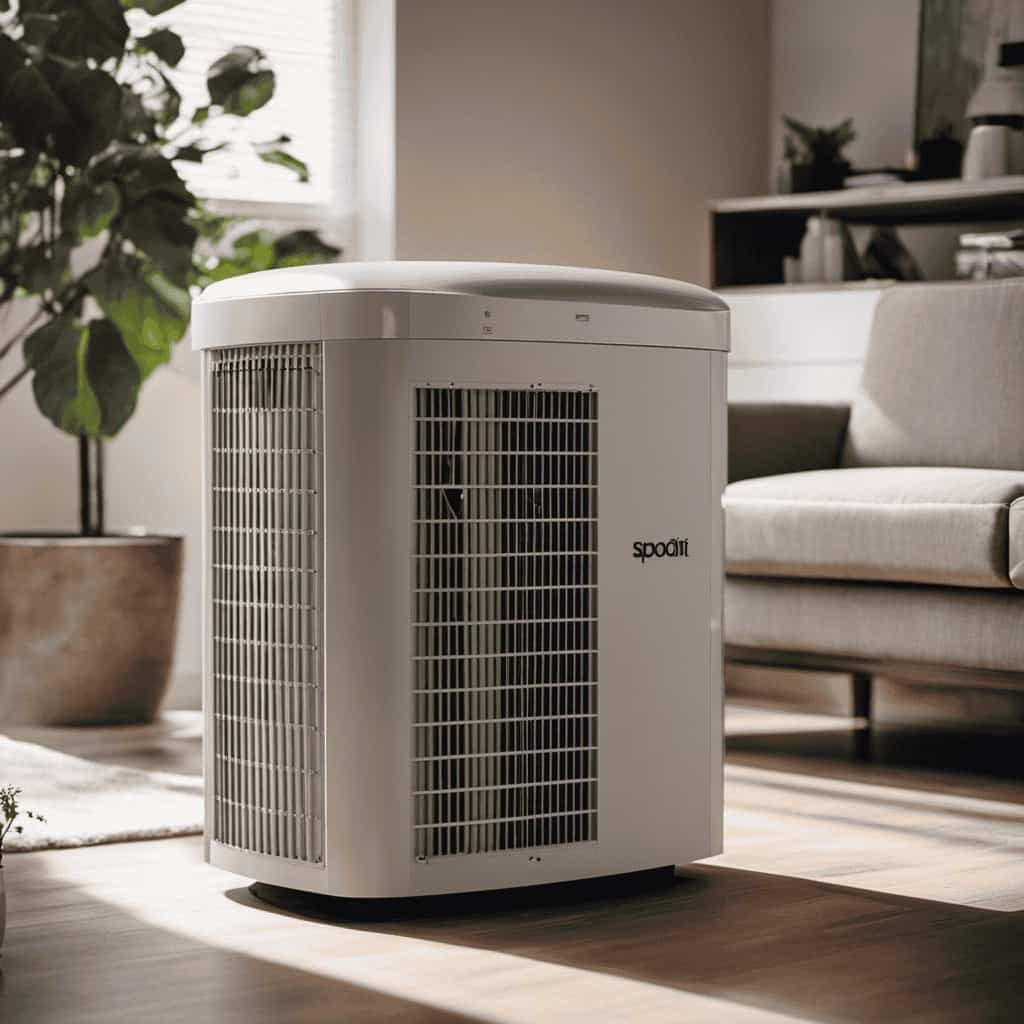
When selecting a heat pump, understanding your home’s heating and cooling needs is essential to making the right choice. The size of your home plays a major role in determining which heat pump will work best. A unit that’s too small won’t effectively heat or cool your space, leading to higher energy bills and discomfort. Conversely, an oversized unit can cycle on and off frequently, wasting energy and reducing the system’s lifespan. To find the right fit, you need to consider your home’s square footage, insulation quality, window placement, and local climate. Proper sizing guarantees maximum energy efficiency, saving you money in the long run. Additionally, understanding how expiring or spoiled appliances can impact overall system performance is important when maintaining your home’s climate control systems. Energy efficiency is a key factor that influences your decision. A more efficient heat pump consumes less electricity to operate, which means lower utility bills and a reduced environmental footprint. When comparing models, look for units with high Seasonal Energy Efficiency Ratio (SEER) and Heating Seasonal Performance Factor (HSPF) ratings. These ratings indicate how well a heat pump converts electricity into heating and cooling output. For smaller homes or apartments, a compact, high-efficiency unit might be ideal, providing sufficient comfort without excessive energy use. Larger homes, especially those with multiple levels or open floor plans, may require a more powerful system with higher capacity to maintain consistent temperatures. Installation considerations are equally important. Larger homes often demand more complex installation setups, including multiple units or ductwork adjustments. This can influence your overall cost and installation timeline. If your home has limited space or unusual structural features, you might need specialized mounting options or zoning systems to ensure even heating and cooling. Additionally, energy efficiency can be impacted by installation quality. Properly sealed ducts, well-positioned outdoor units, and correct refrigerant levels are vital to maximizing your heat pump’s performance. An experienced installer will assess your home’s specific needs, ensuring the system is appropriately sized and installed for maximum efficiency. In smaller homes, installation tends to be simpler and less invasive, making it easier to select a unit that balances capacity with energy savings. Larger homes require careful planning to avoid energy waste and to ensure comfort throughout the space. Ultimately, choosing the right heat pump involves weighing your home’s size, energy efficiency ratings, and installation considerations. Doing so guarantees that your system will perform at its best, keep your energy costs in check, and provide reliable comfort year-round.

Oylus Mini Split Ac/Heating System – 12000 BTU Ductless Mini Split Air Conditioner with Heat Pump, 19 SEER2 115V Energy Efficient Ac Unit Up to 750 Sq.Ft with Installation Kit
【Efficient Cooling & Heating】 – Stay comfortable all year round with 12,000 BTU cooling and 12,500 BTU heating….
As an affiliate, we earn on qualifying purchases.
As an affiliate, we earn on qualifying purchases.
Frequently Asked Questions
How Does Climate Affect Heat Pump Efficiency?
Climate impact greatly affects heat pump efficiency. In colder climates, heat pumps may struggle to extract enough heat, reducing efficiency and increasing energy use. Conversely, in milder weather, they work more effectively, saving you money. Consider efficiency considerations based on your local climate. If you live in a cold area, look for models designed for low temperatures to guarantee peak performance year-round.
Can a Heat Pump Cool and Heat Simultaneously?
Yes, a heat pump can cool and heat simultaneously with dual zone systems. These advanced setups allow different areas of your home to be managed independently, optimizing comfort and efficiency. Smart thermostats enhance this process by adjusting temperatures precisely, so you stay cozy while reducing energy use. It’s like having a subtle dance of warmth and coolness happening at once, providing you with seamless comfort year-round.
What Maintenance Is Required for Different Sizes?
You need to perform regular maintenance tailored to your heat pump’s size and system compatibility. Check the filters monthly and replace them as needed to guarantee efficient airflow. Larger units may require more frequent filter replacements and system checks, while smaller ones might need less attention. Always schedule professional inspections annually to keep your system running smoothly. Proper maintenance prolongs your heat pump’s lifespan and maintains ideal heating and cooling performance.
How Do Noise Levels Vary Between Models?
Think of noise levels like a whisper in a library—some models are quieter, offering sound level reduction that barely registers, while others can be as loud as a busy street. In noise comparison, quieter units feature better insulation and advanced technology, making them ideal for peaceful homes. If you value tranquility, look for heat pumps with low decibel ratings, ensuring your comfort isn’t drowned out by noise.
Are There Rebates for Installing Larger Units?
Yes, there are rebates for installing larger units, but rebate eligibility depends on local programs and specific installation incentives. Check with your utility company or government programs to see if you qualify, as larger units may qualify for additional incentives aimed at encouraging energy efficiency. Always verify the requirements beforehand, as some rebates may have size or efficiency criteria, helping you save money on your upgrade.
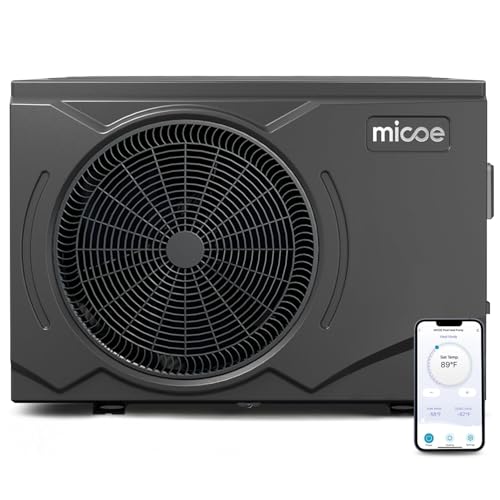
MICOE 35,000 BTU Inverter Pool Heat Pump for Above Ground & Inground Pools up to 24ft (12,000 Gal), Electric Heater with Heating and Cooling Mode, Titanium Heat Exchanger, App Control, 220V
Extend Your Swim Season with 35,000 BTU Heating – Advanced Inverter technology delivers robust heating for pools up…
As an affiliate, we earn on qualifying purchases.
As an affiliate, we earn on qualifying purchases.
Conclusion
Now that you know how to choose the perfect heat pump for your home size, don’t settle for anything less! Picking the right one could mean the difference between freezing in winter and roasting in summer — it’s that powerful! Imagine transforming your home into a climate-controlled paradise with just one smart choice. So, make the right call today, and watch your comfort skyrocket like never before. Your ideal home environment is just a decision away!

9000 BTU Mini Split Air Conditioner & Heat Pump, 115V Wall Mount Ductless Inverter AC/Heating System – 19 SEER2, Ultra Quiet, Suitable for 500 Sq.Ft, Installation Kits
Powerful Cooling & Heating Performance: 9000 BTU cooling capacity efficiently cools spaces up to 500 square feet (ideal…
As an affiliate, we earn on qualifying purchases.
As an affiliate, we earn on qualifying purchases.

Breez Lite | Smart AC Controller for Mini-Split, Window & Portable Air Conditioners & Heat Pumps | Free App, No Subscriptions | Alexa, Google, Siri Shortcuts, SmartThings, IFTTT (White)
Control Your AC From Anywhere: Cielo Breez Lite makes any ductless air conditioner or heat pump smart. Use…
As an affiliate, we earn on qualifying purchases.
As an affiliate, we earn on qualifying purchases.