Most homes guess the right size for a heat pump water heater instead of evaluating their actual hot water needs. Oversizing wastes energy and money, while undersizing can leave you without enough hot water. To choose the correct size, consider your household size, water usage habits, and potential future changes. Proper evaluation ensures efficiency and a steady hot water supply. Keep exploring to discover how to make the best choice for your home.
Key Takeaways
- Many homes choose oversized heat pump water heaters, leading to energy waste and higher operating costs.
- Underestimating household hot water demand results in insufficient hot water supply.
- Incorrect sizing often ignores future household growth or appliance upgrades.
- Proper sizing requires balancing household size, water habits, and potential future changes.
- Failing to follow manufacturer guidelines and installation best practices reduces system efficiency.
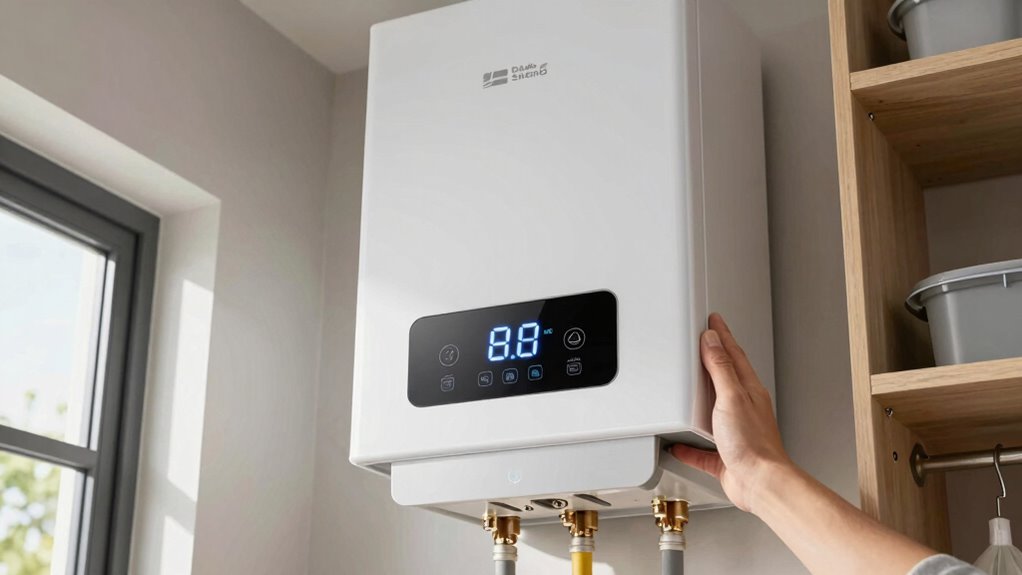
Choosing the right size for your heat pump water heater is vital to guarantee efficient performance and cost savings. Many homeowners overlook this step, leading to energy inefficiency and higher utility bills. When selecting a unit, you might assume that bigger is better, but that’s a common mistake. An oversized water heater will cycle on and off more frequently, wasting energy and reducing the lifespan of the appliance. Conversely, a unit that’s too small won’t meet your household’s hot water needs, leading to constant operation and increased energy consumption. The goal is to find that perfect balance where your heater can supply hot water consistently without unnecessary energy expenditure.
To determine the right size, you need to understand your household’s hot water demand. This involves estimating the number of people living in your home and their typical water usage. For example, a family of four might need a unit capable of providing about 50 gallons of hot water per day, but this can vary depending on habits. Once you have this estimate, you can look for models that match your needs, ensuring they are rated appropriately for your household size. It’s also vital to follow installation guidelines, as proper setup can greatly impact energy efficiency. For instance, ensuring the unit is installed in a location with adequate ventilation and proper insulation helps the heat pump operate efficiently, reducing energy waste.
Understanding the energy efficiency ratings of different models is key to making an informed choice. Look for units with high coefficient of performance (COP) ratings, which indicate better energy efficiency. High efficiency not only lowers your utility bills but also minimizes the environmental impact of your hot water system. Keep in mind that proper installation is just as important as choosing the right size. Following manufacturer instructions and local building codes guarantees ideal operation. For example, installing the unit in a shaded area or a space with good airflow can optimize performance and reduce the workload on the heat pump. Additionally, understanding the Bouvier Des Flandres breed’s guarding instincts can help you plan for socialization and training, ensuring your household remains harmonious.
Getting the sizing right also means considering future household changes. If you’re planning to add members or upgrade appliances, factor those into your calculations. Oversizing or undersizing can lead to unnecessary expenses or insufficient hot water. By paying close attention to these details—understanding your household’s hot water needs, adhering to installation guidelines, and prioritizing energy efficiency—you’ll ensure your heat pump water heater operates smoothly, saves money, and lasts longer. Making a well-informed choice now can greatly benefit your household’s energy consumption and comfort for years to come.
heat pump water heater size calculator
As an affiliate, we earn on qualifying purchases.
As an affiliate, we earn on qualifying purchases.
Frequently Asked Questions
How Often Should I Service My Heat Pump Water Heater?
You should service your heat pump water heater at least once a year to maintain its performance and efficiency. Follow a regular maintenance schedule that includes cleaning filters, inspecting for leaks, and checking refrigerant levels. Doing this helps optimize performance, prevent breakdowns, and extend its lifespan. If you notice unusual noises or performance drops, consider servicing it sooner. Consistent maintenance guarantees your water heater runs smoothly and saves you money on energy bills.
Can a Heat Pump Water Heater Be Used in Cold Climates?
In cold climates, a heat pump water heater can work effectively, but only if you address insulation challenges. Did you know that some units can operate in temperatures as low as 5°F? To guarantee efficiency, you’ll need to insulate pipes well and choose a model designed for colder conditions. Proper installation and insulation help maintain performance, even when outdoor temps drop, making heat pumps a viable option in cold environments.
What Is the Lifespan of a Typical Heat Pump Water Heater?
A typical heat pump water heater lasts about 10 to 15 years with proper maintenance. You should follow regular maintenance schedules, like cleaning filters and inspecting components, to extend its lifespan. Efficiency improvements over time are common if you keep it well-maintained, ensuring it runs smoothly. By staying on top of maintenance, you’ll maximize your heater’s durability, saving money and energy in the long run.
Are There Specific Brands Known for Better Sizing Accuracy?
Some brands are known for better sizing accuracy thanks to their strong reputation for quality and precise engineering. Brands like Rheem, Stiebel Eltron, and Bosch tend to provide reliable sizing guidance, making it easier for you to select the right unit for your needs. Their reputation for consistent performance and accurate sizing info helps you avoid under or oversizing, ensuring your heat pump water heater operates efficiently and lasts longer.
How Does Household Size Impact Water Heater Energy Efficiency?
Did you know that larger households can see up to 30% more energy savings with properly sized water heaters? Household size greatly impacts water consumption, which directly affects efficiency optimization. Smaller households might use less hot water, so a too-large heater wastes energy. Conversely, bigger families need a properly matched unit to guarantee efficient operation and avoid unnecessary energy costs. Proper sizing helps maximize energy savings regardless of household size.
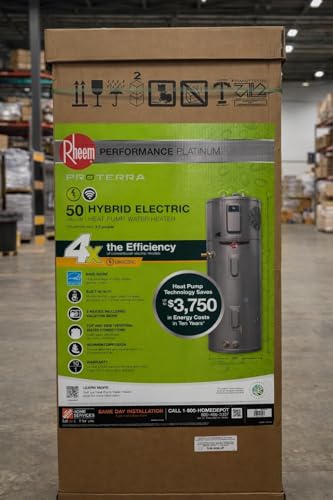
Rheem 50 Gal. Smart High Efficiency Hybrid Heat Pump Water Heater with 10-Year Warranty
It must be wired into your home’s electrical system and will typically require a dedicated electrical circuit (similar…
As an affiliate, we earn on qualifying purchases.
As an affiliate, we earn on qualifying purchases.
Conclusion
Choosing the right heat pump water heater size is like planting a seed in fertile soil—you want it just right to grow strong and thrive. Oversize or undersize, and you risk stunting its potential or wasting energy. Think of your home’s comfort as a delicate symphony, where each instrument must be tuned perfectly. When you size your heater correctly, you’re not just making a choice; you’re setting the stage for a harmonious, efficient future.

A Super Hot Math Teacher Stole My Heart and My Calculator Stainless Steel Insulated Tumbler
Ideal for math teachers, educators, and math-loving geeks looking to express their witty charm and fun-loving attitude in…
As an affiliate, we earn on qualifying purchases.
As an affiliate, we earn on qualifying purchases.
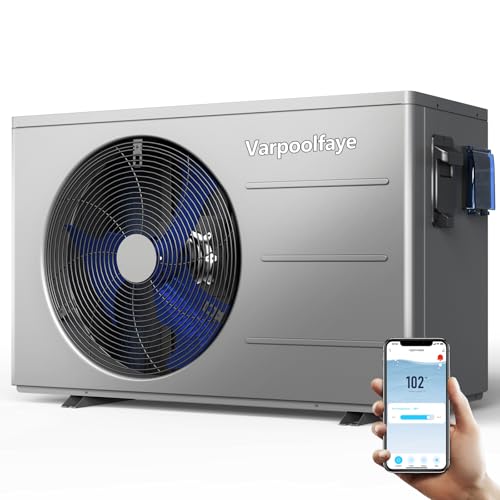
Varpoolfaye 40000 BTU Electric Pool Heater for Inground Pools 12000 Gallon Swimming Pool Heat Pump Above Ground Pool Heater Heating Cooling WiFi Control Schedule 220V
Powerful Performance: With a high-pressure compressor, pool heater heat pump max output of 40000 BTU, a COP of…
As an affiliate, we earn on qualifying purchases.
As an affiliate, we earn on qualifying purchases.