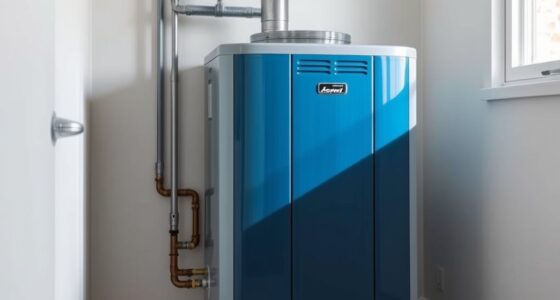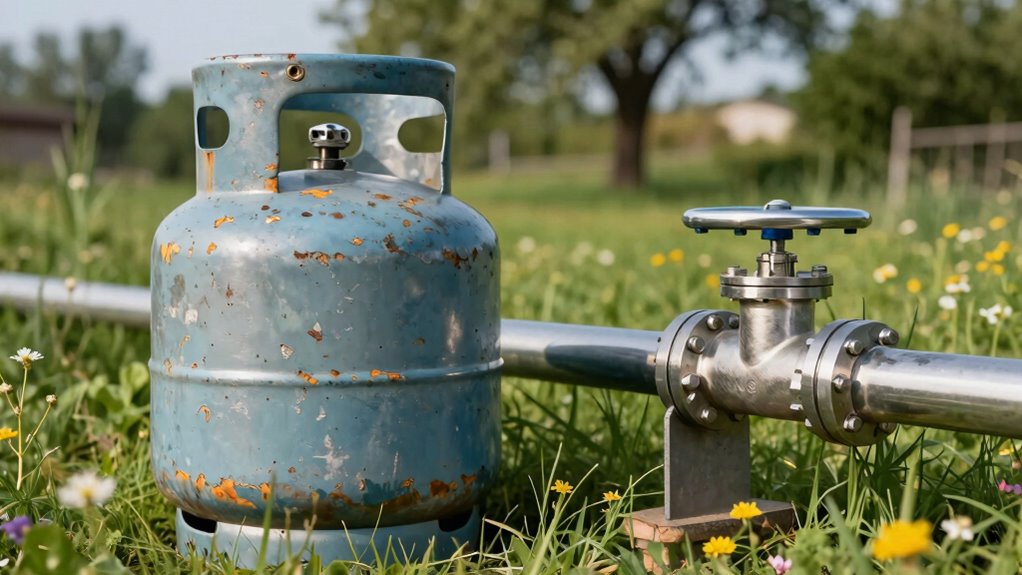

Choosing between natural gas and propane impacts your home’s efficiency, costs, and environmental footprint more than the brand. If natural gas infrastructure exists nearby, it offers lower costs and cleaner emissions, making it a smart long-term choice. Propane provides flexibility if natural gas isn’t available but may cost more and have a bigger environmental impact. Considering your lifestyle and priorities, you’ll want to weigh these factors carefully—continuing will reveal key details to help you decide wisely.
Key Takeaways
- Infrastructure availability determines whether natural gas or propane is practical, affecting long-term home energy options.
- Cost differences, including setup and ongoing expenses, influence the most economical choice for homeowners.
- Natural gas generally has lower emissions, making it preferable for environmentally conscious decisions.
- Lifestyle needs and convenience impact fuel choice, depending on existing infrastructure and energy requirements.
- Long-term benefits, such as sustainability and future-proofing, are crucial in selecting the most suitable fuel.
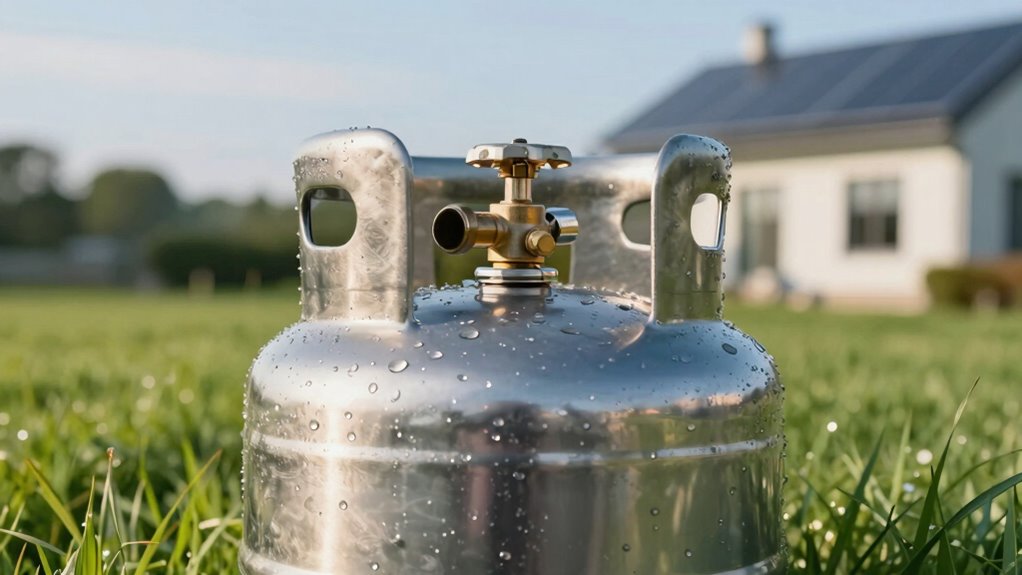
Beyond costs and environmental factors, think about your home’s infrastructure and your lifestyle. If natural gas isn’t available in your area, propane becomes the practical alternative, even if it’s slightly more expensive. Conversely, if you’re environmentally conscious and want to minimize emissions, natural gas aligns better with those goals. Both fuels are reliable and efficient, but your decision should hinge on what matters most to you—cost savings, environmental impact, or convenience. Additionally, pollution impact from fossil fuels plays a significant role in climate change and air quality concerns. Remember, this isn’t just about choosing a brand; it’s about selecting the fuel that best supports your needs and values. When considering your options, assessing fuel infrastructure can help you understand long-term suitability and potential upgrades. By carefully considering these factors, you’ll make an informed decision that benefits your home, your budget, and the planet in the long run.

Natural Gas Detector, TopTes PT177 Gas Leak Detector with Audible & Visual Alarm, Portable Gas Sniffer to Locate Combustible Leak Sources Like Methane, Propane for Home (Includes Battery x2)-Orange
Combustible Gas Leak Detector: PT177 is a useful little tool that helps every household with gas appliances to…
As an affiliate, we earn on qualifying purchases.
As an affiliate, we earn on qualifying purchases.
Frequently Asked Questions
How Does the Environmental Impact Compare Between Natural Gas and Propane?
You’ll find natural gas generally has lower emission levels and a smaller carbon footprint than propane. Natural gas burns cleaner, producing less carbon dioxide and fewer pollutants, making it more eco-friendly. Propane, while still cleaner than some fuels, releases more greenhouse gases per unit. So, if minimizing your environmental impact is a priority, natural gas is the better choice for reducing emissions and your overall carbon footprint.
What Are the Safety Considerations for Each Fuel Type?
You need to prioritize safety with either fuel by managing storage safety and ignition hazards. For natural gas, guarantee proper pipeline maintenance and leak detection, as it’s lighter than air and disperses quickly. For propane, store tanks upright in well-ventilated areas, and check for leaks regularly. Both fuels require caution around open flames and sparks, so stay vigilant to prevent accidents and confirm safe operation.
Can Propane Appliances Be Converted to Natural Gas?
Yes, propane appliances can often be converted to natural gas, but it depends on appliance compatibility. You need to check if the appliance is designed for conversion and follow the proper conversion procedures, which usually involve changing or adjusting parts like orifices and regulators. It’s essential to consult a professional technician to guarantee the conversion is done safely and correctly, preventing damage or hazards.
Which Fuel Is More Cost-Effective Long-Term?
Natural gas tends to be more cost-effective long-term, especially since its prices fluctuate less than propane’s. You’ll also save on storage requirements, as natural gas is supplied through pipelines, eliminating the need for tanks. While propane may seem cheaper initially, pricing fluctuations can lead to higher costs over time. So, if you prioritize stability and lower ongoing expenses, natural gas generally offers better long-term value for your home.
How Does Supply Availability Vary Regionally?
Regional supply varies because infrastructure availability considerably impacts access to natural gas or propane. In areas with well-developed pipelines and distribution systems, natural gas is readily available and reliable. Conversely, regions lacking infrastructure often depend on propane, which is stored locally and delivered by trucks. Your choice depends on your location’s infrastructure; if supply is limited, propane offers a more consistent option, regardless of brand.

VEVOR Horizontal Cylinder Storage Cabinet, 4 x 33 lbs Cylinder Capacity, 31.02×30.04×35 inch Propane Storage Cage, Gas Cylinder Cabinet, Yellow Powder Coat Finish, for Freon, Gases, Oxygen, Nitrogen
Quality Cylinder Storage Cabinet: Our 2-tier horizontal cylinder storage cabinet measures 788x763x889 mm/31.02×30.04×35 in. It boasts strong load-bearing…
As an affiliate, we earn on qualifying purchases.
As an affiliate, we earn on qualifying purchases.
Conclusion
Choosing between natural gas and propane isn’t just about brand—it’s about what’s right for your needs. Did you know that propane can have a carbon footprint up to 20% higher than natural gas? That’s a significant difference that could impact your environmental footprint and costs over time. So, before you decide, consider how each fuel aligns with your budget, efficiency goals, and eco-consciousness. Your choice can make a bigger difference than you might think.

PT520A Natural Gas Detector, Gas Leak Detector with 17-Inch Gooseneck, Locating The Source Like Propane, Methane, and Butane for Home and RV (Includes Battery x3) – Orange
Effective Gas Leak Detector: The TOPTES PT520A natural gas detector detects leaks of methane, propane, natural gas, LPG,…
As an affiliate, we earn on qualifying purchases.
As an affiliate, we earn on qualifying purchases.

4ft Propane Hose Adapter 1lb to 20lb,Propane Adapter 20lb to 1lb Converter, Propane Tank Adapter Hose 20 lb to 1 lb for Weber Q Grill/Coleman Stove/Blackstone Griddle/Buddy Heater/Weber Traveler
Updated Propane Hose Adapter — Alloxity propane hose adapter is specifically designed to fit perfectly for Weber Q…
As an affiliate, we earn on qualifying purchases.
As an affiliate, we earn on qualifying purchases.