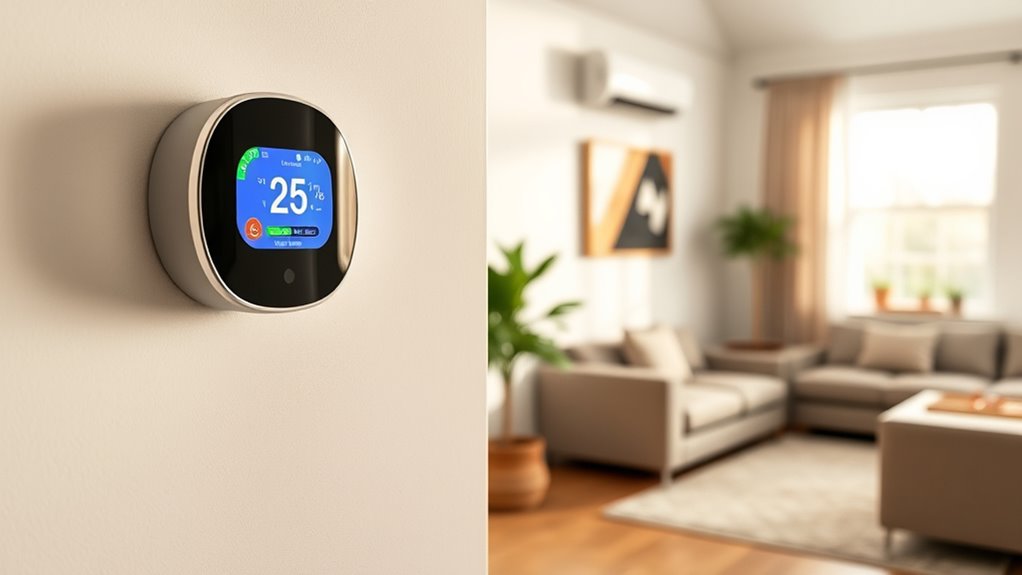

To optimize your thermostat schedules for heat pump heating, personalize settings based on your household habits and zone the home for targeted comfort. Use smart thermostats to learn routines and adjust temperatures automatically, avoiding unnecessary heating. Prioritize heating in occupied areas and reduce heat in unoccupied spaces for efficiency. Regular maintenance keeps your system running smoothly. By applying these strategies, you’ll save energy and lower bills, and there’s more to discover if you continue exploring these tips.
Key Takeaways
- Use smart thermostats that learn occupancy patterns to automatically adjust heating schedules for efficiency.
- Divide your home into zones to prioritize heating in frequently used areas and reduce energy waste.
- Schedule heating based on household routines, lowering temperatures when rooms are unoccupied or during sleeping hours.
- Regularly maintain and clean your heat pump to ensure it operates at peak efficiency and prevents unnecessary energy use.
- Tailor thermostat settings to occupant preferences to balance comfort with energy savings effectively.

Have you ever wondered if your thermostat settings are truly helping you conserve energy and reduce costs? If so, you’re not alone. Many homeowners overlook how their thermostat schedules influence energy consumption and comfort. One way to improve efficiency is by implementing smart zoning, which allows you to divide your home into different areas with individual temperature controls. This means you can prioritize comfort where it matters most and avoid wasting energy on unoccupied spaces. By creating zones based on your household’s habits and occupant preferences, you can tailor heating schedules to match when and where warmth is needed. For example, you might set the living room to stay warmer during evenings when you’re home, while keeping bedrooms cooler during the day when they’re unoccupied. This targeted approach ensures your heat pump works smarter, not harder, reducing unnecessary heating and lowering your energy bills.
Understanding occupant preferences is key to optimizing your thermostat schedule. Everyone’s comfort levels vary, and a one-size-fits-all setting often results in energy waste or discomfort. By observing when different family members prefer warmer or cooler temperatures, you can fine-tune your heat pump’s operation to accommodate these preferences. Some smart thermostats even learn your routines over time, automatically adjusting settings based on your habits. This adaptive scheduling not only enhances comfort but also prevents the heat pump from running excessively during times when heating isn’t needed. Additionally, knowing the bulb lifespan and maintenance tips can help you keep your system running efficiently without unexpected interruptions, ensuring consistent comfort. The combination of smart zoning and occupant preferences creates a personalized heating plan that balances comfort with efficiency, making sure your heat pump operates only when necessary.

PelPro PP150 Pellet Stove for Home Heating - 150 lb Hopper, 49,200 BTU Heats up to 2,500 Sq. Ft., Easy-Dial Temp Control, Built-in Thermostat with Auto-Ignition, Powerful & Quiet 265CFM Blower
PP150 pellet stoves for fireplaces are efficient for home heating up to 2,500 sq. ft. at almost 50,000...
As an affiliate, we earn on qualifying purchases.
Frequently Asked Questions
How Do Heat Pumps Perform in Extremely Cold Climates?
In extremely cold climates, heat pumps may experience reduced efficiency because their cold climate adaptation is limited at very low temperatures. You’ll notice that they work less effectively, and your energy bills could rise. However, modern cold climate heat pumps are designed to perform better in these conditions, providing reliable heating. To maximize efficiency, consider supplemental heating options and proper thermostat scheduling to keep your home warm and comfortable.
Can Smart Thermostats Automatically Optimize Schedules?
Think of smart thermostats as personal chefs for your home’s comfort. They can automatically optimize schedules by learning your habits, so you don’t have to keep making manual adjustments. They adapt to your user preferences, ensuring your heating is just right. This way, you enjoy consistent warmth without the hassle, and your heat pump runs efficiently—saving energy and money. It’s like having a tailored comfort plan, always ready.
What Is the Ideal Temperature Setting for Energy Efficiency?
For energy efficiency, set your thermostat to around 68°F during the day when you’re home, and lower it to about 60-65°F at night or when you’re away. Use energy-saving tips like proper temperature calibration to guarantee your heat pump runs efficiently. Keep an eye on your settings and adjust as needed to maximize savings, making your home comfortable without wasting energy.
How Often Should I Adjust My Thermostat Schedule?
You should adjust your thermostat schedule as needed based on your habits. Typically, making schedule adjustments every one to two weeks helps maintain energy efficiency and comfort. Monitor how you use your heat pump and tweak settings when your routines change, such as weekends or vacations. Regularly reviewing and updating your schedule guarantees your heating stays efficient without sacrificing comfort.
Are There Specific Times of Day Better for Heating?
You should focus on heating during the times of day when your home’s most energy-efficient, typically early mornings and evenings. These periods often align with peak heating times when outdoor temperatures are lower, so adjusting your schedule to warm your home then maximizes efficiency. Avoid unnecessary heating during midday when the sun naturally warms your space, saving energy and reducing costs while maintaining comfort.

Canyon Lodge Large Pellet Stove
Heats up to 2,000-3,000 sq. ft.
As an affiliate, we earn on qualifying purchases.
Conclusion
So, you’ve optimized your thermostat for perfect comfort and efficiency—yet, in the end, it’s funny how the simplest change, like trusting your instincts, might save more energy than all those schedules. Sometimes, we overthink technology, forgetting that human intuition often knows best. Keep a close eye on your habits, and remember, the most sustainable choice might just be listening to your gut instead of relying solely on fancy schedules. After all, simplicity can be the ultimate efficiency.

Large Pellet Stove - 130lb Hopper
Built-in WiFi – Smart Home Technology
As an affiliate, we earn on qualifying purchases.

Medium Pellet Stove - 60lb Hopper
Built-in WiFi – Smart Home Technology
As an affiliate, we earn on qualifying purchases.