When comparing pellet stoves, electric heaters, and heat pumps, you’ll find that pellet stoves offer cozy ambiance and high efficiency but require ongoing pellet purchases and venting. Electric heaters are simple and inexpensive to install, yet they can be costly to run for large spaces. Heat pumps provide excellent energy efficiency and year-round climate control, making them a smart long-term choice—if you’re willing to invest upfront. To find the best fit for your needs, explore how each system balances cost, efficiency, and climate suitability.
Key Takeaways
- Pellet stoves offer high efficiency (70-80%) but require venting and pellet supply, with moderate upfront costs.
- Electric heaters provide nearly 100% efficiency and are inexpensive to install but have higher operational costs.
- Heat pumps are highly efficient (3-4 units of heat per electricity unit), suitable for moderate climates, with higher initial investment.
- Operating costs vary: pellets balance efficiency and ongoing expenses; electric heaters can be costly long-term; heat pumps save energy over time.
- Choice depends on home size, climate, budget, with pellet stoves ideal for ambiance, heat pumps for year-round use, and electric heaters for small or supplemental spaces.
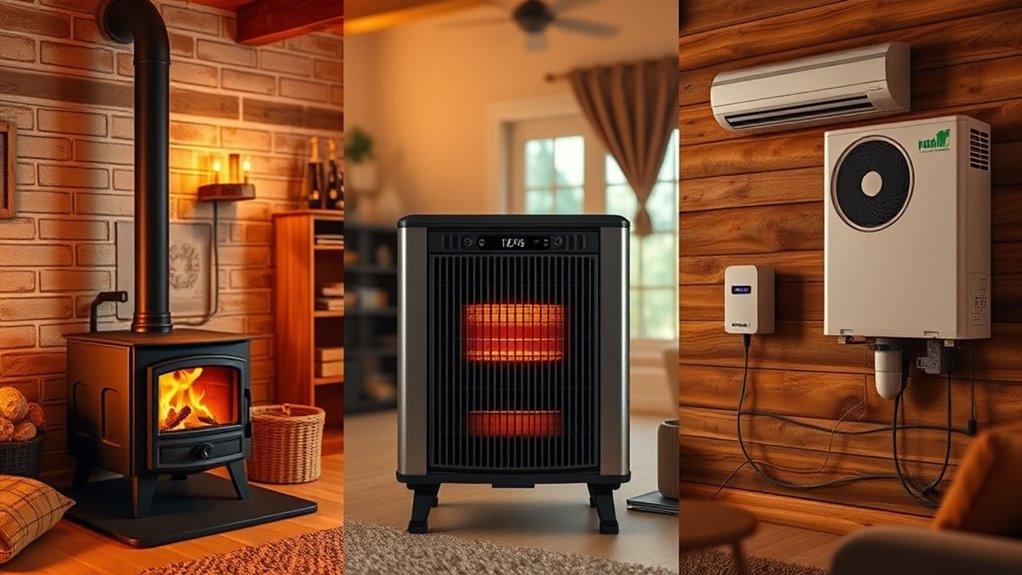
When choosing a heating system for your home, understanding the differences between pellet stoves, electric heaters, and heat pumps can help you make an informed decision. One of the most important factors to contemplate is energy efficiency, which determines how effectively each system converts fuel or electricity into heat. Pellet stoves are known for their high energy efficiency, often reaching efficiency ratings of 70-80%, because they burn compressed wood pellets with minimal waste. Electric heaters are nearly 100% efficient at converting electricity into heat, but their operational costs can be higher depending on local electricity rates. Heat pumps, on the other hand, are remarkably energy-efficient, especially in moderate climates. They work by transferring heat from the outside air or ground into your home, often delivering 3-4 units of heat for every unit of electricity used. This makes them a cost-effective option over time, especially when contemplating ongoing energy expenses. Additionally, some models of heat pumps can provide both heating and cooling, enhancing their versatility for year-round comfort.
Installation costs vary remarkably across these systems. Pellet stoves typically require a dedicated venting system and a reliable supply of wood pellets, which can add to upfront expenses. While the unit itself may be affordable, installation costs can increase if your home needs modifications for proper venting or clearance. Electric heaters are usually the least expensive to install, often just requiring an electrical outlet, making them ideal for supplemental heating or small spaces. However, they might not be suitable as primary heating sources for larger homes due to their limited capacity and higher operating costs over time. Heat pumps have higher initial installation costs compared to electric heaters but are generally less costly than installing a central HVAC system. The cost includes the unit, ductwork modifications, and possibly an upgrade to your electrical system. Despite the higher upfront investment, the energy savings and increased efficiency can make heat pumps a more economical choice in the long run.
When weighing these options, consider your home’s size, climate, and your budget. Pellet stoves offer a good balance of efficiency and ambiance, but they require ongoing pellet purchases and maintenance. Electric heaters are simple and cheap to install, but their long-term costs can add up. Heat pumps provide excellent energy efficiency and can double as cooling systems, making them a versatile choice if your climate permits. Ultimately, the right system depends on your priorities: whether you value upfront costs, ongoing energy savings, or environmental considerations. Choosing the right system involves evaluating several factors, including efficiency ratings and environmental impact.

PelPro PP150 Pellet Stove for Home Heating - 150 lb Hopper, 49,200 BTU Heats up to 2,500 Sq. Ft., Easy-Dial Temp Control, Built-in Thermostat with Auto-Ignition, Powerful & Quiet 265CFM Blower
PP150 pellet stoves for fireplaces are efficient for home heating up to 2,500 sq. ft. at almost 50,000...
As an affiliate, we earn on qualifying purchases.
Frequently Asked Questions
Which Heating Method Is Most Environmentally Friendly?
You’ll find that heat pumps are the most environmentally friendly option because they use renewable energy sources like air, water, or ground heat, reducing greenhouse gas emissions. Electric heaters are also cleaner if powered by renewable energy, but pellet stoves may produce more emissions due to combustion. Overall, heat pumps minimize your carbon footprint and promote sustainability, making them the best choice for eco-conscious heating.
How Much Maintenance Does Each Heating System Require?
Think of maintaining your heating system like tending a garden; each needs care to thrive. Pellet stoves require regular filter replacements and cleaning to guarantee system longevity. Electric heaters are low-maintenance but occasionally need dusting and inspection. Heat pumps demand seasonal checks and filter changes. Overall, pellet stoves need the most upkeep, while electric heaters are the easiest, and heat pumps fall somewhere in between.
What Are the Initial Installation Costs for Each?
Your installation costs vary depending on the system. Pellet stoves typically have higher upfront expenses due to chimney and venting requirements, often ranging from $3,000 to $5,000. Electric heaters are usually cheaper to install, costing around $200 to $1,000, since they need minimal setup. Heat pumps have moderate upfront expenses, generally between $4,000 and $8,000, mainly for outdoor units and ductwork. Consider these initial costs when planning your heating upgrade.
How Do Operating Costs Compare Over Time?
Imagine saving hundreds annually on energy costs—this is what one homeowner achieved switching to a heat pump. Operating costs vary: pellet stoves require fuel purchases, electric heaters have higher electricity bills, but heat pumps are more energy-efficient, offering better energy savings over time. For cost efficiency, heat pumps often prove best, especially in moderate climates. Your choice impacts long-term savings and energy use, so consider these factors carefully.
Can These Systems Be Used Together Effectively?
Yes, you can use these systems together effectively through integration options like zone controls or smart thermostats. Combining pellet stoves, electric heaters, and heat pumps enhances overall efficiency by allowing you to switch or blend heating sources based on needs and costs. This setup optimizes energy use, reduces operating expenses, and maintains comfort, giving you a flexible, efficient heating solution tailored to different spaces and conditions.

Medium Pellet Stove - 60lb Hopper
Built-in WiFi – Smart Home Technology
As an affiliate, we earn on qualifying purchases.
Conclusion
Ultimately, choosing between a pellet stove, electric heater, or heat pump depends on your needs. Imagine cozy nights by a crackling pellet stove, efficient warmth from an electric heater on chilly mornings, or the eco-friendly comfort of a heat pump year-round. Each offers unique benefits, but your choice shapes your home’s warmth and your energy bills. Consider your lifestyle and priorities, and you’ll find the perfect fit to keep your space inviting and comfortable.
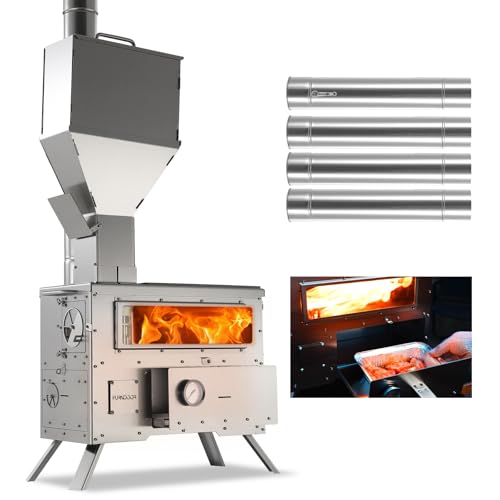
Wood Burning Stove with Oven - Portable Pellet Stove for Hot Tents, 304 Stainless Steel Outdoor Camping Stove with Chimney Pipes & Adapters for Winter Hunting Cooking
STOVE WITH OVEN - Our tent stove features a built-in oven and a large viewing glass, allowing you...
As an affiliate, we earn on qualifying purchases.

Large Pellet Stove - 130lb Hopper
Built-in WiFi – Smart Home Technology
As an affiliate, we earn on qualifying purchases.