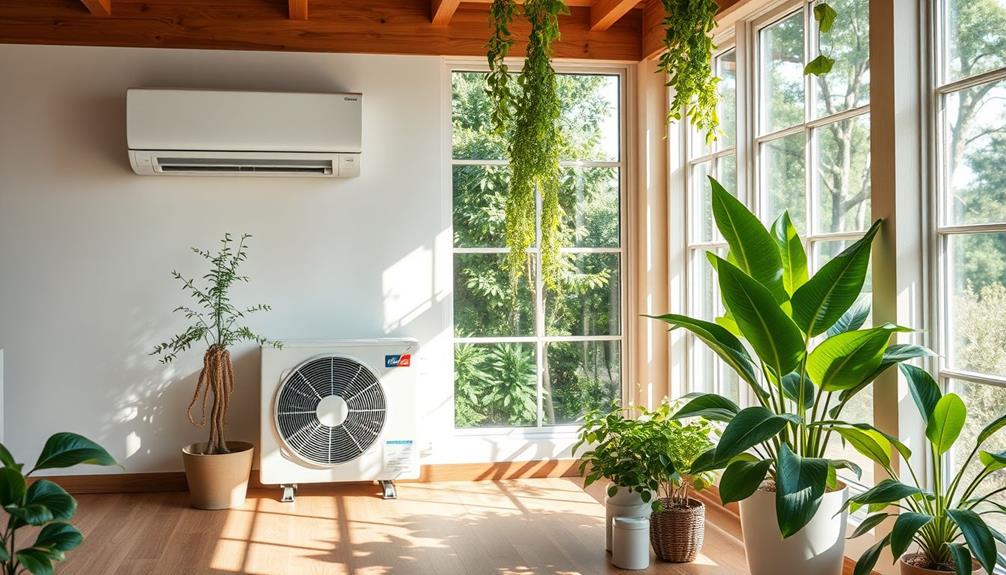
Portable heat pumps for small spaces are designed to be energy-efficient, using less electricity than traditional heaters by transferring heat instead of generating it. They effectively warm small areas with minimal power, helping you save on utility bills and reduce environmental impact. Features like adjustable thermostats and energy-saving modes further optimize consumption. If you’d like to discover ways to maximize their efficiency and keep costs low, stay with us to explore more helpful tips.
Key Takeaways
- Portable heat pumps use significantly less electricity than traditional heaters by transferring heat instead of generating it through resistance.
- They typically have high Energy Efficiency Ratios (EER), indicating low power consumption for effective heating.
- Usage features like programmable timers and adjustable thermostats optimize energy use in small spaces.
- Proper maintenance and monitoring can improve efficiency and reduce overall energy consumption.
- Their eco-friendly refrigerants and ability to extract heat in cold weather further lower environmental impact and energy costs.
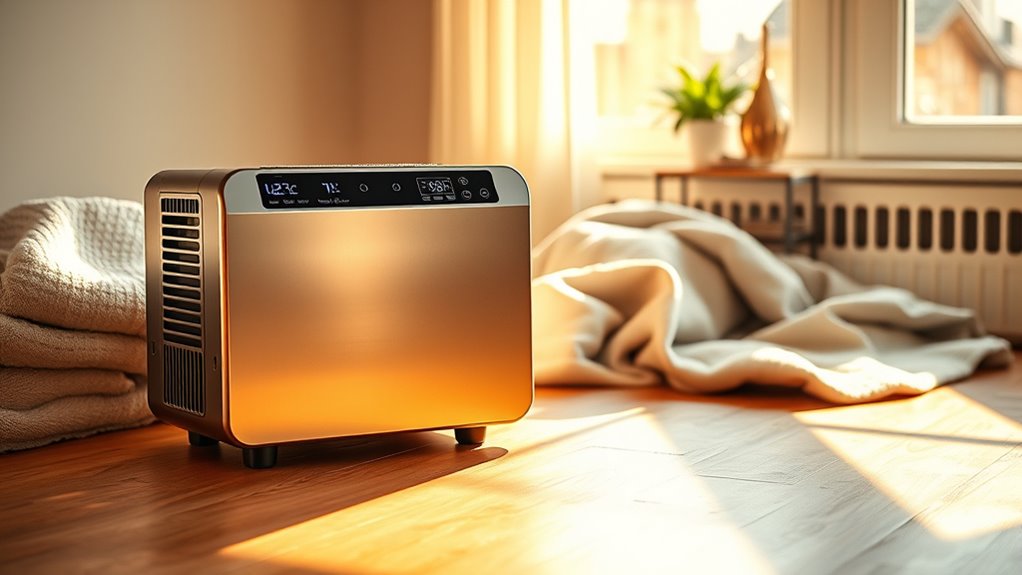
Portable heat pumps have become popular for heating small spaces because they offer an energy-efficient alternative to traditional heaters. When considering their use, you’ll notice that they typically consume less electricity, making them a cost-effective option for keeping your space warm without breaking the bank. Since these devices operate by transferring heat rather than generating it through resistance, they use less energy overall, which helps reduce your monthly utility bills. This cost efficiency is especially appealing if you only need to heat a small area and don’t want to run a bulky, expensive heating system. Additionally, because they require less power, they tend to have a lower environmental impact compared to conventional electric or gas heaters. By consuming less energy, portable heat pumps contribute to a smaller carbon footprint, aligning with eco-conscious choices for your home or workspace.
In terms of environmental impact, portable heat pumps are a smarter choice because they don’t rely heavily on fossil fuels. Instead, they work by extracting heat from the air outside or from the environment, even in cold weather, and bringing it inside. This process means you’re not burning fuel directly, which lowers greenhouse gas emissions. Plus, many modern models are designed with eco-friendly refrigerants that have minimal impact on the ozone layer and global warming potential. As a result, using a portable heat pump helps you reduce your overall environmental footprint while maintaining comfort. It’s a win-win situation: you save money on energy bills and do your part for the planet.
Furthermore, many portable heat pumps come with advanced features that optimize energy use, such as programmable timers, adjustable thermostats, and energy-saving modes. These features allow you to control when and how much energy the device uses, preventing unnecessary operation and further enhancing cost efficiency. When you select a unit with a high Energy Efficiency Ratio (EER), you’re ensuring that the device consumes as little power as possible to provide effective heating. This focus on efficiency not only lowers your operating expenses but also minimizes the environmental impact over the lifespan of the product. Overall, choosing a portable heat pump for small spaces is an intelligent decision if you’re looking to balance affordability with sustainability. It offers a way to stay warm without sacrificing your commitment to reducing your ecological footprint. Additionally, understanding the energy consumption of these units helps you make informed decisions about their use and maintenance.
Frequently Asked Questions
How Do Portable Heat Pumps Compare to Traditional Heating Methods?
You’ll find portable heat pumps more energy-efficient and cost-effective than traditional heating methods, especially for small spaces. They typically have a better cost comparison due to lower installation requirements, which means you save on upfront expenses and time. Unlike conventional systems that need extensive ductwork or vents, portable heat pumps are easy to set up and move, making them a practical choice for quick, efficient heating.
What Maintenance Is Required for Portable Heat Pumps?
Think of your portable heat pump as a vintage radio that needs tuning. You should regularly replace the filter to ensure ideal airflow and efficiency. Additionally, system cleaning is essential to prevent dust buildup and maintain performance. Check for any leaks or unusual noises, and clear debris from vents. Doing these simple maintenance tasks keeps your heat pump running smoothly and extends its lifespan, much like caring for a cherished piece of history.
Are Portable Heat Pumps Suitable for Outdoor Use?
Yes, portable heat pumps can be suitable for outdoor use if they have good outdoor durability and weather resistance. Look for models specifically designed for outdoor environments, with features like sealed components and corrosion-resistant materials. Keep in mind that exposure to extreme weather might diminish their lifespan, so you should consider additional protection like covers or shelters, especially in harsh climates. Proper placement guarantees ideal performance and longevity.
How Does Room Insulation Affect Energy Efficiency?
You may find that good room insulation considerably boosts your heat pump’s efficiency. Different insulation types, like foam or fiberglass, offer varying thermal resistance, reducing heat loss. When your space has higher thermal resistance, it retains warmth better, lowering energy consumption. So, investing in proper insulation can help you save on energy bills and keep your small space warmer with less effort from your heat pump.
Can Portable Heat Pumps Operate Effectively in Extremely Cold Weather?
In extremely cold weather, portable heat pumps can still operate effectively, but their performance drops due to low outdoor temperatures. You might notice the heat pump entering a defrost cycle more frequently to prevent ice buildup on the coils. This cycle temporarily reduces heating efficiency, but modern models are designed to handle cold conditions better. Keep in mind, insulation and proper placement also help maintain ideal performance during winter.
Conclusion
Understanding the energy consumption of portable heat pumps helps you make smarter choices for small spaces. By selecting efficient models and using them wisely, you can save energy and reduce bills. Think of these devices as your cozy allies, warming your space without draining your resources. With mindful use, you’ll keep your comfort high while keeping energy costs low—turning your small space into a haven of warmth and savings.