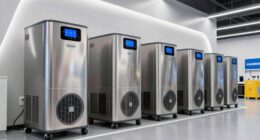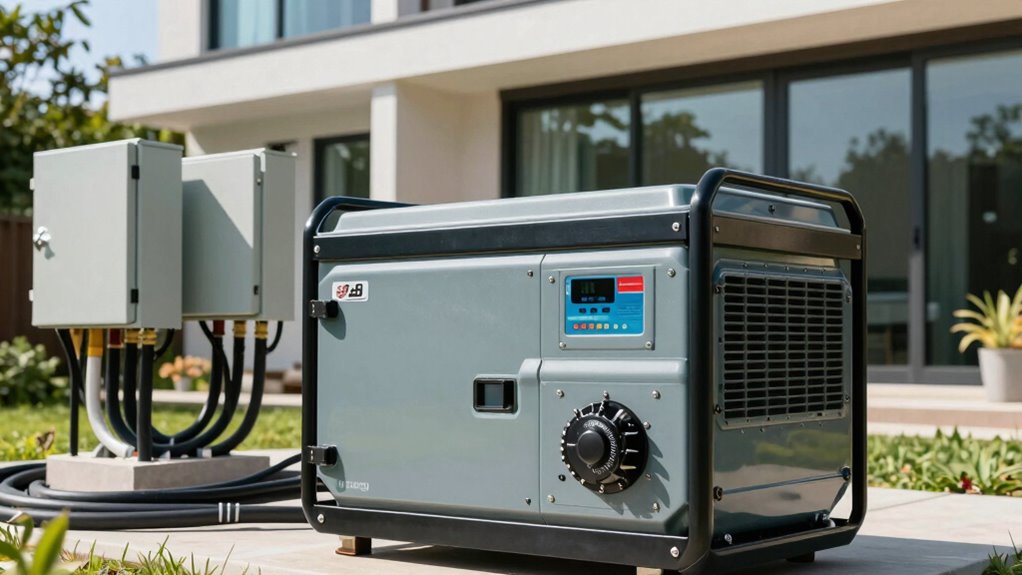
To avoid guessing when sizing your generator for an all-electric home, start by calculating your total energy needs based on your appliances, heating, and cooling requirements. Consider how solar efficiency can reduce the load during sunny days. It’s important to balance the generator size so it’s not too large or small, helping to save costs and ensure reliable power. Keep in mind extra factors like filter sizing and system integration—continue to learn how to fine-tune your backup setup.
Key Takeaways
- Calculate total energy needs based on appliances, heating, and cooling to determine appropriate generator size.
- Balance generator capacity with solar panel output and consumption patterns for optimal system efficiency.
- Avoid oversizing to prevent unnecessary costs and energy waste; undersize risks power outages during high demand.
- Consider additional factors like filter sizing and system components for reliable backup operation.
- Proper planning and accurate estimation ensure dependable, cost-effective all-electric home power solutions.
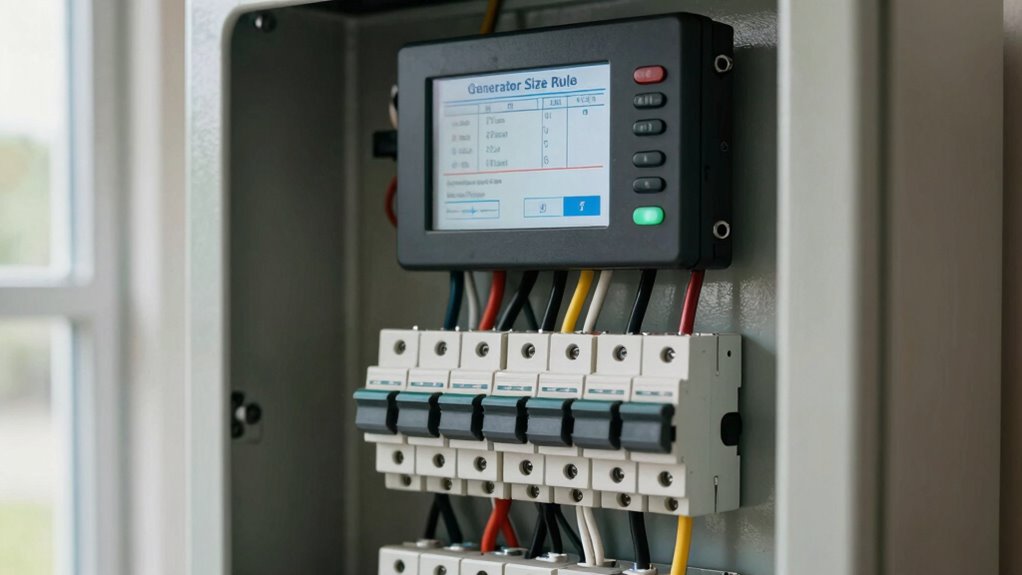
When planning an all-electric home, choosing the right generator size is essential to guarantee reliable power without overspending. You want a system that provides enough backup power during outages, but not so large that it wastes energy or drives up costs unnecessarily. To do this effectively, understanding the generator size rule is indispensable. The key is to size your generator based on your home’s total energy needs, factoring in how much power your appliances, heating, and cooling systems require. This approach guarantees you don’t guess or overestimate, which can lead to inefficiency and higher expenses. Additionally, considering filter sizing/flow can help ensure your system operates efficiently and minimizes energy waste. In all-electric homes, solar efficiency plays a key role in how you manage your power needs. If you have solar panels, you’ll want a generator that complements your solar energy system, not competes with it. During sunny days, your solar panels might supply most of your electricity, reducing the load on your generator. But during cloudy days or at night, your backup power system should seamlessly take over. Thus, understanding your solar efficiency helps you accurately estimate when and how much backup power you’ll need. This balance is essential because a generator that’s too big can drain your resources, while one that’s too small might leave you in the dark during critical moments. Considering energy consumption patterns can further optimize your backup power strategy and avoid unnecessary capacity.

4400 Watt Open Frame Inverter Generator, Gas Powered Portable Generator for Emergency Home Backup, RV Ready 30A Outlet, ECO Mode, Low Oil Shutoff, Quiet Operation, EPA Compliant
Peak 4300W Gas Power Generator:Powered by a 223cc 4-stroke OHV engine, this portable inverter generator for home backup…
As an affiliate, we earn on qualifying purchases.
As an affiliate, we earn on qualifying purchases.
Frequently Asked Questions
How Often Should I Upgrade My Generator Size?
You should upgrade your generator size whenever your power needs increase, especially after adding new appliances or during home renovations. Regular generator installation checks help guarantee it can handle power outages effectively. If you notice your generator struggles during outages or if appliances aren’t getting enough power, it’s time for an upgrade. Staying proactive prevents outages from disrupting your home and keeps your power supply reliable and efficient.
Can Generator Size Affect Home Appliance Longevity?
Generator size is like a heartbeat for your appliances—if it’s too small, your devices struggle, shortening their lifespan. Proper sizing guarantees your home’s power efficiency and reduces strain on appliances, making them last longer. Regular appliance maintenance becomes easier when your generator provides consistent power. When your generator matches your home’s needs, you protect your appliances and keep your energy system running smoothly, preventing costly repairs or replacements down the road.
What Are the Cost Implications of Oversizing a Generator?
Oversizing your generator increases costs because it reduces efficiency and leads to unnecessary power distribution. You’ll spend more on the initial purchase, installation, and maintenance, as larger units consume more fuel and need extra upkeep. Additionally, an oversized generator can cause inefficiencies, wasting energy. To save money and optimize performance, it’s best to choose a generator that matches your home’s actual power needs, ensuring better efficiency and balanced power distribution.
Is Professional Assessment Necessary for Generator Sizing?
You don’t want to leave your generator installation to guesswork, so hiring a professional is essential. While it might seem tempting to DIY, a skilled assessment guarantees your system is correctly sized, preventing safety hazards or inefficiencies. Ignoring professional guidance risks overlooking safety precautions and could lead to costly mistakes. Trust an expert to evaluate your needs, confirming your all-electric home runs smoothly and safely without unnecessary surprises.
How Does Climate Influence Generator Size Requirements?
Climate greatly influences your generator size requirements because climate adaptation affects the temperature impact on your home’s energy needs. In colder climates, you’ll need a larger generator to handle heating demands during winter, while warmer areas may require less. Extreme temperatures can strain your system, so evaluating local weather patterns helps determine the right size. This guarantees your all-electric home stays comfortable and reliable, no matter the climate.

Jackery Solar Generator 1000 v2 with 200W Solar Panel,1070Wh Portable Power Station LiFePO4 Battery,1500W AC/100W USB-C Output, 1Hr Fast Charge for Outdoor,Off-Grid Living,RV,Emergency
Powerful yet Compact: Boasting a 1,500W AC output and a 3,000W surge peak, the Solar Generator 1000 V2…
As an affiliate, we earn on qualifying purchases.
As an affiliate, we earn on qualifying purchases.
Conclusion
So, next time you’re dreaming of going all-electric, remember the generator size rule. Picture your house as a tiny, overworked hamster wheel, spinning wildly just to keep the lights on during a blackout—because size truly does matter. Ignore the rule, and you might find yourself in a comical tug-of-war with your power supply, desperately praying for a miracle. Trust me, a properly sized generator is your best bet for avoiding a comedy of errors in your own home.
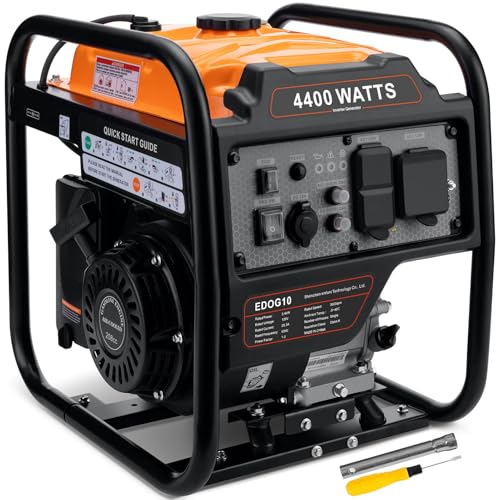
Oxseryn 4400-Watts Inverter Generator, Open Frame Generator Gas Powered, Emergency Home Backup, RV Ready 30A Outlet, EPA Compliment
Powerful Output: 4400 peak watts and 3400 running watts, 2*120V AC ports, 1* 30A RV port, 1*12V DC…
As an affiliate, we earn on qualifying purchases.
As an affiliate, we earn on qualifying purchases.

YAMAKATO Generator Gas Fuel Tank Fuel Strainer Filter Screen Replacement for Honda 17672-899-000 Predator Generac 0H1326 Centurion Champion Powermate etc.
Made of oil resistance nylon in OEM standard for Honda and clone generators.
As an affiliate, we earn on qualifying purchases.
As an affiliate, we earn on qualifying purchases.