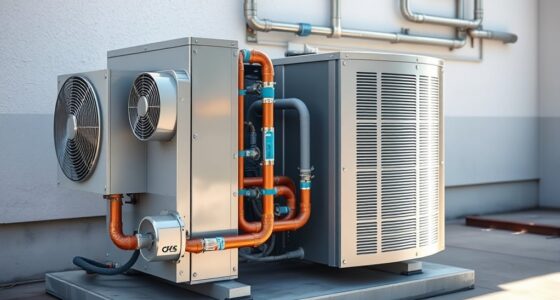
HVAC system commissioning and performance testing make certain your system runs efficiently, reliably, and maintains comfort. By calibrating sensors, adjusting control systems, and verifying airflow, temperature, and pressure levels, you can prevent unnecessary wear and energy waste. Regular testing helps identify and fix issues early, extending equipment lifespan. Proper commissioning guarantees that your HVAC operates at peak performance for long-term savings and comfort—continue to learn how these steps make a difference for your system.
Key Takeaways
- Proper commissioning ensures HVAC systems operate efficiently, reliably, and sustainably by verifying equipment calibration and control settings.
- Performance testing confirms airflow, temperature, and pressure parameters meet design specifications, identifying system faults early.
- Accurate calibration of sensors and controls maintains optimal environmental conditions and reduces energy waste.
- Regular testing and calibration extend equipment lifespan and prevent unnecessary cycling or overworking components.
- A comprehensive commissioning process establishes a foundation for long-term system performance, energy savings, and operational reliability.
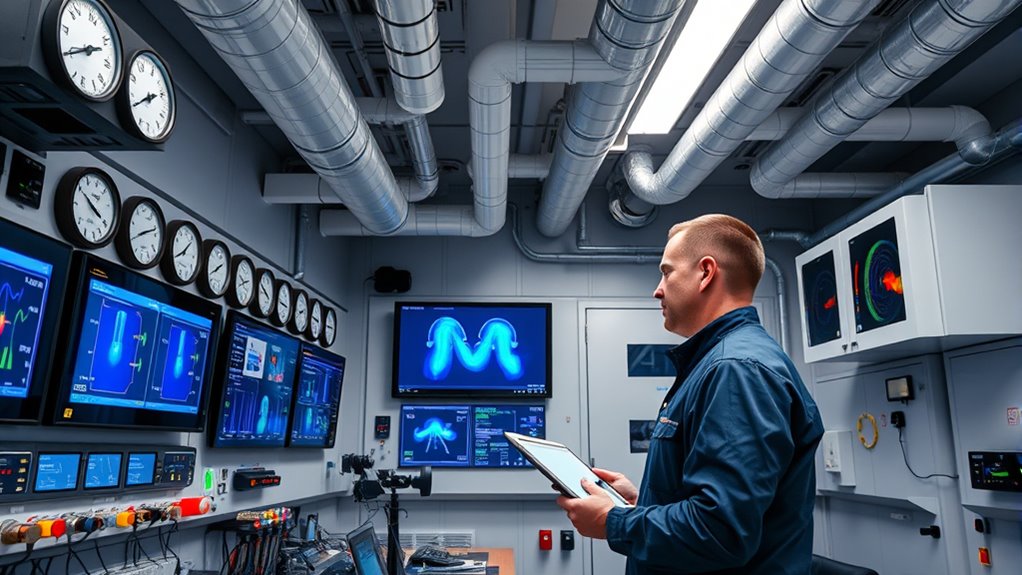
Have you ever wondered how to guarantee your HVAC system performs at its best? The key lies in proper commissioning and performance testing, ensuring that every component operates efficiently and reliably. One of the primary focuses during this process is maximizing energy efficiency. When your HVAC system is correctly commissioned, it uses less energy to maintain your desired comfort levels, which translates into reduced utility bills and a smaller environmental footprint. Achieving this begins with detailed equipment calibration, where sensors, thermostats, and control systems are precisely adjusted to match manufacturer specifications and your building’s unique needs. Correct calibration ensures that your system responds accurately to temperature changes, avoiding unnecessary cycling or overworking, both of which waste energy and strain equipment.
During commissioning, you’ll want to verify that all equipment is calibrated correctly. This step is essential because even minor deviations can lead to significant inefficiencies over time. For example, if your air distribution fans aren’t calibrated properly, they may circulate more air than needed, increasing energy consumption without providing additional comfort. Similarly, improperly calibrated thermostats can cause your system to run longer than necessary, wasting energy and increasing wear and tear. By conducting thorough calibration checks, you ensure that sensors and control devices are functioning within their ideal ranges, which directly impacts energy efficiency and system longevity. Regular calibration maintenance helps maintain system performance and prevents energy waste caused by sensor drift or environmental changes.
Proper calibration of HVAC equipment ensures efficiency, longevity, and optimal performance over time.
Furthermore, calibration isn’t a one-time task. It should be revisited periodically to account for any drift in sensor accuracy or changes in building conditions. Regular calibration maintains the system’s peak performance, preventing energy waste and extending equipment lifespan. When calibration is done correctly, your HVAC system can operate smoothly, responding precisely to control signals and environmental conditions, which means consistent comfort and lower operational costs.
Performance testing complements calibration by verifying that all components work together seamlessly. During testing, you’ll examine airflow rates, temperature differentials, and pressure levels to ensure they align with design specifications. This process uncovers any mismatches or faults in the system, allowing you to address issues before they escalate into costly repairs or inefficiencies. It also confirms that your system operates at top performance, providing reliable comfort while keeping energy consumption in check.
In essence, focusing on energy efficiency through meticulous equipment calibration and extensive performance testing guarantees that your HVAC system delivers maximum results. It’s an investment that pays off in lower energy bills, fewer repairs, and enhanced comfort. When you approach commissioning with a keen eye on calibration and testing, you set the stage for a system that runs efficiently, reliably, and sustainably for years to come.
Frequently Asked Questions
How Often Should HVAC System Commissioning Be Repeated?
You should repeat HVAC system commissioning every 3 to 5 years to guarantee peak performance. Regular system maintenance helps identify issues early, while retrofit scheduling allows you to update components for efficiency gains. Staying consistent with commissioning keeps your system running smoothly, reduces energy costs, and prolongs equipment lifespan. Don’t wait until problems arise—schedule periodic reviews to maintain peak performance and adapt to changing building needs.
What Are the Common Signs of HVAC System Inefficiency?
You’ll notice signs of HVAC inefficiency when your system makes unusual noises or when airflow seems weak or uneven. Excessive system noise might indicate mechanical problems, while airflow issues can point to clogged filters or duct blockages. If your system struggles to maintain temperature or cycles frequently, it’s a sign that it’s not operating efficiently. Addressing these issues early can save energy and prolong your system’s lifespan.
How Does Climate Affect HVAC Commissioning Procedures?
Climate critically impacts your HVAC commissioning procedures. In different climate zones, you need to tailor testing to address specific challenges like humidity control in humid regions or heating efficiency in cold zones. By adjusting your procedures based on the climate zone, you guarantee the system performs at its best year-round. This includes verifying proper humidity control, temperature regulation, and energy efficiency, ultimately improving comfort and reducing operational costs for your space.
Are There Industry Standards for HVAC Performance Testing?
You’ll find that industry standards for HVAC performance testing are as strict as a fortress! These standards, backed by industry certifications, set the gold standard for testing protocols, ensuring your system operates flawlessly. They cover everything from airflow to energy efficiency, so you can trust that your HVAC system meets the highest quality benchmarks. Following these standards guarantees peak performance, longevity, and peace of mind for your building’s comfort.
What Is the Typical Timeline for HVAC Commissioning Process?
You typically spend about 4 to 8 weeks on the HVAC commissioning process. During this time, you review commissioning documentation, verify performance metrics, and confirm systems operate according to design specifications. You’ll conduct tests, identify issues, and make adjustments to optimize performance. This timeline allows you to thoroughly validate all components, ensuring the HVAC system functions efficiently and reliably before final acceptance.
Conclusion
By thoroughly testing and commissioning your HVAC system, you guarantee peak performance, prolonged longevity, and perfect comfort. Proper preparation prevents poor operation, saving you stress, space, and sums in the long run. Stay steadfast, scrutinize systems, and stay committed to quality. When you prioritize precise planning, persistent performance, and proactive problem-solving, you’ll enjoy a perfectly functioning HVAC that keeps your space comfortable, cost-effective, and consistent. Proper commissioning powers your peace of mind and promises a problem-free, productive environment.