When designing HVAC systems for multi-use buildings, you should focus on optimizing airflow to prevent drafts and dead zones, and establish effective zoning based on space usage and occupancy. Incorporate flexible controls, such as adjustable dampers and sensors, to adapt to changing needs, while ensuring sound levels remain comfortable. Proper ductwork layout and ventilation strategies improve energy efficiency and maintain comfort across different zones. Continue exploring these considerations to create a reliable and adaptable HVAC system suited for diverse building functions.
Key Takeaways
- Implement zoning strategies based on building usage, occupancy, and thermal loads for targeted heating and cooling.
- Optimize airflow distribution with strategic diffuser placement and adjustable dampers to prevent drafts and dead zones.
- Integrate automated controls and sensors for real-time airflow and temperature adjustments across different zones.
- Design ductwork to minimize pressure drops, ensuring consistent airflow and system efficiency in diverse building areas.
- Incorporate sound management techniques to maintain occupant comfort and reduce noise-related disturbances.
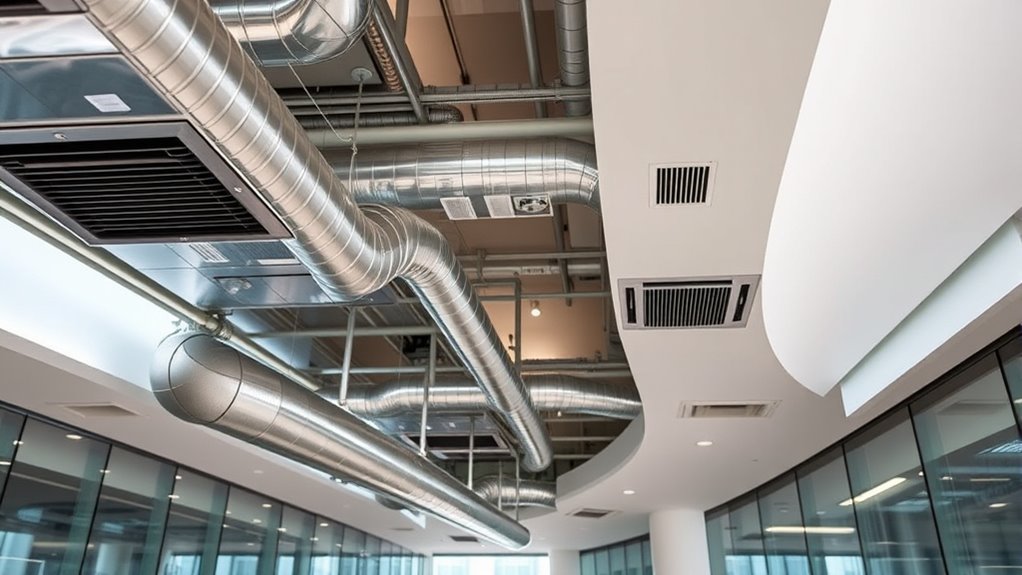
Designing an effective HVAC system requires careful consideration of various factors to guarantee ideal comfort and efficiency. One of the most critical aspects is airflow optimization. Proper airflow ensures that conditioned air reaches every corner of the building without creating drafts or dead zones. To achieve this, you need to evaluate the layout carefully, considering the size and shape of each space. Use strategically placed diffusers and vents to promote even air distribution. Additionally, balancing the airflow across different zones helps prevent issues like overheating or undercooling in specific areas. Installing adjustable dampers and sensors allows you to fine-tune airflow in real-time, ensuring each zone receives the appropriate amount of conditioned air. This not only improves comfort but also enhances energy efficiency by avoiding unnecessary conditioning of unoccupied or less-used spaces.
Zoning strategies play a crucial role in managing airflow and maintaining precise temperature control in multi-use buildings. By dividing the building into different zones based on usage, occupancy, or thermal load, you can customize heating and cooling to match each area’s specific needs. For instance, conference rooms may require different settings than offices or retail spaces. Implementing zoning controls allows you to shut off or reduce airflow to unused zones, conserving energy and reducing operational costs. When designing zones, consider factors like occupancy patterns, equipment heat gains, and external influences such as sunlight exposure. Proper zoning also simplifies maintenance and troubleshooting, as issues can be isolated to specific sections without affecting the entire building.
Furthermore, integrating zoning strategies with airflow optimization enhances overall system performance. Automated controls, such as programmable thermostats and sensors, enable you to respond dynamically to changing conditions within each zone. This ensures that the conditioned air matches the real-time needs of occupants, improving comfort and reducing waste. You should also evaluate the ductwork layout to minimize pressure drops and ensure that airflow remains consistent across all zones. When planning for airflow optimization and zoning, keep in mind the importance of flexibility. As building use evolves or occupancy patterns shift, your HVAC system should be adaptable enough to accommodate those changes without major overhauls. Additionally, understanding the principles of sound vibrations can help in designing quieter HVAC systems that enhance occupant comfort. By paying close attention to airflow and zoning strategies, you can design an HVAC system that delivers ideal comfort, efficiency, and longevity in a multi-use building environment.

ALORAIR Whole House Dehumidifier, 90 PPD Commercial Grade Whole Home Dehumidifiers for Garages, Water Damage Restoration, 2300 Sq.Ft dehumidifiers for Crawl Space
Energy Efficient Whole House Dehumidifier: 90 pints per day at AHAM condition, 70 Pint at DOE, up to...
As an affiliate, we earn on qualifying purchases.
Frequently Asked Questions
How Do Zoning Strategies Impact HVAC Efficiency in Multi-Use Buildings?
Zoning strategies considerably impact HVAC efficiency by allowing you to tailor climate control to specific areas, enhancing zoning flexibility. With effective zoning, you can optimize load distribution, reducing energy waste and ensuring comfort. You can isolate zones that need different temperatures or occupancy levels, which prevents unnecessary heating or cooling. This targeted approach minimizes energy consumption, lowers operational costs, and improves overall system performance, making your multi-use building more efficient and comfortable.
What Are the Best Practices for Integrating Renewable Energy Sources?
Integrate renewable energy sources like solar and wind, much like planting seeds for future growth. You should prioritize solar integration on rooftops and facades, maximizing sunlight exposure, and consider wind energy turbines in open areas. Combining these sources optimizes energy efficiency, reduces reliance on the grid, and supports sustainability goals. By carefully planning, you guarantee a seamless blend of renewables, making your multi-use building greener and more resilient.
How Does Occupancy Variability Affect HVAC System Sizing?
Occupancy variability impacts your HVAC system sizing because fluctuating occupant density changes the heat load and ventilation requirements. When occupancy increases unexpectedly, ventilation rates need to be modified to guarantee good indoor air quality and comfort. Conversely, lower occupancy means your system may be oversized, wasting energy. Properly evaluating typical occupant density and designing for peak ventilation rates helps you optimize system size, ensuring efficiency and comfort across all building use scenarios.
What Innovative Controls Enhance Energy Management Across Diverse Spaces?
You can enhance energy management by implementing smart sensors and AI integration across diverse spaces. Smart sensors monitor occupancy, temperature, and humidity in real-time, allowing your system to adjust HVAC operations dynamically. AI analyzes this data to optimize airflow, heating, and cooling efficiently. This approach reduces energy waste, improves comfort, and guarantees your building adapts seamlessly to changing usage patterns, making your HVAC system smarter and more sustainable.
How Can Noise Control Be Optimized in Multi-Use HVAC Systems?
You can optimize noise control in multi-use HVAC systems by implementing sound masking to reduce sound transmission between spaces. Additionally, you should incorporate vibration isolation techniques for equipment and ductwork to prevent noise from spreading. Regular maintenance also helps keep noise levels low. Combining these strategies creates a quieter environment, ensuring different spaces in the building function comfortably without disrupting each other.

COAIRO Whole House Dehumidifier 208 Pint, Crawl Space Dehumidifier with Controller Fresh Air Function and Drain Hose Up to 3000 sq. ft. for Grow Tent, Whole House, Commercial, Basement, Water Damage
208-Pint Upgrade Whole House Dehumidifier: The CoAiro whole house dehumidifier can efficiently remove up to 208 pints at...
As an affiliate, we earn on qualifying purchases.
Conclusion
Remember, thorough planning is key to a successful HVAC system in multi-use buildings. By considering diverse spaces, energy efficiency, and occupant comfort, you create a harmonious environment. Don’t forget, a chain is only as strong as its weakest link—so guarantee every element is optimized. When you pay attention to these details, your building becomes a model of functionality and sustainability, proving that “the devil is in the details.”

30 Pint Dehumidifier for Basement, 2500 Sq. Ft Dehumidifiers for Home with Drain Hose, 3 Modes, Smart Humidity Control, 24H Timer, 0.52 Gal Water Tank, for Whole House, Bedroom, Bathroom, Garage, Rv
Powerful 30-Pint Moisture Removal for Spaces up to 2500 Sq. Ft: High humidity can make rooms feel damp,...
As an affiliate, we earn on qualifying purchases.

Waykar 158 Pints Crawl Space Dehumidifier with Remote Control and Pump, Dual Duct HVAC Commercial Whole-House Dehumidifier for Basement, Industry Water Damage Unit - 5-Year Quality Coverage
【158 Pint Crawl Space Dehumidifier】The Waykar whole-house dehumidifier extracts up to 158 pints of water per day (under...
As an affiliate, we earn on qualifying purchases.