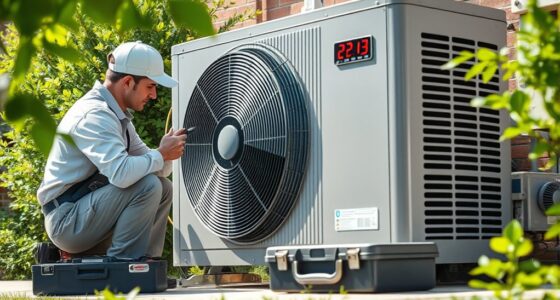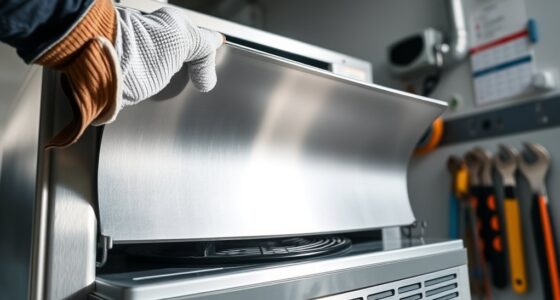
Installing a hybrid water heater in your garage isn’t as simple as it seems. You might face higher upfront costs for unit purchase, electrical upgrades, or venting, and you’ll need enough space and proper ventilation. Maintenance is ongoing, including filter cleaning and inspections. Environment factors like extreme temperatures can affect performance. If you want to avoid surprise expenses and guarantee reliable operation, there’s more to uncover about what truly goes into making your system work smoothly.
Key Takeaways
- Installation costs can be higher due to electrical upgrades, plumbing, and ventilation requirements.
- Proper placement and insulation are crucial for optimal efficiency and to prevent performance issues.
- Maintenance needs, like sediment removal and filter cleaning, are essential to extend system lifespan.
- Cold climates may reduce efficiency, possibly requiring additional insulation or backup heating.
- Ensuring adequate clearance and ventilation helps maintain safety and system performance over time.
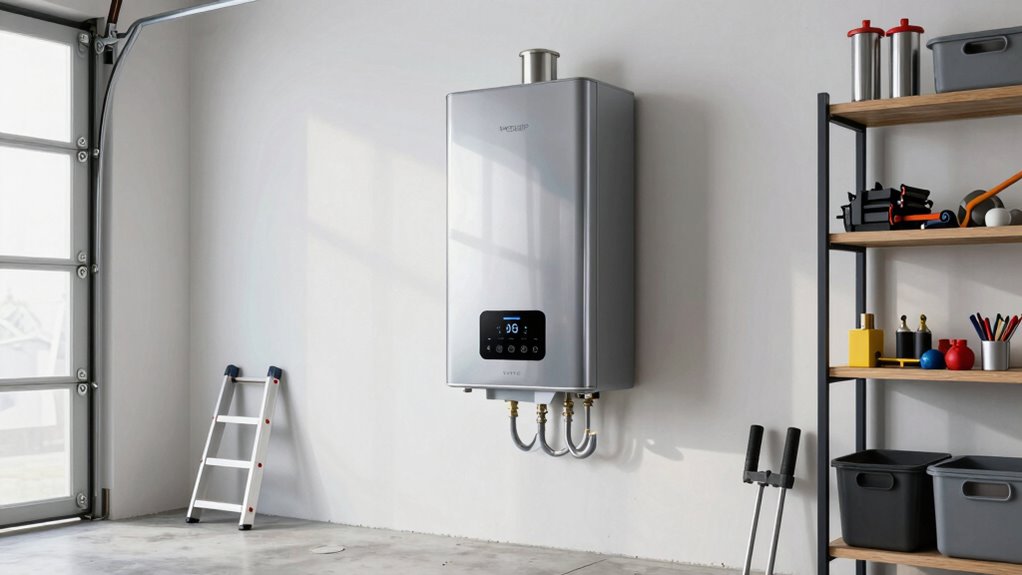
Installing a hybrid water heater in your garage can be a smart way to save space and improve energy efficiency. These units combine the best of both traditional tank and tankless systems, offering reliable hot water while reducing energy consumption. But before you dive into the installation process, it’s important to understand some things that nobody might tell you. First, while hybrid water heaters are designed for energy efficiency, their upfront installation costs can be higher than conventional models. These costs include not only the unit itself but also potential modifications to your garage’s electrical system, additional plumbing, and possibly insulation or venting adjustments.
Hybrid water heaters save space and boost efficiency, but installation costs and setup considerations are essential to keep in mind.
One thing that often surprises homeowners is that installation costs for a hybrid water heater can vary significantly depending on your existing setup. If your garage isn’t already prepared with the necessary electrical capacity, you might face unexpected expenses to upgrade your system. For example, hybrid units require a dedicated circuit, which could mean hiring an electrician to install a new breaker. Additionally, some garages lack the proper space or ventilation needed for certain models, adding to the overall costs. While these systems are designed to be compact, you’ll want to ensure there’s enough clearance for maintenance and airflow, which could influence the placement and installation fees. Proper installation is crucial for ensuring the system performs efficiently and safely over its lifespan.
Energy efficiency is a key benefit, but you should know that the savings depend heavily on your usage habits and local climate. Hybrid water heaters work efficiently by switching between heating methods based on demand and temperature, but in colder climates, they might struggle to keep up without additional insulation or backup heating sources. This can lead to increased operational costs if not properly managed. Also, keep in mind that the initial investment in a hybrid unit is balanced over time by reduced energy bills, but it might take several years to see a full return on your investment. Furthermore, understanding the importance of proper insulation can maximize your system’s efficiency and reduce operational costs.
Another aspect that often slips under the radar is maintenance. Hybrid water heaters require regular upkeep to maintain their efficiency and longevity. Sediment buildup, filter cleaning, and occasional inspections are necessary, and these tasks can sometimes be overlooked during busy household routines. If you’re not prepared for routine maintenance, your unit could lose efficiency faster than expected. Proper maintenance extends the lifespan of your system and ensures consistent performance. Finally, consider the impact of your garage environment—extreme temperatures, humidity, and debris can influence how well your hybrid system performs and might lead to additional maintenance or protective measures.
In short, while installing a hybrid water heater in your garage offers significant energy efficiency benefits and saves space, it’s essential to be aware of the potential installation costs, environmental considerations, and ongoing maintenance needs. Planning ahead ensures you maximize your investment and enjoy reliable, efficient hot water for years to come.

Camco Hot Water Hybrid Heat Kit – Easily Converts Any 6-Gallon RV LP Gas Water Heater to 120V Electricity to Conserve Propane (11673)
Converts any RV LP gas water heater to 120v electricity on demand
As an affiliate, we earn on qualifying purchases.
As an affiliate, we earn on qualifying purchases.
Frequently Asked Questions
How Long Does Installation Typically Take?
Installation usually takes about 2 to 4 hours, depending on your garage’s setup and existing plumbing. During this time, your installer will connect the hybrid water heater, ensuring proper placement for maximum energy efficiency. Keep in mind that a cost comparison might reveal higher upfront costs, but the energy efficiency benefits often save you money in the long run. Proper installation is key to maximizing those savings and performance.
Are There Specific Garage Insulation Requirements?
Yes, there are specific garage insulation requirements when installing a hybrid water heater. You should guarantee your garage is properly insulated, especially around walls and ceilings, to maintain energy efficiency and prevent heat loss. Check local codes for insulation standards, which often recommend R-values for garage walls and ceilings. Proper insulation helps your heater operate efficiently, reduces energy costs, and protects against temperature fluctuations that could impact performance.
What Safety Precautions Are Necessary During Installation?
Safety is paramount—think of it as “measure twice, cut once.” You should turn off the electrical power before working on electrical wiring, ensuring all connections are secure and properly insulated. Check ventilation requirements to prevent dangerous fumes buildup. Use appropriate tools, wear protective gear, and follow manufacturer instructions carefully. Properly grounding the unit and ensuring adequate ventilation reduces risks, keeping you safe throughout the installation process.
Can I Install It Myself or Need a Professional?
You can attempt a DIY installation if you’re comfortable with plumbing, electrical work, and local codes, but it’s often best to seek professional assistance. Hybrid water heater installation involves complex wiring and venting, which DIYers might overlook. For safety, code compliance, and ensuring your system functions correctly, hiring a licensed professional minimizes risks and guarantees proper setup, especially in a garage environment where ventilation and safety measures are essential.
How Often Should I Perform Maintenance Checks?
Imagine your hybrid water heater as a diligent worker, quietly ensuring hot water flows smoothly. You should perform maintenance checks at least once a year. During your inspection, look for leaks, corrosion, and sediment buildup. Follow a consistent maintenance schedule, including flushing the tank and checking the anode rod. Inspection tips like listening for unusual noises or checking pressure relief valves help keep it running efficiently and extend its lifespan.

3" Stainless Steel Direct Vent Kit, Includes 3-Inch Outer Diameter Elbow and Vent Pipe, Water Heater Vent Pipe Kit for Gas Tankless Water Heater
Included accessories: This 3" stainless steel vent pipe kit includes 1 exhaust pipe,1 exhaust elbow,1 roll of aluminum…
As an affiliate, we earn on qualifying purchases.
As an affiliate, we earn on qualifying purchases.
Conclusion
Installing a hybrid water heater in your garage can save space and cut energy costs, but don’t overlook the importance of proper insulation and ventilation. For example, a homeowner in Ohio installed one and noticed a significant reduction in bills, but they also had to upgrade their garage’s insulation to prevent heat loss. With careful planning, your installation can be smooth and efficient, ensuring you enjoy reliable hot water without unexpected issues down the line.

Nilight 5PCS Thermal Circuit Breaker 5A 10A 15A 20A 30A 125/250V AC 65V DC Push Button Manual Reset Overload Protector Waterproof Cap Auto Trip Resettable for Industrial 12-24V Auto Cars
Protect Your System: Nilight thermal circuit breaker can be reset after a disconnect over a period of time,…
As an affiliate, we earn on qualifying purchases.
As an affiliate, we earn on qualifying purchases.

Duck Brand Foam Pipe Covers, Pipe Insulation Foam Tubes for Hot and Cold Water Pipes, Pre Slit and Self Sealing Adhesive Edge, 0.75 in. x 1 Ft., 6 Sticks Per Package, 6 Feet Total, Black
Duck Brand insulating foam pipe stick covers are great for insulating both hot and cold water pipes
As an affiliate, we earn on qualifying purchases.
As an affiliate, we earn on qualifying purchases.