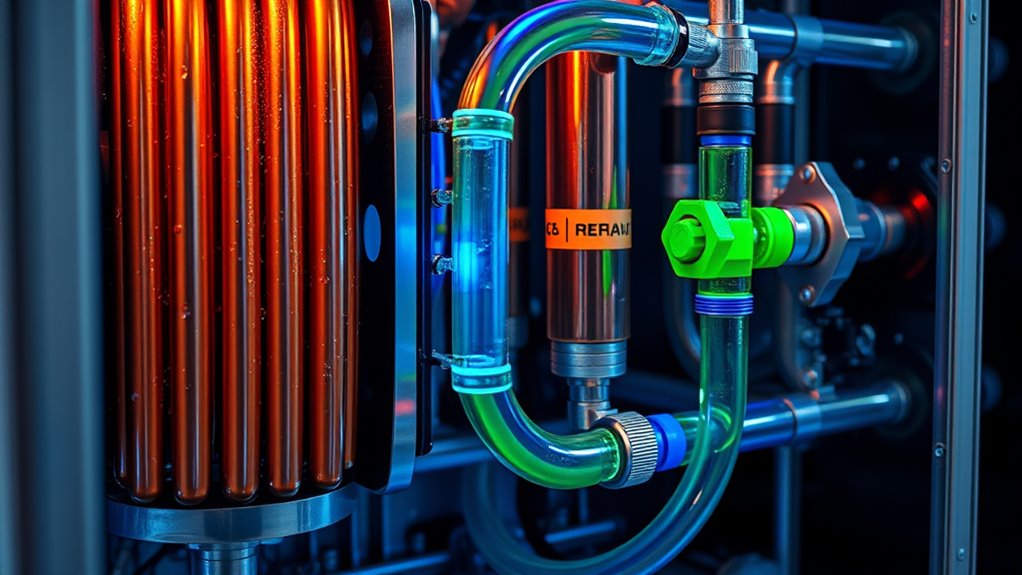

In heat pumps, the most common refrigerants include modern options like HFCs, such as R-410A and R-32, which offer good efficiency. Eco-friendly hydrocarbons like propane (R290) are gaining popularity for their low GWP and environmental benefits. Older refrigerants like CFCs and HCFCs have been phased out due to ozone depletion. Understanding your options can help you choose a more eco-conscious and efficient system—if you continue exploring, you’ll discover more about their benefits and impacts.
Key Takeaways
- Modern heat pumps typically use HFCs like R-410A or R-32 for efficient operation.
- Hydrocarbons such as propane (R290) are eco-friendly refrigerants with low GWP.
- Chlorofluorocarbons (CFCs) and HCFCs are phased out due to ozone depletion concerns.
- Low GWP refrigerants are increasingly preferred to reduce environmental impact.
- Innovations focus on refrigerants that balance high efficiency with low climate harm.
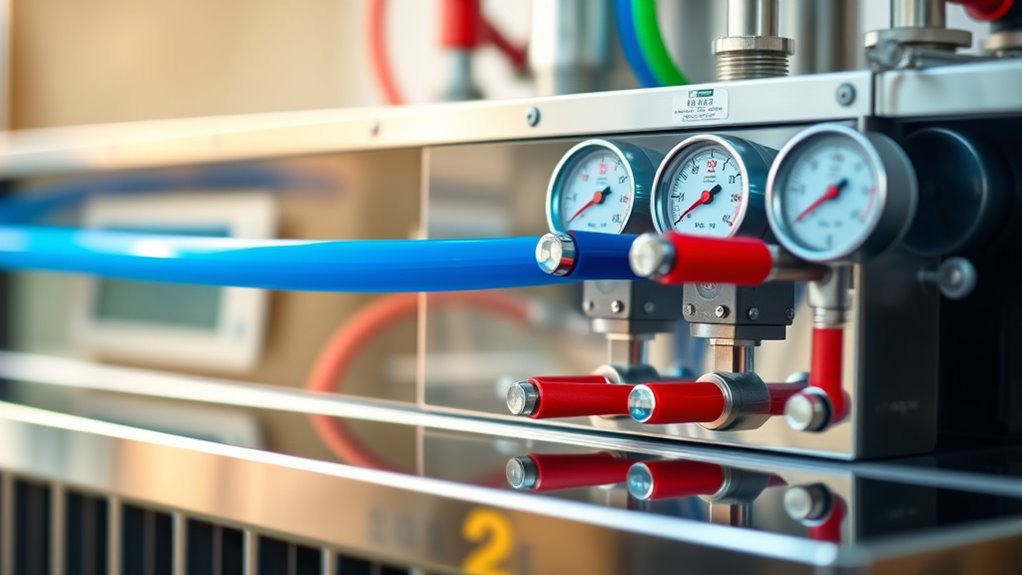
Have you ever wondered what makes heat pumps efficient at heating and cooling your home? It all comes down to the refrigerants they use. Refrigerants are the key fluids that transfer heat, enabling your system to provide comfort year-round. But not all refrigerants are created equal, especially when considering their environmental impact and efficiency ratings. These factors influence not only how well your heat pump performs but also how it affects the planet.
Refrigerants are key to heat pump efficiency, impacting performance and environmental footprint.
When choosing a refrigerant, you should pay attention to its refrigerant environmental impact. Some older refrigerants, like chlorofluorocarbons (CFCs) and hydrochlorofluorocarbons (HCFCs), have been phased out because they damage the ozone layer. That’s why modern heat pumps use more eco-friendly options, such as hydrofluorocarbons (HFCs) or hydrocarbons like propane (R290). While these newer refrigerants don’t harm the ozone, some still have high global warming potential (GWP). That’s why industry standards are pushing for refrigerants with lower GWP values to help reduce climate impact.
Refrigerant efficiency ratings also play a *crucial* role in determining how well your heat pump performs. Higher efficiency ratings mean your system uses less energy to produce the same amount of heating or cooling. Modern refrigerants with better thermodynamic properties improve the heat transfer process, making systems more efficient. For example, refrigerants like R-32 are gaining popularity because they offer excellent efficiency ratings and have a lower GWP compared to older options like R-410A. When your heat pump uses a refrigerant with a high efficiency rating, you’re likely to see lower energy bills and a smaller carbon footprint.
It’s worth noting that advancements in refrigerant technology aim to strike a balance between efficiency and environmental responsibility. Manufacturers are constantly researching new formulations that deliver high efficiency while minimizing negative environmental impacts. This ongoing innovation means your heat pump can operate more effectively and with less harm to the planet. As a homeowner, understanding these factors helps you make informed decisions about the equipment you select. Choosing a heat pump with a refrigerant that has a good efficiency rating and a low environmental impact ensures you’re doing your part for sustainability without sacrificing comfort.

Yellow Jacket 42046 2-Valve A2L Heat Pump Manifold, Gauges, Hoses
1 – 2-Valve A2L Heat Pump Manifold (42046)
As an affiliate, we earn on qualifying purchases.
As an affiliate, we earn on qualifying purchases.
Frequently Asked Questions
Are Natural Refrigerants More Environmentally Friendly Than Synthetic Ones?
Yes, natural refrigerants are generally more environmentally friendly than synthetic ones. They have a lower environmental impact because they often have a minimal global warming potential and ozone depletion potential. You should consider their refrigerant lifecycle, which involves less environmental harm during extraction, use, and disposal. Choosing natural refrigerants helps reduce your carbon footprint and supports sustainability, making them a better option for eco-conscious heat pump systems.
How Do Refrigerant Types Affect Heat Pump Efficiency?
Refrigerant types directly impact heat pump efficiency through refrigerant performance and system compatibility. When you choose the right refrigerant, you enhance performance, ensuring better heat transfer and energy savings. Compatible refrigerants prevent system issues and optimize operation. Using efficient refrigerants also reduces environmental impact and operating costs. So, selecting the proper refrigerant type is essential for maximizing your heat pump’s efficiency, longevity, and eco-friendliness.
What Are the Safety Considerations for Different Refrigerants?
You should prioritize safety when handling different refrigerants by being aware of their specific hazards. Always perform refrigerant leak detection regularly to prevent leaks, which can cause health issues or environmental damage. In refrigerant emergencies, handle the situation calmly, ventilate the area, and follow proper procedures. Use protective gear, and if you’re unsure, call a professional. Proper training guarantees you manage refrigerants securely and avoid accidents.
Can Refrigerants Be Recycled or Reused in Heat Pumps?
While refrigerants aren’t typically recycled directly within heat pumps, you can follow proper refrigerant disposal and reuse protocols. Technicians often recover and recondition refrigerants to ensure they meet safety and environmental standards before reuse. This process minimizes waste and reduces environmental impact. It’s essential to rely on certified professionals for refrigerant disposal and reconditioning, ensuring compliance with regulations and maintaining system efficiency.
How Do Refrigerant Costs Impact Overall Heat Pump Installation?
Refrigerant pricing directly impacts your overall heat pump installation costs because higher-priced refrigerants increase material expenses. When refrigerant costs rise, installation becomes more expensive, and you might see added charges passed on to you. To manage this, you should compare quotes from different installers and inquire about refrigerant options. Being aware of fluctuating refrigerant pricing helps you budget better and understand the total cost of your heat pump system.

Refrigerant Leak Detector for Heat Pumps, SIMBOW ALD-200 PRO ASHP Freon Leak Detector 16 Inch Sensor Probes 0.14oz./Yr. Max Sensitivity 3000mah Rechargeable Battery Detect R410A, R407C, R32, R1234ze.
【Optimized for Heat Pump Applications】 The ALD-200 ASHP refrigerant detector is specifically engineered to identify refrigerants commonly utilized…
As an affiliate, we earn on qualifying purchases.
As an affiliate, we earn on qualifying purchases.
Conclusion
Now that you know the incredible types of refrigerants powering heat pumps, you’re practically a superhero in the world of energy efficiency! These refrigerants are so essential, they can save you from skyrocketing bills and environmental disaster—like having a secret weapon in your home. With the right refrigerant, you’ll enjoy unbeatable comfort and save the planet at the same time. So, stay informed, choose wisely, and let your heat pump do all the heavy lifting!

Industrial Heat Pump-Assisted Wood Drying (Advances in Drying Science and Technology)
As an affiliate, we earn on qualifying purchases.
As an affiliate, we earn on qualifying purchases.

ACiQ 3 Ton 19 SEER2 High Efficiency Central Heat Pump Split System with 5kW Backup Heat Kit and Free Thermostat – R454B Inverter | 36000 BTU, Upflow/Right-Horizontal, AC/Heating HVAC Unit
CERTIFIED ACiQ SELLERS: Everything you need for reliable HVAC solutions!
As an affiliate, we earn on qualifying purchases.
As an affiliate, we earn on qualifying purchases.