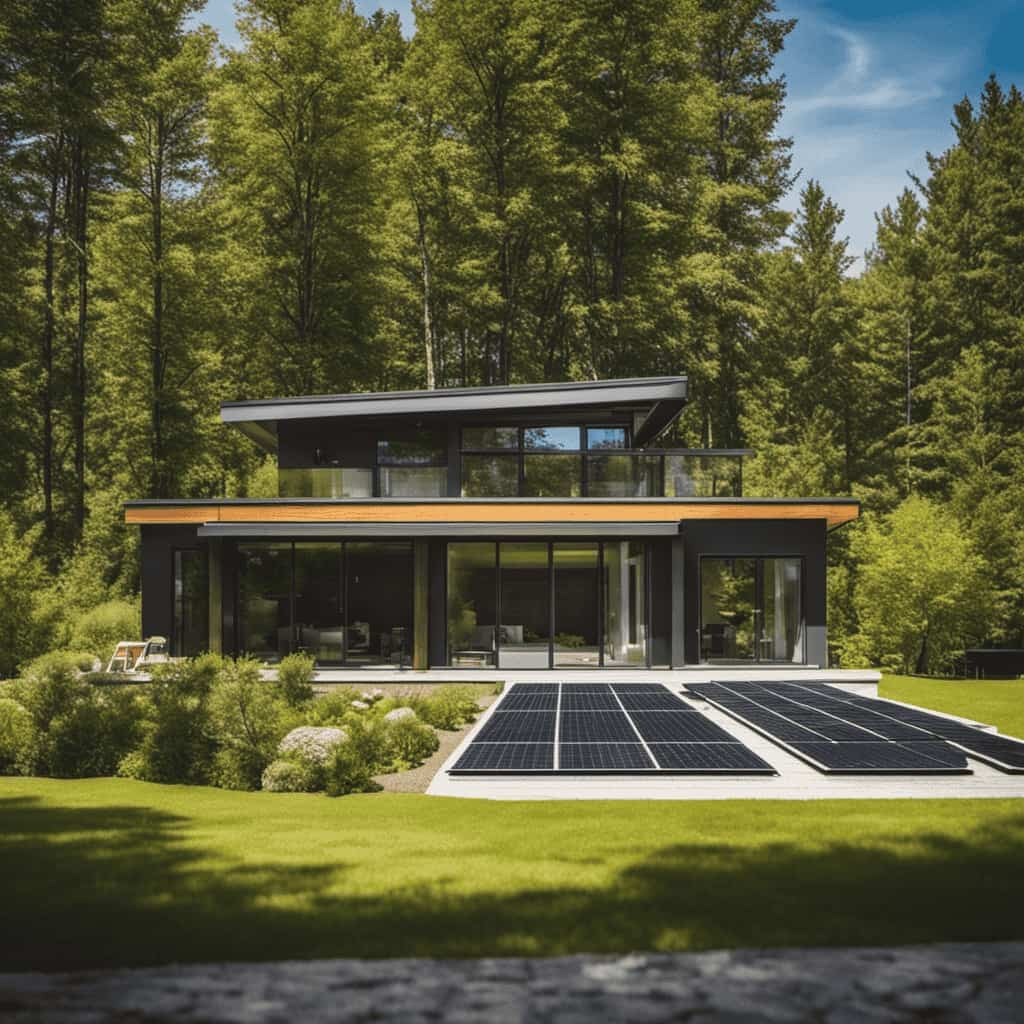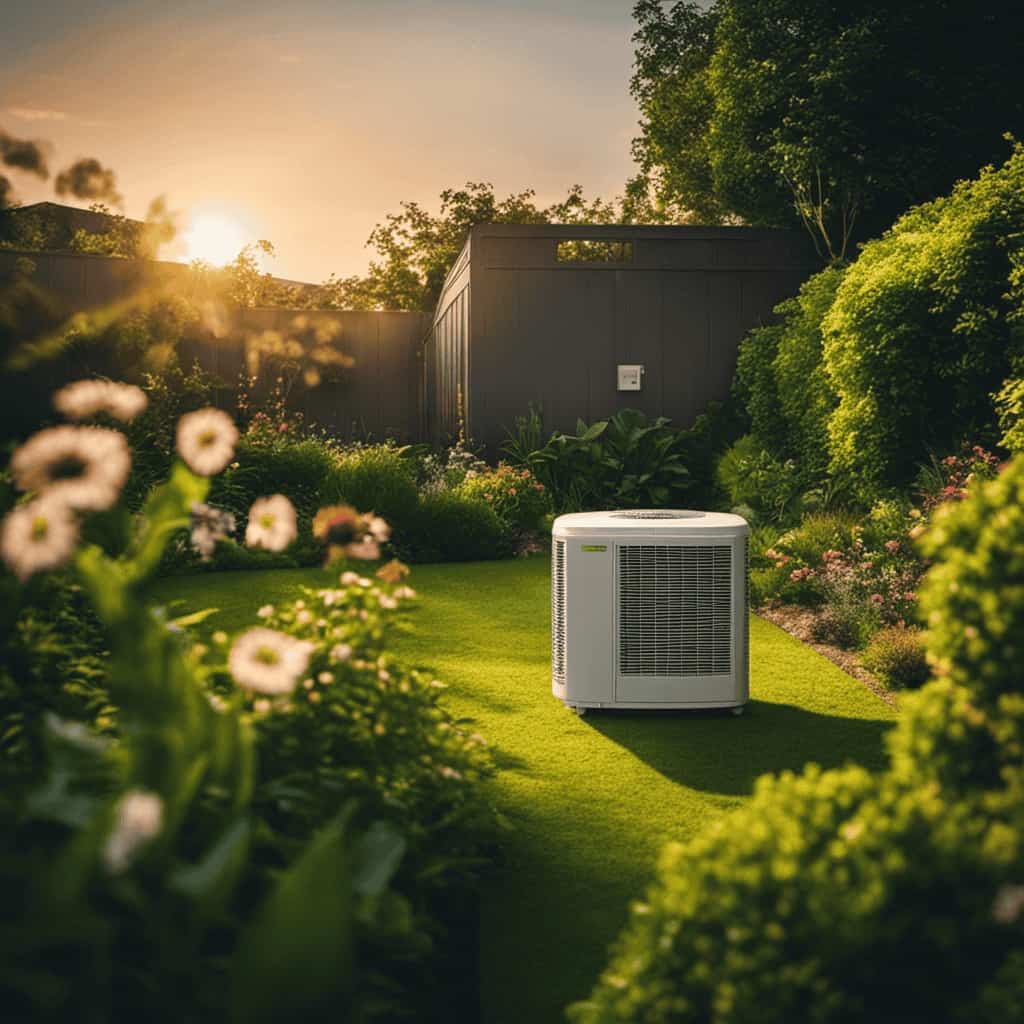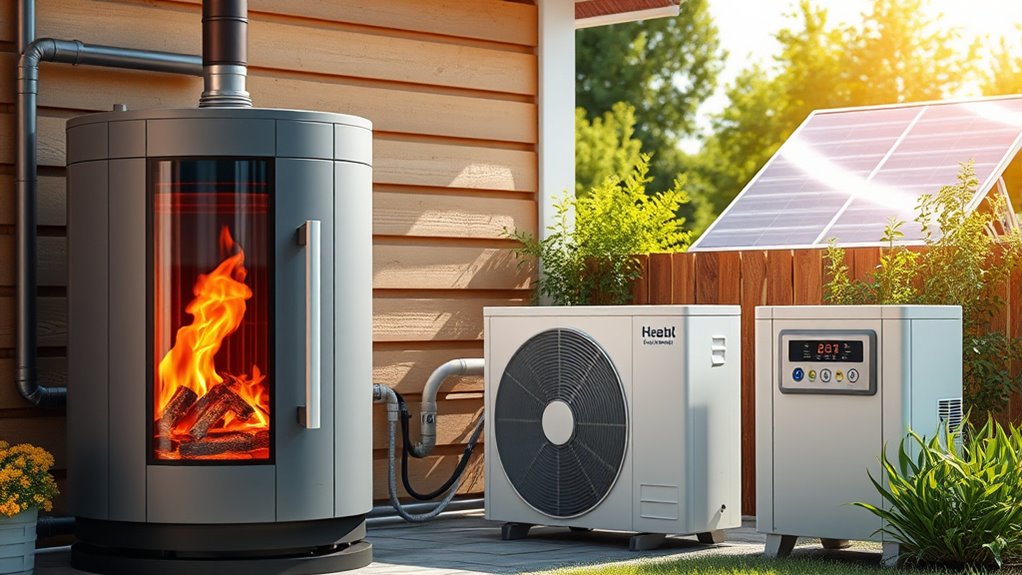
Hybrid biomass heating systems with heat pumps provide an efficient and flexible way to meet your energy needs all year. By switching between biomass boilers and heat pumps based on outdoor temperatures and fuel availability, you can maximize efficiency and reduce your reliance on fossil fuels. These systems help lower your carbon footprint and support sustainability goals. Explore further to discover how this innovative solution can enhance your property’s energy resilience and savings.
Key Takeaways
- Hybrid systems combine biomass boilers and heat pumps to optimize energy use based on seasonal demands and energy prices.
- Proper integration ensures seamless operation, switching between biomass and heat pumps for maximum efficiency.
- Advanced controls monitor external factors like temperature and electricity costs to automate system adjustments.
- These systems enhance energy resilience, reduce reliance on fossil fuels, and support sustainability goals.
- They provide reliable, year-round heating solutions suitable for residential and commercial properties.
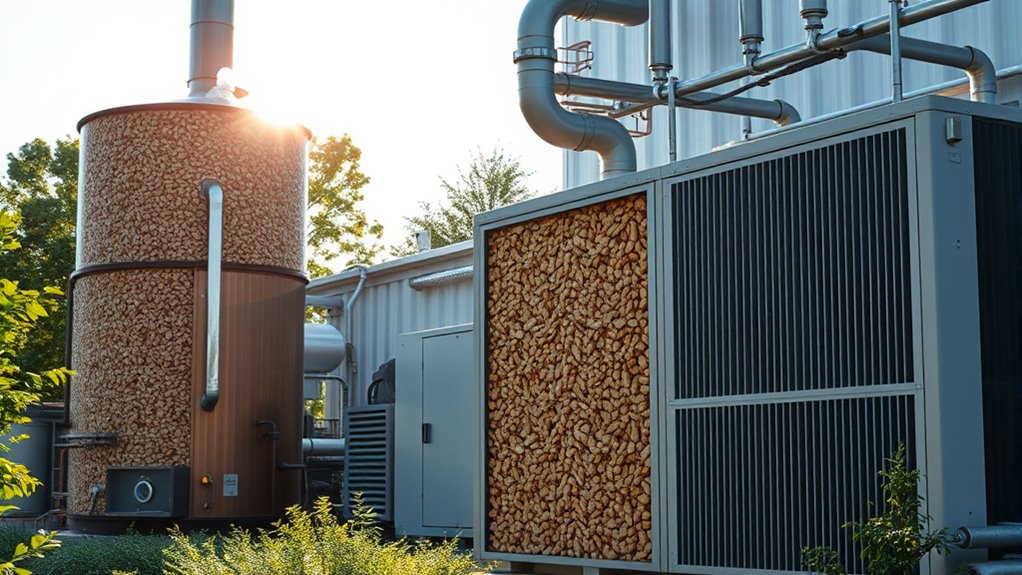
Have you ever considered how biomass heating and hybrid systems can transform your energy use? These innovative solutions are gaining attention because they offer a practical way to harness sustainable energy while optimizing efficiency. By combining biomass boilers with heat pumps, you can create a flexible, eco-friendly system that reduces reliance on fossil fuels and lowers your carbon footprint. This approach not only aligns with environmental goals but also provides reliable heating throughout the year.
Discover how biomass and heat pump hybrid systems can make your energy use greener and more efficient.
When you integrate biomass heating with heat pumps, system integration becomes essential. You’ll want to design a setup where both components work seamlessly, switching between or combining their output based on demand and energy prices. During colder months, a biomass boiler can deliver consistent heat, especially when biomass fuel supplies are readily available. Meanwhile, heat pumps excel when temperatures are milder, offering energy-efficient heating by extracting warmth from the air or ground. This synergy ensures you’re using the most appropriate, sustainable energy source at any given time, maximizing efficiency and minimizing waste.
System integration in hybrid setups also simplifies your energy management. Advanced controls can automatically monitor outdoor temperatures, energy costs, and system performance, adjusting operation to optimize savings and comfort. For example, when electricity rates are low, the heat pump might operate more frequently, supplementing biomass heat when needed. Conversely, during peak biomass availability or high fuel costs, the system can prioritize biomass heating. This dynamic coordination means you’re not just reducing emissions but also controlling your energy expenses more effectively.
Moreover, combining biomass with heat pumps enhances your overall energy resilience. You’re less dependent on external energy markets or grid fluctuations, creating a more self-sufficient heating solution. This hybrid approach can also be scaled to fit different property sizes, from small homes to larger commercial buildings, thanks to its adaptable system integration. Plus, it’s a forward-looking choice that aligns with renewable energy initiatives, supporting broader sustainability goals.
In addition, implementing payment solutions in your energy systems can help manage costs and streamline billing, ensuring smoother operation and customer satisfaction. Embracing biomass heating paired with heat pumps allows you to access sustainable energy sources while enjoying smooth, efficient system integration. This strategy not only promotes environmental responsibility but also provides you with greater control over your energy use and costs. Transitioning to this hybrid setup can future-proof your property’s heating, making it a smart, eco-conscious decision that benefits both your wallet and the planet.

Canyon Lodge Large Pellet Stove
Heats up to 2,000-3,000 sq. ft.
As an affiliate, we earn on qualifying purchases.
Frequently Asked Questions
What Is the Initial Cost of Installing Biomass Heating Systems?
The initial investment for installing biomass heating systems typically ranges from $10,000 to $30,000, depending on system size and complexity. Installation costs include site preparation, equipment, and labor, which can vary based on your property’s specifics. You should expect higher costs for larger or more advanced systems. While the upfront expense might seem steep, consider long-term savings on energy bills and potential government incentives that can offset initial installation costs.
How Do Hybrid Systems Optimize Energy Efficiency?
Hybrid systems supercharge your energy efficiency by blending renewable integration and system automation, transforming your heating into a powerhouse of savings. They seamlessly switch between heat pumps and biomass, maximizing efficiency in every season. By intelligently balancing energy sources, you’ll slash energy bills and reduce emissions. It’s like having a super-smart energy team working 24/7 to optimize performance, ensuring you get the most eco-friendly, cost-effective heating all year long.
Are Biomass Heating Systems Suitable for Small Residential Properties?
Biomass heating systems can be suitable for small residential properties if your renewable preferences align with sustainable energy sources and the property’s suitability supports biomass installation. You’ll need sufficient space for the boiler and fuel storage, as well as access to a reliable supply of biomass fuel. If your property meets these criteria and you prioritize renewable options, biomass heating could be an efficient, eco-friendly choice for your home.
What Maintenance Is Required for Heat Pumps in Hybrid Setups?
You need to regularly clean or replace your heat pump filters to guarantee ideal airflow and efficiency. Additionally, you should schedule refrigerant checks annually to prevent leaks and maintain proper system performance. Keep an eye on any unusual noises or temperature fluctuations, and have a professional inspect your hybrid setup periodically. Proper maintenance keeps your heat pump running smoothly, saving you energy and extending its lifespan.
How Do Government Incentives Support Biomass and Hybrid Heating Installations?
Government incentives make it almost too easy to embrace biomass and hybrid heating. Thanks to policy incentives and funding programs, you can lower upfront costs and boost efficiency. It’s almost like the government wants you to switch, making it financially attractive to cut emissions and save money long-term. So, if you’re on the fence, these incentives are your golden ticket to greener, cheaper heating solutions.

Westinghouse Natural Gas Tankless Water Heater Indoor Installation Max 7.9 GPM 180,000 BTU, WIFI Enable Temp Self Modulating Non Condensing High Efficiency for House or Commercial, APOLO Performance
【On-Demand Efficiency】 Westinghouse tankless water heater works only needed, saving energy and costs. Compact yet powerful for whole-home...
As an affiliate, we earn on qualifying purchases.
Conclusion
By choosing biomass heating and hybrid systems with heat pumps, you can markedly reduce your carbon footprint—up to 70% compared to traditional fossil fuels. These systems not only boost energy efficiency but also offer cost savings over time. Embracing these technologies puts you at the forefront of sustainable living, helping combat climate change. So, consider upgrading your heating system today and join the movement toward cleaner, greener energy solutions.

Large Pellet Stove - 130lb Hopper
Built-in WiFi – Smart Home Technology
As an affiliate, we earn on qualifying purchases.

PelPro PP150 Pellet Stove for Home Heating - 150 lb Hopper, 49,200 BTU Heats up to 2,500 Sq. Ft., Easy-Dial Temp Control, Built-in Thermostat with Auto-Ignition, Powerful & Quiet 265CFM Blower
PP150 pellet stoves for fireplaces are efficient for home heating up to 2,500 sq. ft. at almost 50,000...
As an affiliate, we earn on qualifying purchases.