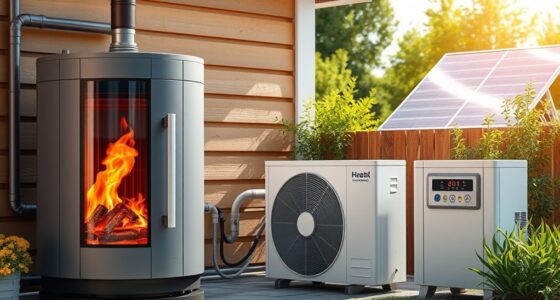
Geothermal energy harnesses Earth’s natural heat as a sustainable, renewable source of heat for various uses. By tapping into underground hot water and steam, you can generate electricity or provide direct heating for buildings, greenhouses, and industry. This clean energy option offers reliable, consistent power with minimal greenhouse emissions. If you’re interested, you’ll discover how technological advances expand geothermal’s potential and make it a essential part of a greener future.
Key Takeaways
- Geothermal energy harnesses Earth’s internal heat, providing a sustainable and renewable source of thermal energy.
- Hot springs and geothermal reservoirs naturally supply hot water and steam for direct heating applications.
- Drilling into geothermal reservoirs allows continuous extraction of heat for electricity and thermal energy use.
- Technological advancements like enhanced geothermal systems expand access to clean heat sources in different regions.
- Geothermal energy offers a low-emission, reliable, and renewable alternative for heating buildings, industries, and communities.
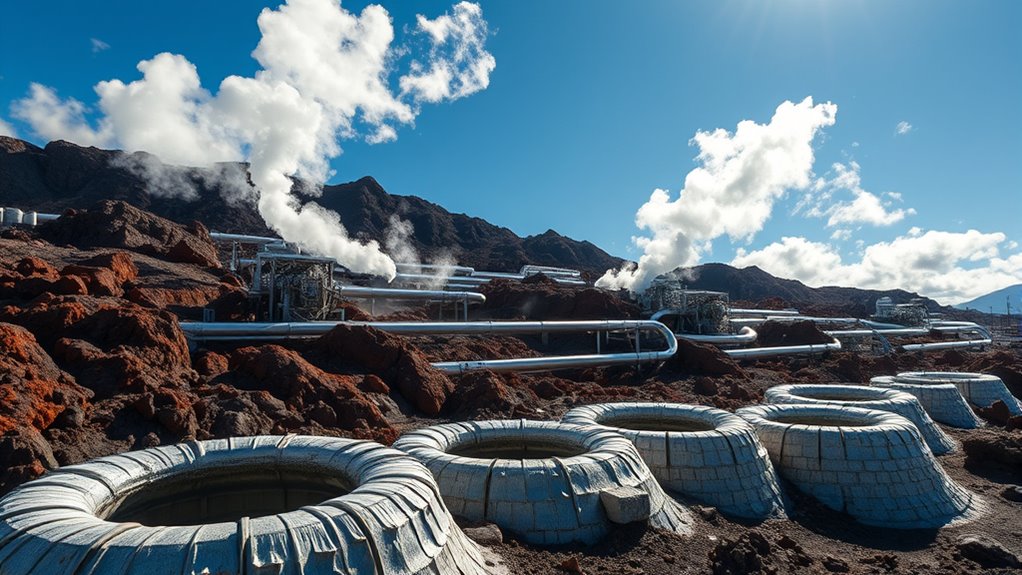
Have you ever wondered how Earth’s internal heat can be harnessed for clean energy? It’s an incredible natural resource that offers sustainable ways to produce heat and electricity. One of the most accessible methods is through hot spring utilization. When underground water is heated by the Earth’s geothermal energy, it rises to the surface as hot springs. These springs have been used for centuries, not only for bathing and relaxation but also as a natural source of thermal energy. Today, we’ve developed ways to tap into this heat more efficiently, transforming hot springs into valuable assets for energy production. By drilling into geothermal reservoirs, engineers can extract hot water or steam, which can then be used directly for heating or converted into electricity.
Geothermal power plants are at the heart of this energy harnessing process. They work by capturing the Earth’s heat at various depths, where temperatures are high enough to generate power. Once the geothermal fluid is extracted, it passes through turbines connected to generators, producing electricity. This process is remarkably clean, as it emits very little greenhouse gases compared to fossil fuels. Plus, geothermal power plants operate continuously, providing a steady source of energy unlike intermittent renewable sources like wind or solar. This reliability makes geothermal energy a crucial component of a balanced, sustainable energy grid.
You might be surprised to learn how widespread geothermal energy utilization can be. Regions with volcanic activity or significant geothermal reservoirs are prime locations for geothermal power plants. Countries like Iceland, the Philippines, and the United States have developed extensive geothermal infrastructure, effectively turning underground heat into a massive source of clean power. Hot spring utilization isn’t just about electricity; it’s also about heating buildings, greenhouses, and even industrial processes. The versatility of geothermal heat makes it an attractive option for communities seeking sustainable energy solutions.
Harnessing Earth’s internal heat also involves ongoing technological advancements. Enhanced geothermal systems (EGS), for example, create artificial reservoirs by fracturing rocks and injecting water, expanding the potential for geothermal energy in areas lacking natural reservoirs. These innovations could liberate huge new sources of renewable heat, making geothermal energy even more accessible and cost-effective. When you consider the benefits—renewable, reliable, low-emission—geothermal energy stands out as an essential part of our shift to cleaner energy sources. Its ability to provide consistent heat through hot spring utilization and power through geothermal power plants offers a promising path toward a sustainable future, harnessing the Earth’s natural warmth for generations to come. Additionally, ongoing research into geothermal resource management promises to optimize extraction techniques and further expand its role in global energy strategies.
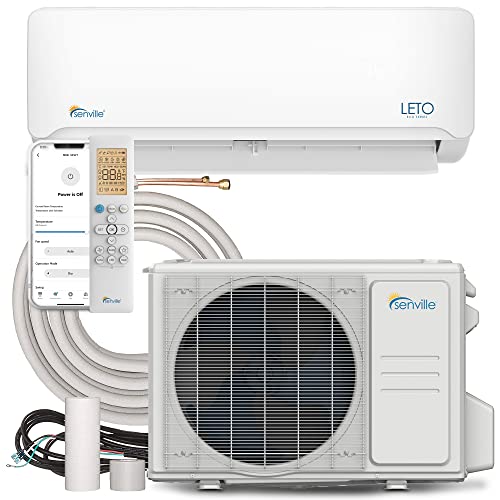
Senville LETO Series Mini Split Air Conditioner Heat Pump, 12000 BTU 110/120V, Inverter, Works with Alexa, SEER2 20.8, 1 Ton, White
Alexa Enabled Mini Split AC/Heating System: Integrate with voice control or app, allowing you to adjust your mini...
As an affiliate, we earn on qualifying purchases.
Frequently Asked Questions
What Are the Environmental Impacts of Geothermal Energy?
You might wonder about geothermal energy’s environmental impact. It has a relatively small environmental footprint, but you should consider potential ecosystem effects, like land use changes and water usage. Sometimes, drilling can cause minor surface disturbances or release trace gases. Overall, though, it’s cleaner than fossil fuels, making it a sustainable choice. By managing site impacts well, you can minimize negative effects on local ecosystems.
How Long Does a Typical Geothermal Installation Last?
A typical geothermal installation lasts like a well-worn tool, often 25 to 50 years, depending on your system’s longevity and maintenance. You’ll need regular upkeep to keep it running smoothly, but with proper care, it can serve you for decades. The underground components tend to endure longer than the surface equipment, so prioritizing maintenance guarantees your geothermal system remains reliable and efficient over its lifespan.
Can Geothermal Energy Be Used for Cooling as Well?
Yes, you can use geothermal energy for cooling through geothermal cooling systems. These systems utilize heat pump efficiency to transfer heat away from your home, providing effective cooling during hot months. By leveraging the stable underground temperature, geothermal cooling reduces energy consumption and offers a sustainable alternative to traditional air conditioning. You’ll benefit from lower utility bills and a more environmentally friendly way to stay comfortable year-round.
What Are the Initial Costs of Geothermal System Installation?
Think of installing a geothermal system like planting a sturdy tree. The initial costs and installation expenses can be significant, often ranging from $10,000 to $30,000 or more. This upfront investment covers drilling, equipment, and labor. While it’s a hefty start, remember that this “tree” provides long-term savings on energy bills and a sustainable, eco-friendly source of heat and cooling, making it a worthwhile investment.
How Accessible Is Geothermal Energy in Urban Areas?
You can access geothermal energy in urban areas, but its availability depends on existing urban infrastructure and proximity to geothermal resources. Cities with well-developed energy distribution systems and suitable geological conditions make it easier to tap into geothermal heat. However, retrofitting urban infrastructure can be complex and costly, which may limit widespread adoption. Overall, urban areas can utilize geothermal energy effectively, especially with advancements in drilling and heat exchange technologies.
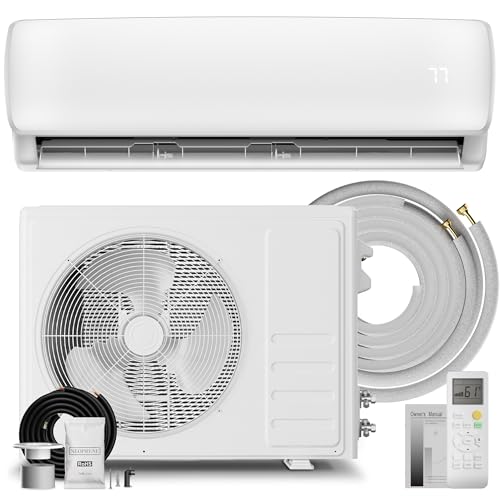
MEPTY 9000BTU Mini Split AC/Heating System, 19 SEER2 Energy Efficient Mini Split Air Conditioner with Heat Pump, 110V Cools Up to 450sq.ft, Ductless Inverter AC Unit with Pre-Charged Condenser
⭐Advanced Energy Saving: Advanced inverter technology with leading 19 SEER2 rating delivers superior performance through ensuring that the...
As an affiliate, we earn on qualifying purchases.
Conclusion
While some worry geothermal energy isn’t reliable enough, advancements are making it more consistent than ever. You can trust that tapping into Earth’s heat offers a sustainable, renewable source of warmth that reduces your carbon footprint. It’s not just a backup; it’s a long-term solution you can count on. By embracing geothermal, you’re investing in a cleaner future—one where energy is both abundant and environmentally friendly. Make the switch today for a greener tomorrow.

MARBERO Portable Power Station 88Wh Camping Lithium Battery Solar Generator Fast Charging with AC Outlet 120W Peak Power Bank(Solar Panel Optional) for Home Backup Outdoor Emergency RV Van Hunting
EFFICIENT CHARGING: Use the adapter included in the package to charge the power station from 0 to 80%...
As an affiliate, we earn on qualifying purchases.

DELLA Motto Series Mini Split AC, 208-230V 17.5 SEER2 Cools up to 550 Sq.Ft, 12000 BTU Air Conditioner & Heater with 1 Ton Pre-Charged Heat Pump, Works with Alexa and WiFi
QUIET OPERATION & INSTALLATION: This system mandates professional installation as it's not a DIY mini split AC. This...
As an affiliate, we earn on qualifying purchases.