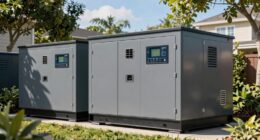
Combining wind turbines with heat pumps helps you maximize renewable energy use by integrating clean power with efficient heating. Smart controls and thermal storage manage wind variability, ensuring consistent heat supply. Placing compressors in nacelles reduces losses, boosting performance. Larger storage and smart grids address intermittent wind, making the system reliable. Future innovations like AI control and advanced turbines will further enhance efficiency—discover how these advancements can transform your renewable energy approach.
Key Takeaways
- Integrating wind turbines with heat pumps enhances renewable heating efficiency and reduces reliance on fossil fuels.
- Thermal energy storage balances wind variability, ensuring consistent heat supply through load shifting.
- Advanced smart controls optimize system performance amid fluctuating wind conditions.
- Proper system sizing and real-time monitoring maximize renewable energy utilization and system longevity.
- Emerging technologies like AI-driven controls and modular designs enable scalable, off-grid renewable heating solutions.

The Renewable Energy Home Handbook
As an affiliate, we earn on qualifying purchases.
As an affiliate, we earn on qualifying purchases.
Synergistic Operation of Wind Turbines and Heat Pumps

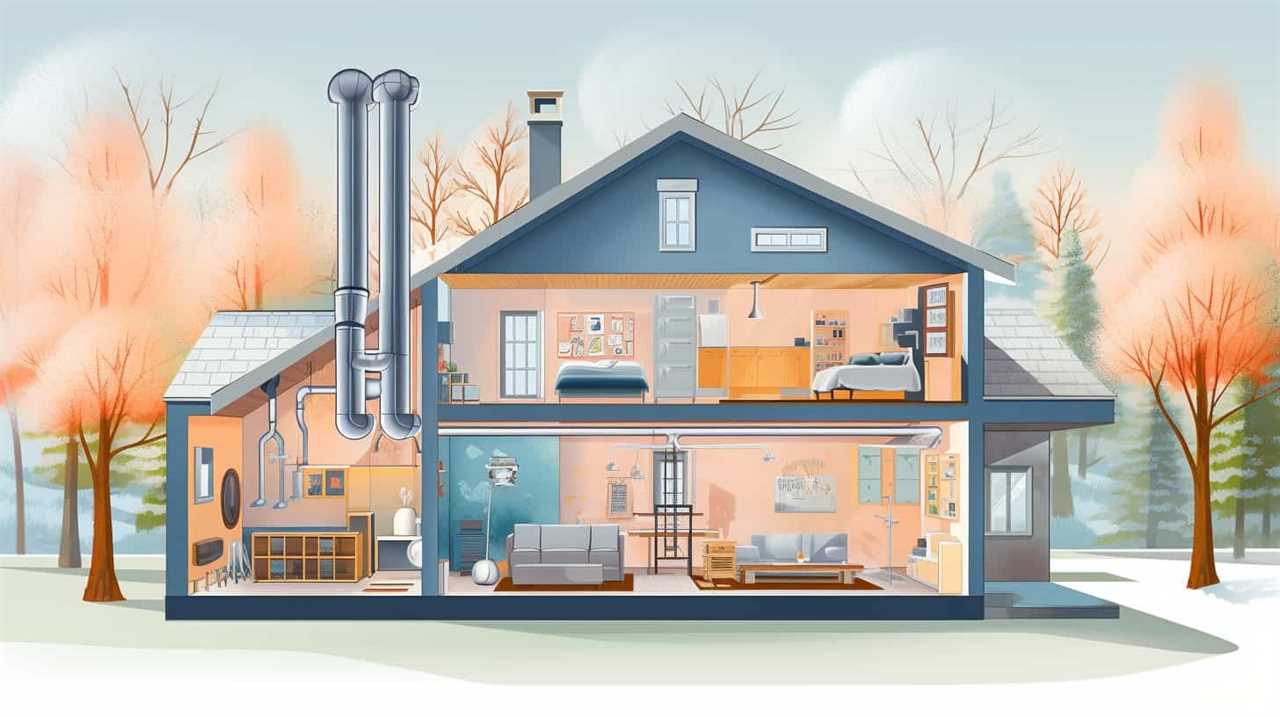
The synergistic operation of wind turbines and heat pumps offers a promising approach to harness renewable energy efficiently. By integrating wind energy directly with heat pumps, you can provide renewable heating while reducing reliance on fossil fuels and grid electricity. Advanced system integration with smart control strategies ensures that wind power fluctuations are managed effectively, maintaining consistent thermal comfort. Placing compressors directly in the nacelle minimizes mechanical losses, boosting overall energy efficiency. Incorporating thermal energy storage helps balance variable wind output, ensuring steady heat supply. These hybrid systems not only enhance renewable heating but also considerably cut carbon emissions. Real-world experiments have demonstrated efficiencies over 90% even at low wind speeds, maximizing the potential of wind energy and improving the sustainability of heating solutions. Understanding refrigeration cycle efficiency principles is crucial for optimizing system performance and ensuring maximum energy savings. Additionally, implementing advanced control algorithms can further optimize operation, adapting to changing wind conditions and demand patterns. Recognizing the importance of system calibration can further fine-tune performance and maximize energy utilization. Moreover, integrating energy storage solutions can enhance system reliability and efficiency during periods of low wind activity.

Thermal Energy Networks and Storage (Energy Engineering)
As an affiliate, we earn on qualifying purchases.
As an affiliate, we earn on qualifying purchases.
Enhancing Energy Efficiency Through Integrated Systems

Integrating wind turbines with heat pumps considerably boosts energy efficiency by enabling direct use of wind energy for heating purposes. This synergy reduces transmission losses and enhances renewable integration. To maximize benefits, consider:
- Using thermal storage to enable load shifting, maintaining steady heating despite variable wind speeds.
- Implementing advanced system modeling and control strategies for optimal energy management across fluctuating conditions.
- Properly sizing hybrid systems of wind turbines and heat pumps to improve system efficiency and reduce dependence on fossil fuels. system sizing
- Regularly assessing and maintaining system components to ensure ongoing optimal performance and longevity system maintenance.
- Incorporating real-time data monitoring to swiftly respond to fluctuating energy production and consumption patterns, thereby optimizing system operation. real-time data
- Developing comprehensive system integration plans to seamlessly combine wind energy with heating solutions, maximizing overall system performance.
- Considering the impact of seasonal wind variations to adapt system operation and storage strategies effectively, ensuring consistent heating supply year-round.
These strategies ensure effective coupling of wind energy with heat pumps, increasing overall efficiency. By focusing on system modeling and load management, you can optimize renewable energy use and create resilient, sustainable heating solutions that adapt to changing wind conditions.
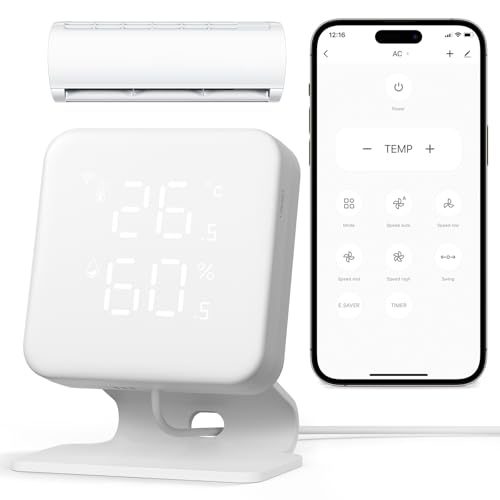
WOOX Smart Air Conditioner & Heater Pump Controller, WiFi IR Remote Control for Mini Split AC, Portable & Window AC, Temperature and Humidity Automation Controllers, Compatible with Alexa/Google
【Smart Air Conditioner Controller】 Turn your old AC or heat pump into a smart AC, this smart controller…
As an affiliate, we earn on qualifying purchases.
As an affiliate, we earn on qualifying purchases.
Overcoming Challenges in Renewable Energy Storage and Distribution

Maximizing the benefits of renewable energy integration requires overcoming significant challenges in storage and distribution. Energy storage solutions, like batteries and thermal reservoirs, are pivotal for managing wind power’s intermittency and maintaining continuous heat supply through heat pumps. Effective system integration relies on smart grid technology and advanced energy management to optimize wind turbine output and heat pump operation. Larger storage technologies improve system reliability more than simply increasing wind capacity, ensuring consistent energy delivery. Distributed energy sharing networks enable more efficient use of renewable energy, reducing dependence on fossil fuel backups. However, high costs and policy barriers hinder large-scale deployment. Additionally, the development of energy storage solutions is crucial for overcoming variability issues, allowing for better balancing of supply and demand. Overcoming these hurdles is essential for creating resilient, efficient, and sustainable renewable energy systems.

The art of off-grid heating; efficient solutions for eco-conscous living;: DIY off-grid solutions for efficient woodstoves and heating in tiny homes, … living. (OFF-GRID SOLAR POWER FOR BEGINNERS)
As an affiliate, we earn on qualifying purchases.
As an affiliate, we earn on qualifying purchases.
Real-World Applications and Case Studies

Have you ever considered how community-scale renewable energy projects can transform local neighborhoods? These projects harness wind power and heat pumps to reduce fuel poverty and cut carbon emissions remarkably. For example:
Community-scale renewables empower neighborhoods, reduce emissions, and enhance energy affordability through wind, solar, and heat pump solutions.
- A 2 MW wind turbine can supply heating to around 2,000 households, replacing fossil fuels.
- Integrating solar panels and batteries boosts household energy savings by about 31%.
- Replacing gas boilers with wind-powered heat pumps can reduce household carbon emissions by up to 90%.
System integration, supported by policy reforms like easing planning restrictions, accelerates adoption. These projects show that community-scale models not only improve energy affordability but also foster cleaner, sustainable living. By deploying renewable energy solutions locally, you empower communities to take control of their energy future and contribute to climate change mitigation.
Future Trends and Technological Advancements
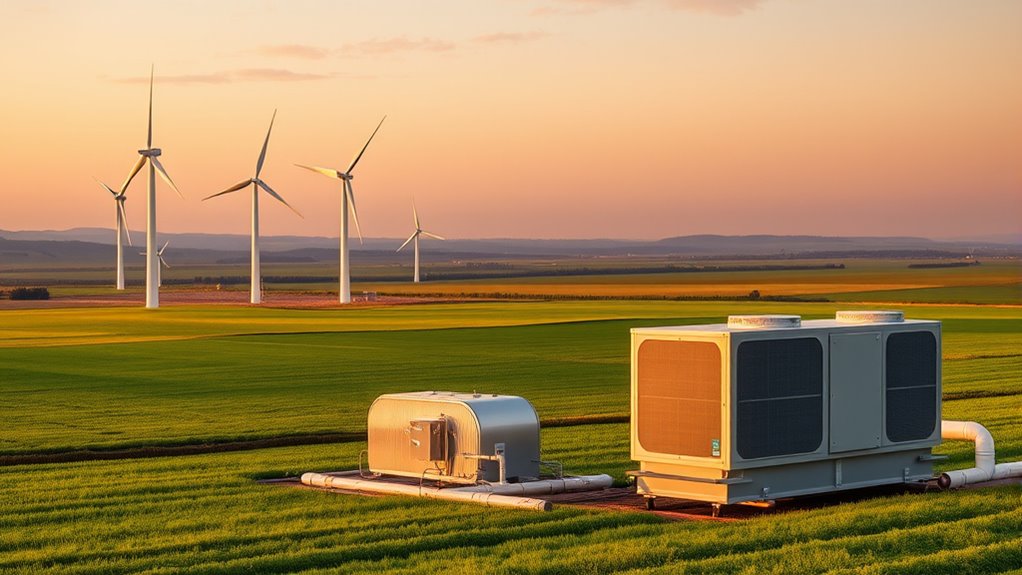
Emerging technological advancements are set to revolutionize renewable energy systems, making them more efficient and adaptable. Innovations in wind turbine technology, like bladeless and floating turbines, will boost capacity and enable deployment in deeper waters. AI-driven control systems now optimize heat pump efficiency in real time, responding to fluctuating wind speeds and weather conditions. Next-generation heat pump components, including variable-speed compressors and advanced heat exchangers, improve COP ratings beyond 5, reducing costs. Integration of hybrid wind-thermal systems with smart grid systems enhances renewable energy integration, minimizes curtailment, and maximizes use. Scalable, modular wind and heat pump systems facilitate rapid deployment in off-grid locations, supporting off-grid renewable heating. Additionally, ongoing research into renewable energy storage solutions promises to address intermittency challenges and further improve system reliability. The development of AI-powered control systems further enhances system responsiveness and efficiency, ensuring better adaptation to changing environmental conditions. These advancements promise a more resilient, efficient, and widespread adoption of renewable energy solutions worldwide.
Frequently Asked Questions
Are Wind Turbines a Good Source of Renewable Energy?
Yes, wind turbines are a great source of renewable energy. They efficiently convert wind into electricity, often over 90% in low wind conditions, and produce no greenhouse gases during operation. While their intermittent nature can be a challenge, adding energy storage or hybrid systems can guarantee reliable power. With vast global potential, especially in places like China, wind turbines help you reduce reliance on fossil fuels and promote sustainability.
Can a Wind Turbine Power a Heat Pump?
Sure, a wind turbine can power a heat pump, and it’s like hitting two birds with one stone. With advanced control systems and direct coupling, you can use wind energy efficiently to heat your space. Even small turbines work well at moderate speeds, achieving over 90% efficiency. While wind isn’t always steady, adding storage options keeps things running smoothly, making your renewable energy setup both reliable and eco-friendly.
How Do Wind Turbines Generate Renewable Energy?
You might wonder how wind turbines generate renewable energy. They work by capturing the kinetic energy of moving air with their blades. As the blades spin, they turn a rotor connected to a generator, which converts mechanical energy into electricity. The amount of energy produced depends on wind speed, with stronger winds producing more. In ideal conditions, turbines can generate enough clean power to supply thousands of homes.
Why Can’t Wind Turbines Be 100% Efficient?
You might wonder why wind turbines can’t reach 100% efficiency. The main reason is Betz’s law, which limits energy extraction to about 59.3%. Additionally, aerodynamic losses from blade drag and turbulence, along with mechanical and electrical conversion inefficiencies, reduce overall performance. Variations in wind speed and environmental factors like air density also prevent turbines from ever achieving perfect efficiency, making total energy conversion impossible.
Conclusion
By combining wind turbines and heat pumps, you can substantially boost renewable energy use and efficiency. This integrated approach helps address storage and distribution challenges while maximizing output. As technology advances, aren’t you excited about a future where renewable energy is more reliable and widespread? Embracing these innovations now puts you at the forefront of sustainable living, ensuring a cleaner planet for generations to come. Why wait to harness the full potential of renewable energy?