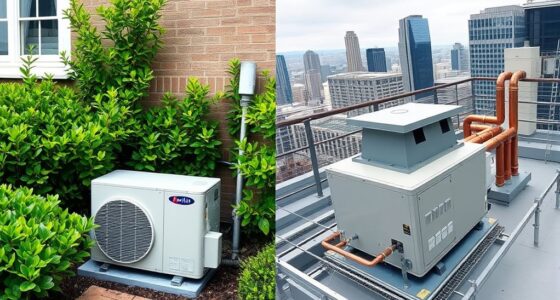
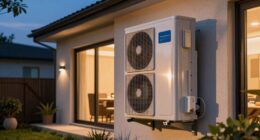
Implementing heat pumps on campuses and institutional settings offers a highly efficient, eco-friendly way to meet heating and cooling needs while reducing reliance on fossil fuels. They transfer heat rather than generate it, cutting energy costs and lowering greenhouse gas emissions. Although installation can be complex, working with experienced professionals and exploring funding options can ease the process. If you want to explore the benefits and challenges further, you’ll discover valuable insights ahead.
Key Takeaways
- Heat pumps enhance energy efficiency and reduce emissions in campus heating and cooling systems.
- They support sustainability goals by integrating with renewable energy sources like solar and wind.
- Installation can be complex, requiring careful planning to address existing infrastructure and space constraints.
- Long-term operational savings and environmental benefits justify initial investment costs.
- Technological advances are making heat pump deployment more accessible and suitable for institutional needs.
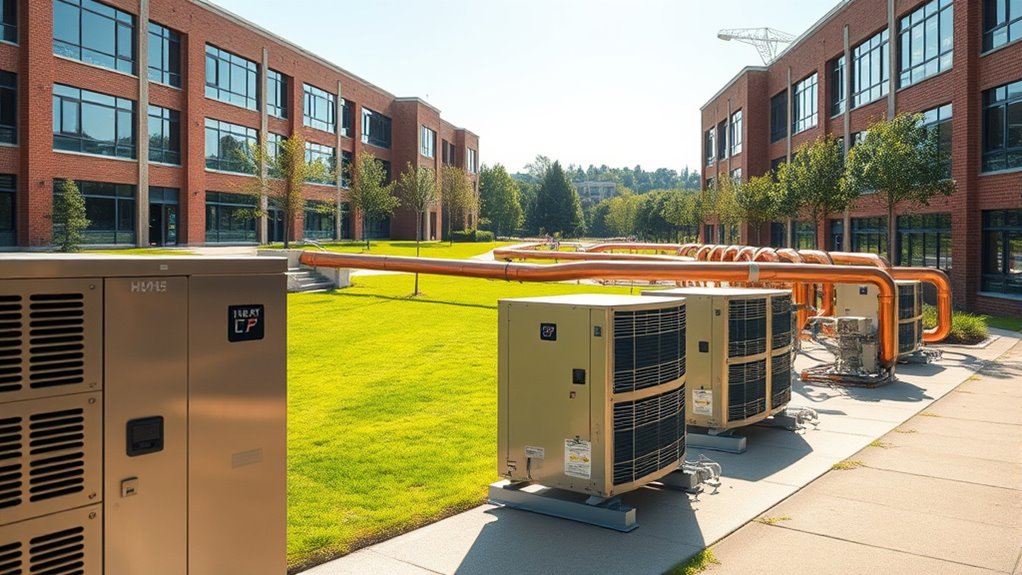
Have you contemplated how heat pumps can transform energy efficiency on campuses and institutional settings? These systems are a game-changer, especially when paired with renewable energy sources. They use electricity to transfer heat rather than generate it, making them markedly more efficient than traditional heating and cooling methods. By integrating heat pumps, your campus can reduce reliance on fossil fuels, lower greenhouse gas emissions, and move toward a more sustainable future. The shift toward renewable energy is essential, and heat pumps offer a practical way to maximize its benefits. They can leverage solar or wind power, further amplifying the environmental advantages. However, deploying heat pumps isn’t without challenges. One of the primary hurdles is installation, which can be complex and costly, particularly in older buildings or campuses with intricate infrastructure. You might face space constraints or the need for substantial modifications to existing systems, which can increase upfront expenses. Additionally, the initial investment for high-quality heat pumps and associated equipment can be sizable, but the long-term savings in energy costs often justify these costs. Another installation challenge involves ensuring the system’s compatibility with the campus’s energy grid and existing HVAC infrastructure. Proper planning is essential to avoid disruptions and maximize efficiency. You’ll also need to weigh local climate conditions; while heat pumps work well in moderate temperatures, extreme cold or heat can reduce their effectiveness, possibly requiring supplemental systems. To address these challenges, detailed feasibility studies and careful planning are indispensable. Working with experienced professionals can help identify suitable models, ideal locations, and integration strategies that mitigate installation hurdles. The good news is that many campuses have successfully navigated these challenges by phased rollouts or pilot programs, allowing them to refine their approach before full-scale implementation. Funding options and incentives, like government grants or renewable energy subsidies, can offset some installation costs, making the transition more financially accessible. As technology advances, installation processes are becoming more streamlined, and newer models are better suited to a wider range of environments. Ultimately, while installation challenges exist, they shouldn’t deter you from contemplating heat pumps for your campus. With careful planning, the benefits—improved energy efficiency, reduced carbon footprint, and enhanced sustainability—far outweigh the initial hurdles. Embracing renewable energy through heat pump technology not only supports your institution’s environmental goals but also contributes to long-term operational savings, positioning your campus as a leader in sustainable development.
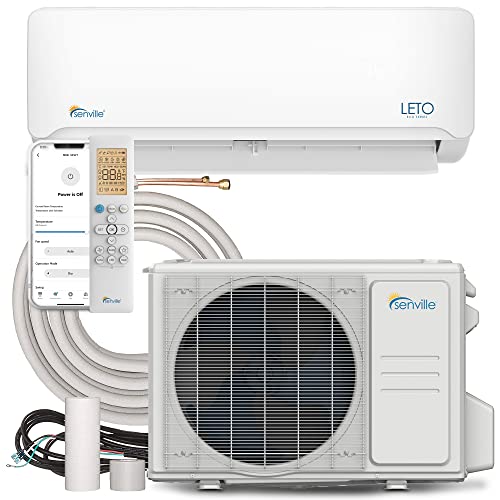
Senville LETO Series Mini Split Air Conditioner Heat Pump, 12000 BTU 110/120V, Inverter, Works with Alexa, SEER2 20.8, 1 Ton, White
Alexa Enabled Mini Split AC/Heating System: Integrate with voice control or app, allowing you to adjust your mini...
As an affiliate, we earn on qualifying purchases.
Frequently Asked Questions
What Is the Typical Lifespan of a Campus Heat Pump System?
A campus heat pump system typically lasts 15 to 20 years with proper system maintenance. Regular upkeep helps guarantee ideal performance and extends its lifespan. Technological advancements continue to improve durability and efficiency, making newer models last even longer. You should plan for routine inspections, filter changes, and system upgrades as needed, which will help you maximize your investment and keep the system running smoothly throughout its lifespan.
How Do Heat Pumps Perform During Extreme Cold Weather?
During extreme cold weather, heat pumps may experience reduced efficiency, but modern models are designed to handle these conditions well. You’ll notice they perform efficiently thanks to defrost cycles that prevent ice buildup on the outdoor unit. These cycles help maintain consistent heat output and ensure the system keeps running smoothly. While performance can dip in very low temperatures, advancements in technology keep heat pumps a reliable choice even in harsh winter conditions.
What Are the Initial Installation Costs for Large Institutional Facilities?
Think of the initial installation costs for large institutional facilities as planting a seed—investment today blooms into long-term savings. You’ll likely face a cost comparison that ranges from moderate to high, depending on system size and complexity. Fortunately, financing options are available to ease upfront expenses, making it more feasible to adopt energy-efficient heat pumps. This strategic investment not only cuts future costs but also champions sustainability.
Are Heat Pumps Suitable for Historic Campus Buildings?
Yes, heat pumps can be suitable for historic campus buildings if you prioritize historic preservation and architectural integration. They offer energy efficiency without compromising the building’s character, especially when carefully installed. You might need to work with preservation authorities to guarantee the installation respects the historic features. Proper planning allows you to modernize your energy system while maintaining the integrity of the historic architecture.
How Can Campuses Maximize Energy Savings With Heat Pump Systems?
You can maximize energy savings with heat pump systems by integrating smart controls that optimize operation based on demand and weather. Pairing these with renewable energy sources boosts efficiency and sustainability. Implementing energy audits reveals areas for improvement, while upgrading insulation reduces load. These strategies work together to lower costs, decrease environmental impact, and enhance campus sustainability, keeping you ahead in energy management and environmental responsibility.

DELLA Motto Series Mini Split AC, 208-230V 17.5 SEER2 Cools up to 550 Sq.Ft, 12000 BTU Air Conditioner & Heater with 1 Ton Pre-Charged Heat Pump, Works with Alexa and WiFi
QUIET OPERATION & INSTALLATION: This system mandates professional installation as it's not a DIY mini split AC. This...
As an affiliate, we earn on qualifying purchases.
Conclusion
Switching to heat pumps is like planting a tree that grows stronger each year, offering reliable comfort and savings. Imagine a campus that, after installing heat pumps, cut energy costs by 30%, proving a brighter, greener future is possible. Just as a single drop can start an ocean, your decision today can spark a sustainable tomorrow. Embrace this change—your institution’s warmth and environmental impact depend on it.
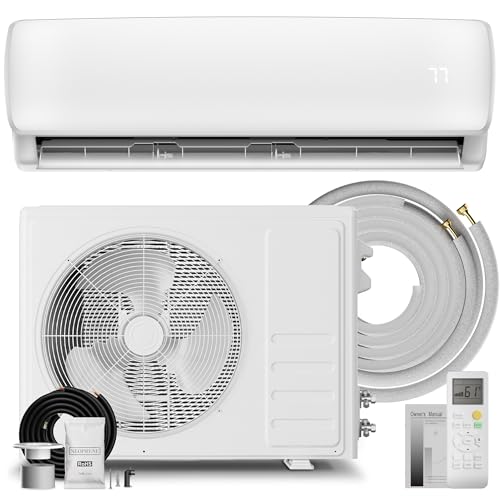
MEPTY 9000BTU Mini Split AC/Heating System, 19 SEER2 Energy Efficient Mini Split Air Conditioner with Heat Pump, Cools Up to 450sq.ft, Ductless Inverter AC Unit with Pre-Charged Condenser
⭐Advanced Energy Saving: Advanced inverter technology with leading 19 SEER2 rating delivers superior performance through ensuring that the...
As an affiliate, we earn on qualifying purchases.
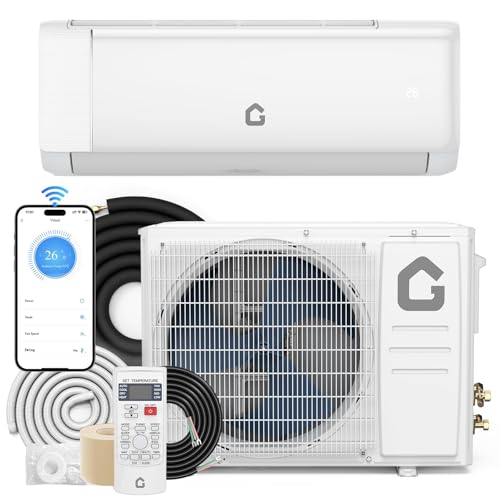
12,000 BTU Mini Split AC & Heat Pump | 115v, Inverter, Smart WiFi, DIY Install, Remote | Ultra-Quiet, Energy Efficient for 750 Sq.Ft Space
Superior Cooling & Heating: Effectively cools and heats spaces up to 750 sq. ft. with 12,000 BTU inverter...
As an affiliate, we earn on qualifying purchases.