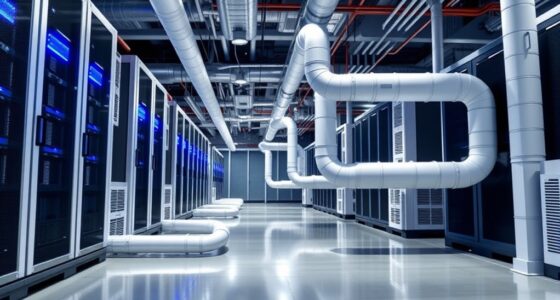
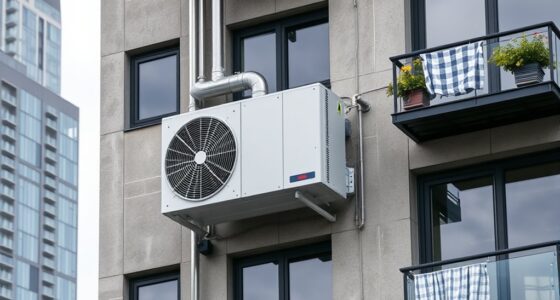
Commercial heat pump systems are a smart choice for office buildings, offering efficient heating and cooling all year round. You’ll benefit from reduced energy costs, thanks to their ability to transfer heat instead of generating it. These systems are environmentally friendly and can simplify maintenance by using a single unit for both functions. Although installation costs are higher initially, long-term savings and incentives make them a worthwhile investment. Keep exploring to discover how these systems can transform your building’s climate control.
Key Takeaways
- Commercial heat pump systems offer energy-efficient heating and cooling solutions ideal for office buildings.
- They provide year-round climate control by reversing heat transfer processes, reducing reliance on separate HVAC units.
- Installation is streamlined with modern designs, though initial costs may be higher; incentives can help offset expenses.
- These systems help lower operational costs and environmental impact through reduced energy consumption.
- Proper sizing and professional installation ensure optimal performance, reliability, and long-term savings for office environments.
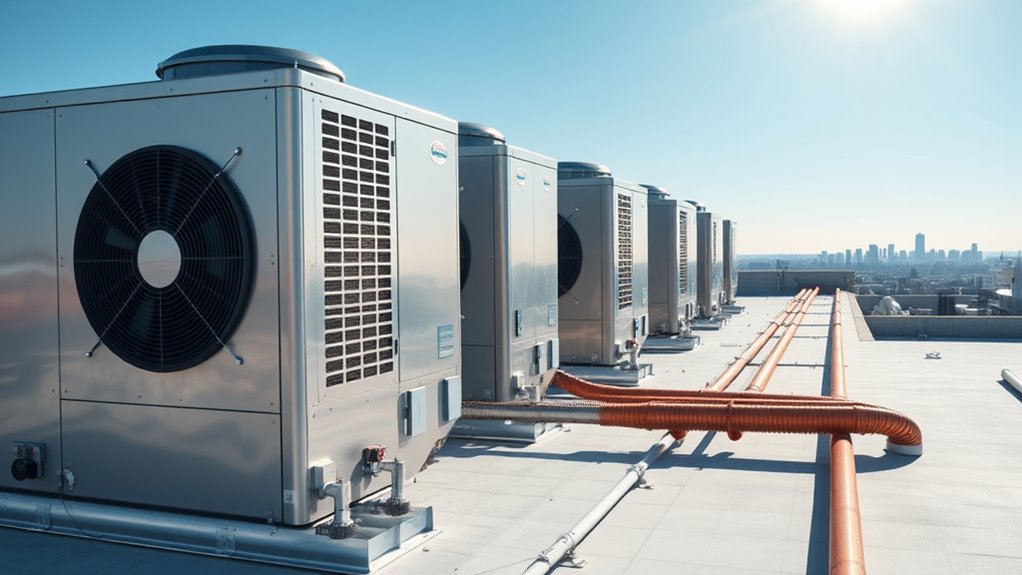
Are commercial heat pump systems the smart choice for your business’s heating and cooling needs? If you’re considering upgrading your office building’s climate control, heat pumps offer a compelling option. These systems are known for their high energy efficiency, which can considerably reduce your operational costs over time. Unlike traditional HVAC units that generate heat or cool air by burning fuel or relying solely on electric resistance, heat pumps transfer heat from one place to another. This process consumes less energy, translating into lower utility bills and a smaller environmental footprint. While the initial installation costs of commercial heat pump systems might seem higher than traditional systems, the long-term savings often outweigh the upfront investment. Plus, many manufacturers and contractors offer financing or incentives that can make installation more affordable and accessible.
When you weigh the energy efficiency of heat pumps against other options, it’s clear they can provide consistent comfort year-round. During winter, they extract heat from outside air—even at low temperatures—and bring it inside to warm your workspace. In summer, the process reverses, effectively cooling your building by removing heat. This dual functionality means you only need one system to handle both heating and cooling, simplifying maintenance and reducing the need for multiple units. Because heat pumps operate efficiently across various seasons, they help optimize your energy consumption. This efficiency not only cuts costs but also aligns with sustainability goals, making your business more environmentally responsible.
Installation costs are an important consideration, but they shouldn’t be the sole factor in your decision. Modern heat pump systems are designed for easier installation than older models, and advancements have reduced labor and hardware expenses. When planning your project, it’s essential to work with experienced professionals who can evaluate your building’s specific needs and recommend the right system size and configuration. Proper installation ensures maximum energy efficiency and reliable operation, which ultimately leads to greater savings and fewer disruptions. Keep in mind that the upfront costs may include upgrades to your electrical infrastructure or modifications to your existing ductwork, but these are often offset by the long-term energy savings and potential tax incentives.

30 Pint Dehumidifier for Basement, 2500 Sq. Ft Dehumidifiers for Home with Drain Hose, 3 Modes, Smart Humidity Control, 24H Timer, 0.52 Gal Water Tank, for Whole House, Bedroom, Bathroom, Garage, Rv
Powerful 30-Pint Moisture Removal for Spaces up to 2500 Sq. Ft: High humidity can make rooms feel damp,...
As an affiliate, we earn on qualifying purchases.
Frequently Asked Questions
What Is the Average Lifespan of Commercial Heat Pump Systems?
You can expect your commercial heat pump system to last around 10 to 15 years, depending on factors like system durability and maintenance. Technological advancements have improved system lifespan, making modern units more reliable and efficient. Regular upkeep, such as cleaning filters and scheduling inspections, helps maximize longevity. Staying on top of these practices guarantees your system remains effective, reducing the need for early replacements and keeping your office comfortable year-round.
How Do Heat Pumps Perform in Extremely Cold Climates?
Think of your heat pump as a brave explorer facing icy wilderness. In extremely cold climates, it may struggle a bit, but modern models are designed to perform well even when temperatures plummet. You should consider deforestation concerns, as outdoor units might disrupt local flora. Also, keep noise level considerations in mind, since some units can be louder in harsh conditions, so choose a model that balances efficiency and quiet operation.
What Maintenance Is Required for Optimal Operation?
You need to regularly replace filters to keep airflow ideal and prevent strain on the system. Additionally, check refrigerant levels periodically to guarantee efficient heat transfer and avoid freezing or overheating issues. Keep the outdoor unit clear of debris and schedule professional inspections annually. These steps help maintain your heat pump’s performance, extend its lifespan, and ensure it operates efficiently in all weather conditions.
Are Heat Pumps Suitable for Large-Scale Office Buildings?
Yes, heat pumps can be suitable for large-scale office buildings, but you should consider scalability challenges and zoning complexities. These systems are flexible and energy-efficient, but integrating them into large spaces requires careful planning. You’ll need to address zoning issues to guarantee even heating and cooling, and plan for potential scalability challenges as your building’s needs grow. Proper design and professional installation help maximize their benefits in large-scale applications.
How Do Initial Installation Costs Compare to Traditional HVAC Systems?
Think of installation costs as planting seeds—you might spend more upfront. Compared to traditional HVAC systems, initial costs for commercial heat pump systems are often higher due to the sophisticated technology. The cost comparison shows a steeper investment initially, mainly because of installation challenges like system integration and space requirements. However, these systems can save you money long-term through energy efficiency, making the early investment worthwhile.

Waykar 158 Pints Crawl Space Dehumidifier with Remote Control and Pump, Dual Duct HVAC Commercial Whole-House Dehumidifier for Basement, Industry Water Damage Unit - 5-Year Quality Coverage
【158 Pint Crawl Space Dehumidifier】The Waykar whole-house dehumidifier extracts up to 158 pints of water per day (under...
As an affiliate, we earn on qualifying purchases.
Conclusion
Think of commercial heat pump systems as the heartbeat of your office building—steady, reliable, and essential. They breathe life into your workspace, keeping it comfortable and efficient, even on the coldest days. By choosing the right system, you’re not just investing in technology; you’re nurturing a sustainable future. Embrace this powerful beat, and watch your building thrive like a resilient organism, seamlessly adapting to every season with grace and strength.

ALORAIR Whole House Dehumidifier, 90 PPD Commercial Grade Whole Home Dehumidifiers for Garages, Water Damage Restoration, 2300 Sq.Ft dehumidifiers for Crawl Space
Energy Efficient Whole House Dehumidifier: 90 pints per day at AHAM condition, 70 Pint at DOE, up to...
As an affiliate, we earn on qualifying purchases.

5000 Sq.Ft Energy Star Most Efficient 2024 Dehumidifier,DECIUU Max 100 Pint Dehumidifier for Basement with Drain Hose,Intelligent Humidity Control for Home Bathroom Garage Bedroom
Most Efficient 2024 Energy Star Dehumidifier: Tired of battling stubborn humidity? Our ENERGY STAR certified dehumidifier removes 70...
As an affiliate, we earn on qualifying purchases.