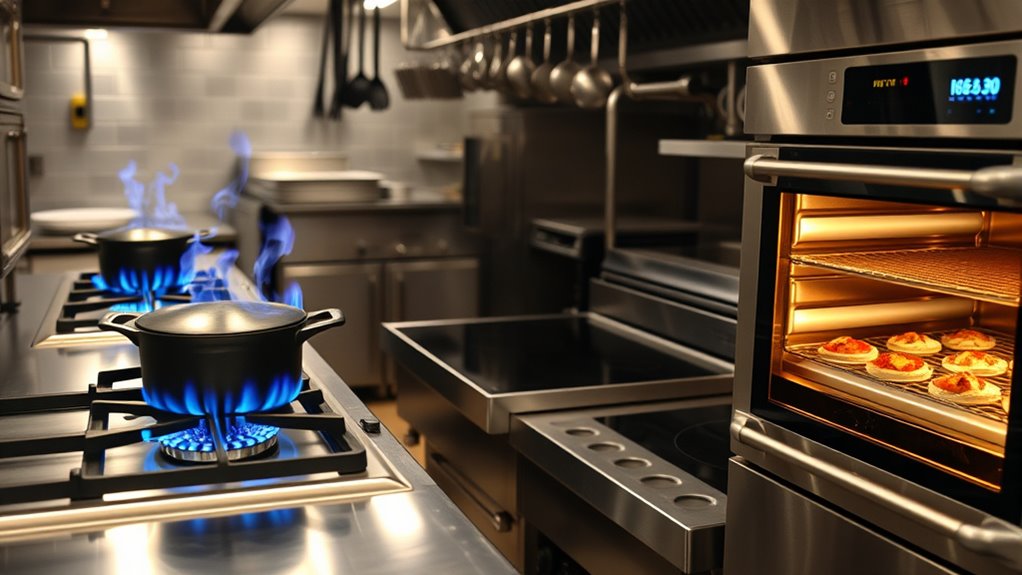

When comparing heating solutions for your commercial kitchen, consider safety, energy efficiency, and application needs. Gas appliances heat quickly and offer precise control but require ventilation and strict safety measures. Electric options, like infrared and convection heaters, are safer, easier to install, and often more energy-efficient, reducing operational costs. To find the best fit for your setup, explore how each solution balances safety standards and efficiency, as you’ll discover more options to optimize your kitchen environment.
Key Takeaways
- Gas-powered systems offer rapid heating and precise control but require ventilation and stricter safety compliance.
- Electric heaters, such as infrared and convection units, provide safer, easier installation and higher energy efficiency.
- Modern solutions incorporate advanced insulation and smart controls to optimize energy use and reduce operational costs.
- Safety features like automatic shut-offs and temperature limiters are essential for compliance and accident prevention.
- Choice depends on kitchen size, volume, safety regulations, and energy efficiency goals, balancing performance with safety.
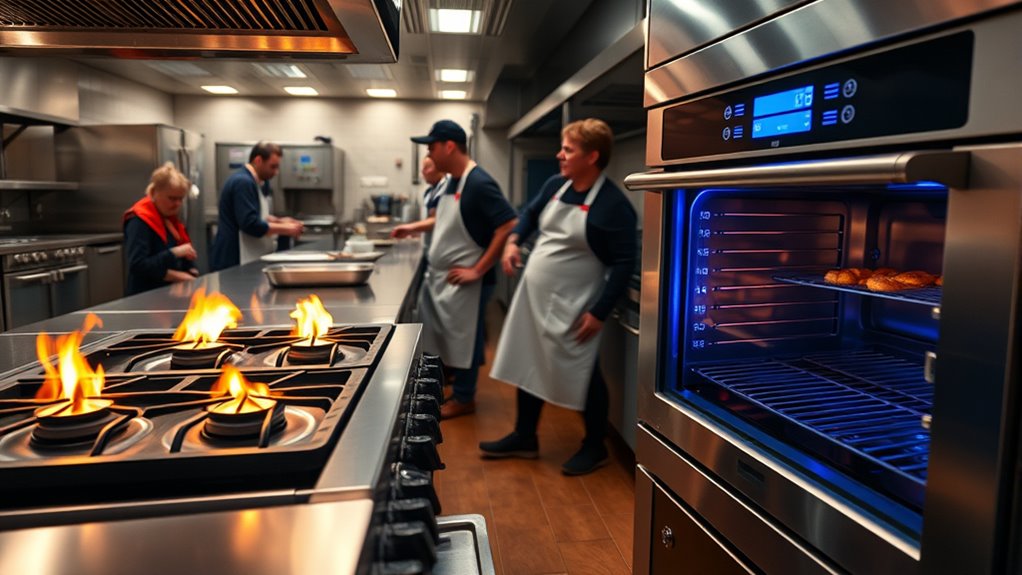
In commercial kitchens, maintaining the right temperature is essential for safety, efficiency, and food quality. Choosing the right heating solution impacts your ability to meet safety regulations while keeping energy consumption in check. You need equipment that heats quickly, maintains consistent temperatures, and adheres to safety standards without draining your budget. When evaluating heating options, consider how energy-efficient each system is. Energy efficiency isn’t just about saving money; it’s also about reducing your kitchen’s environmental footprint and complying with regulations aimed at minimizing energy waste. Modern heating solutions often incorporate advanced insulation, precise thermostats, and smart controls to optimize energy use, which can substantially lower operating costs over time. Additionally, selecting systems with security considerations can help prevent unauthorized access or tampering, ensuring the safety of your staff and premises.
Choosing energy-efficient, safe heating solutions enhances safety, reduces costs, and ensures consistent food quality in commercial kitchens.
Safety regulations play a pivotal role in selecting heating equipment. You must ensure that your chosen system complies with local codes and industry standards to prevent accidents and ensure safe operation. For instance, certain heating methods might pose fire risks if not properly installed or maintained. Equipment that features built-in safety mechanisms, such as automatic shut-offs or temperature limiters, can help you meet safety regulations and protect your staff. Additionally, you should consider how accessible and easy the system is to inspect and maintain, as regular checks are crucial for preventing hazards and ensuring ongoing compliance.
Different heating solutions serve various needs in a commercial kitchen. Gas-powered appliances offer rapid heating and precise temperature control, making them ideal for high-volume cooking. However, they may require special ventilation and are subject to stricter safety regulations due to the inherent risks of gas leaks or carbon monoxide. Electric options, like infrared or convection heaters, tend to be safer, easier to install, and often more energy-efficient, especially when combined with smart controls. They also produce less heat loss, which means you get more effective heating with less energy expenditure. Radiant heaters are particularly good for direct heat applications, providing quick warmth in specific areas without wasting energy on unnecessary space heating.
Ultimately, your choice should balance energy efficiency, safety compliance, and operational needs. Invest in systems with proven safety features and energy-saving technologies, and always follow manufacturer guidelines and local safety regulations. Regular maintenance and staff training are equally important to keep your heating system running safely and efficiently. When you prioritize these factors, you’ll create a safer, more energy-efficient kitchen environment that consistently produces high-quality food while keeping costs manageable.
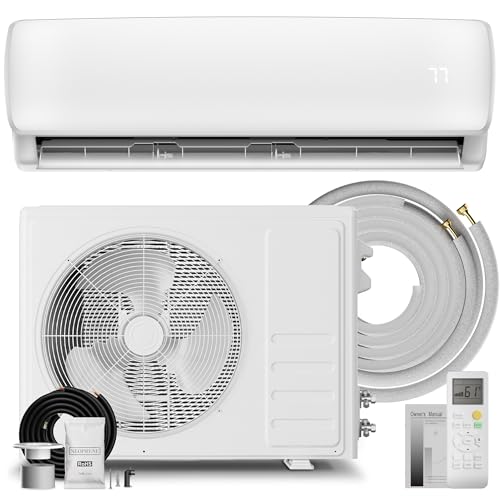
MEPTY 9000BTU Mini Split AC/Heating System, 19 SEER2 Energy Efficient Mini Split Air Conditioner with Heat Pump, 110V Cools Up to 450sq.ft, Ductless Inverter AC Unit with Pre-Charged Condenser
⭐Advanced Energy Saving: Advanced inverter technology with leading 19 SEER2 rating delivers superior performance through ensuring that the...
As an affiliate, we earn on qualifying purchases.
Frequently Asked Questions
What Are the Latest Innovations in Commercial Kitchen Heating Technology?
The latest innovations in commercial kitchen heating technology include smart controls and wireless sensors, which you can easily integrate. These advancements allow you to precisely monitor and adjust temperatures in real-time, improving efficiency and safety. With smart controls, you can set schedules or make quick adjustments remotely. Wireless sensors provide instant feedback on heat levels, helping you maintain ideal conditions effortlessly and reduce energy waste.
How Do Energy-Efficient Heating Solutions Impact Overall Kitchen Operations?
Energy-efficient heating solutions boost your kitchen’s operational efficiency by reducing energy consumption and lowering costs. You’ll see significant energy savings, which can be reinvested into other areas of your business. These systems provide consistent heat, improving cooking performance and staff comfort. As a result, your kitchen runs smoother, faster, and more sustainably, helping you meet environmental goals while maintaining high-quality service and minimizing overhead expenses.
Are There Eco-Friendly Heating Options Suitable for Small Restaurant Kitchens?
Yes, eco-friendly options like solar heating and geothermal solutions are perfect for small restaurant kitchens. They’re like a breath of fresh air, helping you cut costs and reduce your carbon footprint. Solar heating harnesses sunlight, while geothermal systems tap into the earth’s natural warmth. Both are sustainable, energy-efficient, and can seamlessly fit into your kitchen’s operations, making your business greener without sacrificing performance.
What Are the Maintenance Requirements for Different Commercial Heating Systems?
You’ll need to check your heater’s lifespan and schedule regular maintenance to guarantee it runs efficiently. For example, boilers may require annual inspections, while infrared systems need less frequent cleaning. Maintenance frequency varies depending on usage and type, but generally, you should clean filters monthly and perform professional check-ups at least once a year. Staying on top of these tasks keeps your system reliable and prolongs its lifespan.
How Do Heating Solutions Affect Food Safety and Hygiene Standards?
Heating solutions directly impact food safety and hygiene standards by preventing food contamination and guaranteeing hygiene compliance. You need to select systems that maintain proper temperatures, avoid hotspots, and are easy to clean, reducing bacteria growth. Regular maintenance and proper sanitation are essential to keep these systems effective. When you prioritize these aspects, you minimize risks, protect your reputation, and ensure a safe environment for both staff and customers.
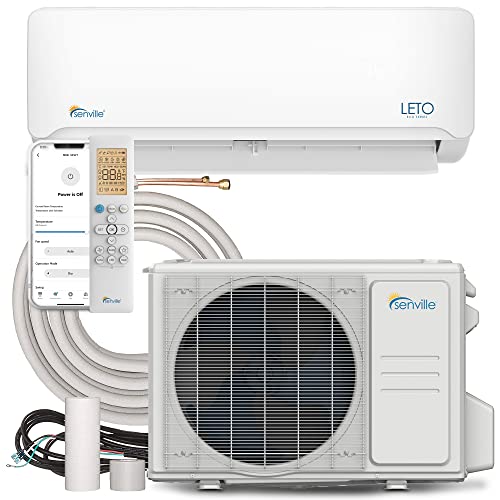
Senville LETO Series Mini Split Air Conditioner Heat Pump, 12000 BTU 110/120V, Inverter, Works with Alexa, SEER2 20.8, 1 Ton, White
Alexa Enabled Mini Split AC/Heating System: Integrate with voice control or app, allowing you to adjust your mini...
As an affiliate, we earn on qualifying purchases.
Conclusion
When choosing a heating solution for your commercial kitchen, remember that there’s no one-size-fits-all answer. Each option has its pros and cons, so you need to weigh them carefully. Keep in mind that sometimes, the best choice is the one that checks all your boxes and keeps your operation running smoothly. Don’t put all your eggs in one basket—evaluate your needs, budget, and space to find the perfect fit.

DELLA Motto Series Mini Split AC, 208-230V 17.5 SEER2 Cools up to 550 Sq.Ft, 12000 BTU Air Conditioner & Heater with 1 Ton Pre-Charged Heat Pump, Works with Alexa and WiFi
QUIET OPERATION & INSTALLATION: This system mandates professional installation as it's not a DIY mini split AC. This...
As an affiliate, we earn on qualifying purchases.

Nexaro 12000BTU Mini Split Air Conditioner& Heater, 17 SEER2 𝟏𝟏𝟓𝐕 Wall-Mounted AC Unit Cools Rooms up to 750 Sq. Ft, Energy Efficient Inverter AC with Heat Pump
𝗜𝗻𝘁𝗲𝗹𝗹𝗶𝗴𝗲𝗻𝘁 𝗜𝗻𝘃𝗲𝗿𝘁𝗲𝗿 𝗘𝗳𝗳𝗶𝗰𝗶𝗲𝗻𝗰𝘆: Enjoy significant energy savings year-round with advanced inverter technology. This AHRI Certified system precisely adjusts...
As an affiliate, we earn on qualifying purchases.