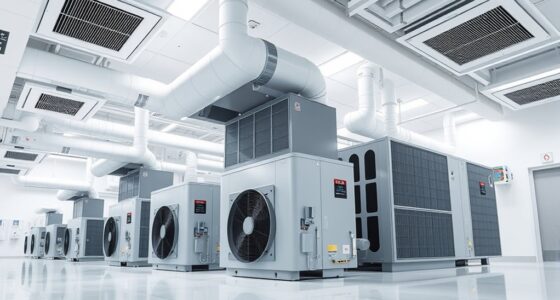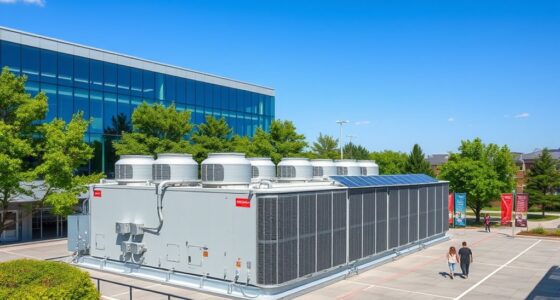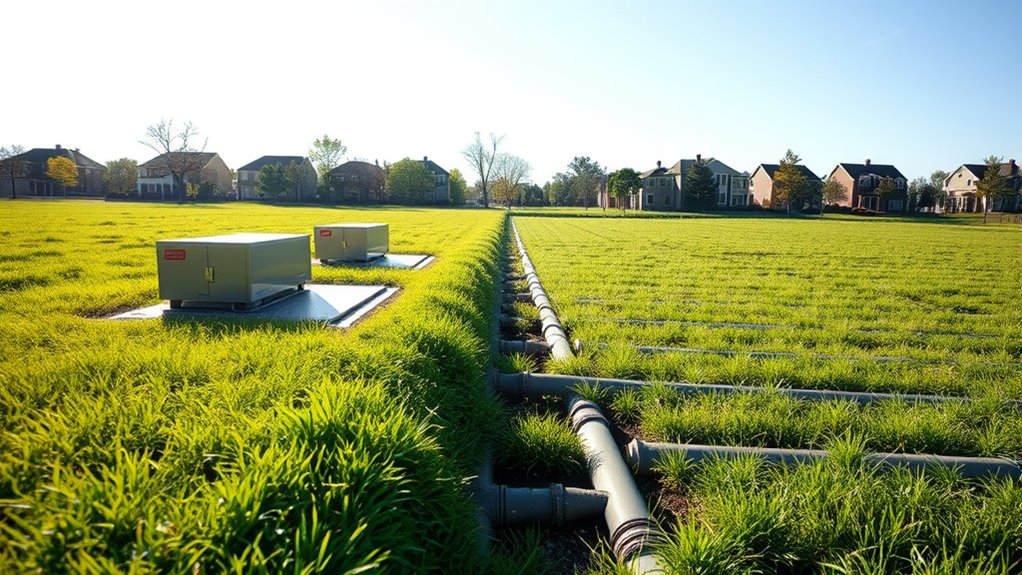

Community-scale geothermal heat pump systems use underground temperatures to efficiently heat and cool multiple buildings, offering sustainable benefits and long-term savings. They reduce reliance on fossil fuels, lower greenhouse gas emissions, and can improve your community’s energy independence. While installation can be complex and may require careful planning, the long-term advantages often outweigh initial costs. To learn more about how these systems work and how to get started, keep exploring the options available.
Key Takeaways
- Community-scale geothermal systems provide sustainable, efficient heating and cooling for multiple buildings by utilizing stable underground temperatures.
- Proper site assessment and specialized drilling are essential to address soil, rock, and space challenges in installation.
- Integration with existing infrastructure may require additional modifications, involving detailed engineering and increased upfront costs.
- Cost-benefit analysis helps justify initial investment through long-term energy savings and environmental benefits.
- Effective community engagement ensures stakeholder support and maximizes the system’s long-term operational and environmental advantages.
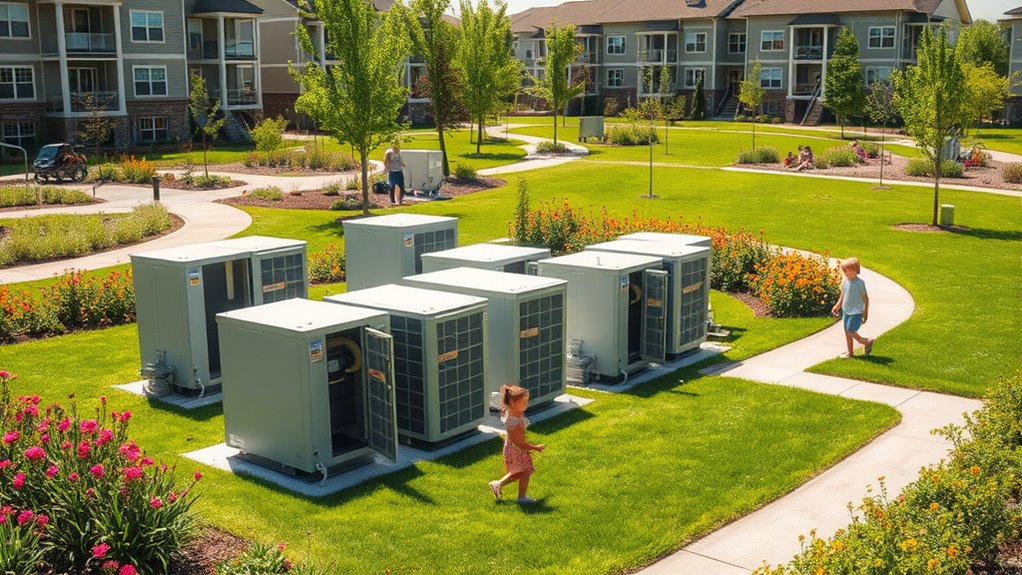
Community-scale geothermal heat pump systems are an innovative solution for providing sustainable and efficient heating and cooling to multiple buildings within a shared area. These systems tap into the stable underground temperatures to deliver energy-efficient climate control, reducing reliance on fossil fuels and lowering greenhouse gas emissions. When considering such projects, you should conduct a thorough cost benefit analysis to determine if the long-term savings outweigh the upfront investment. This analysis helps you evaluate installation costs, ongoing maintenance, energy savings, and potential incentives or subsidies. While initial expenses can be significant, the operational efficiencies and environmental benefits often justify the investment over time.
Community geothermal systems offer sustainable, efficient heating and cooling for multiple buildings.
However, installing a community-scale geothermal system isn’t without its challenges. One major hurdle is the installation process itself, which can be complex and resource-intensive. You’ll need to assess the geology of the site carefully, as soil composition and rock formations impact borehole drilling and heat exchange efficiency. Some terrains may require specialized drilling equipment or techniques, increasing costs and project timelines. Additionally, the space needed for the underground loops must be available, which can pose logistical issues in urban or densely developed areas. This often requires strategic planning and coordination with local authorities to secure permits and ensure minimal disruption.
Another installation challenge involves integrating the geothermal system with existing infrastructure. You may encounter compatibility issues with current heating and cooling systems, demanding additional modifications or upgrades. Proper design and engineering are essential to optimize performance and ensure that the system can meet the heating and cooling demands of all participating buildings. This often involves detailed modeling and collaboration with engineers and contractors, which can add to the upfront costs and project duration. Moreover, awareness of community engagement strategies is crucial to ensure broad support and smooth project execution.
Furthermore, community engagement is vital. Gaining buy-in from stakeholders, residents, or business owners requires clear communication about the benefits and potential disruptions during installation. Transparency about costs, timelines, and environmental impacts helps build trust and support for the project.
Despite these challenges, the long-term benefits of community-scale geothermal heat pump systems are compelling. They offer a reliable, renewable energy source that can markedly reduce energy bills and carbon footprints. Proper planning, a detailed cost benefit analysis, and addressing installation challenges upfront will position you for a successful implementation. Over time, the reduced operational costs and environmental advantages make these systems an attractive, sustainable choice for communities aiming to modernize their heating and cooling infrastructure efficiently.

Geothermal Energy Utilization and Technologies 2020
As an affiliate, we earn on qualifying purchases.
As an affiliate, we earn on qualifying purchases.
Frequently Asked Questions
What Are the Initial Costs of Installing Community-Scale Geothermal Systems?
You’ll find that the upfront expenses for installing community-scale geothermal systems typically range from $2 million to $5 million, depending on size and complexity. These costs cover drilling, equipment, and installation. To manage these expenses, you can explore project financing options or grants. Keep in mind, while the initial investment is substantial, long-term savings on energy costs often make it a worthwhile, sustainable choice for communities.
How Long Does It Take to See a Return on Investment?
You’ll see a return on investment in just a few years, sometimes as little as three to five, thanks to rapid advances in technology and a solid financial analysis. These systems slash energy bills dramatically, making the savings skyrocket over time. As technology keeps evolving, costs decrease, and efficiency increases, so your investment grows more valuable almost overnight. It’s like planting a seed that quickly blossoms into a financial powerhouse.
What Maintenance Is Required for Community Geothermal Systems?
You’ll need to perform regular system monitoring to guarantee ideal performance and catch issues early. Routine inspections of pumps, piping, and heat exchangers help maintain component longevity. Keep an eye on fluid levels, check for leaks, and schedule annual professional maintenance. By staying proactive, you reduce the risk of costly repairs and extend your system’s lifespan, ensuring it operates efficiently for years to come.
Are There Any Government Incentives for Community Geothermal Projects?
Yes, you can benefit from government incentives for community geothermal projects. Federal grants and tax incentives are available to help offset installation costs and encourage renewable energy adoption. You should research specific programs at the federal, state, or local levels, as these incentives can vary. By taking advantage of these financial supports, you make your project more affordable and promote sustainable energy solutions for your community.
How Does Land Availability Impact Project Feasibility?
Think of land availability like fitting a puzzle piece; if it’s too small or the wrong shape, your project stalls. You need to secure land access and navigate zoning regulations, which can either facilitate or hinder your geothermal plans. Limited space or strict zoning could mean redesigning your project or facing delays, making land considerations vital for evaluating overall feasibility and ensuring your community benefits from sustainable energy.

AB Plate Heat Exchanger, 4"x12" 30 Plates Water To Water Heat Exchanger, Copper/SS316L Stainless Steel Brazed Plate Heat Exchanger For Floor Heating, Water Heating, Snow Melting
【Premium Quality】Our plate heat exchanger is made of high quality 316L stainless steel which are brazed together by…
As an affiliate, we earn on qualifying purchases.
As an affiliate, we earn on qualifying purchases.
Conclusion
Community-scale geothermal heat pump systems are like a well-tuned orchestra, harmonizing energy and sustainability. By working together, these systems can reduce your community’s carbon footprint and lower energy costs, creating a cleaner, greener future. Embracing geothermal technology is like planting a sturdy tree that grows stronger over time, offering lasting benefits for generations. So, take action now and help your community flourish with this renewable, reliable energy source.

Multi Functional Hydraulic Drilling Machine Portable Water Well Drilling Rig Mobile Borehole Drilling Equipment Professional Drill Kit for Agricultural Irrigation Home Use and Geothermal Projects
【Portable & Mobile Rig Structure】This water well drilling rig is built with a compact and movable frame that…
As an affiliate, we earn on qualifying purchases.
As an affiliate, we earn on qualifying purchases.

Socket Fusion Heater Adapter Set (1 1/2")
Brand new socket/spigot pair for IPS 1 1/2" pipe and fitting socket fusion.
As an affiliate, we earn on qualifying purchases.
As an affiliate, we earn on qualifying purchases.