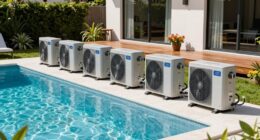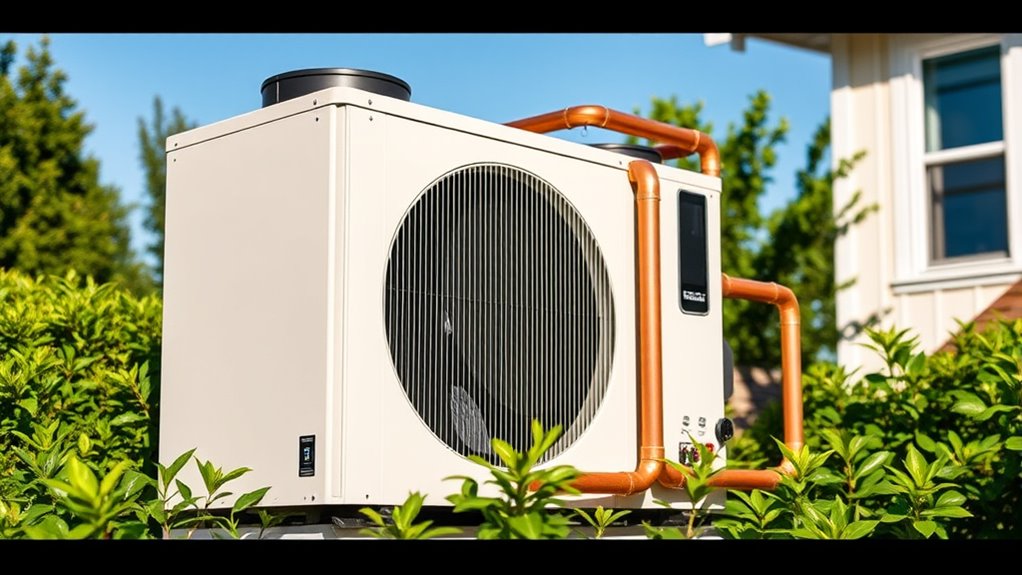
Dual-purpose heat pumps are a smart choice for your home because they provide both heating and cooling, while also handling water heating. They transfer heat more efficiently than traditional systems, which helps cut your energy bills and reduce your carbon footprint. Though they involve a higher upfront cost and require expert installation, the long-term savings and convenience make them worth considering. Keep exploring to discover how these systems can fit into your lifestyle and home setup.
Key Takeaways
- Dual-purpose heat pumps provide both space heating/cooling and water heating in a single, efficient system.
- They transfer heat instead of generating it, reducing energy consumption and utility costs.
- Proper installation and sizing are essential for optimal performance and long-term savings.
- Suitable for modern, eco-conscious homes seeking integrated climate and water management.
- Higher initial costs are offset by energy savings, rebates, and simplified maintenance over time.
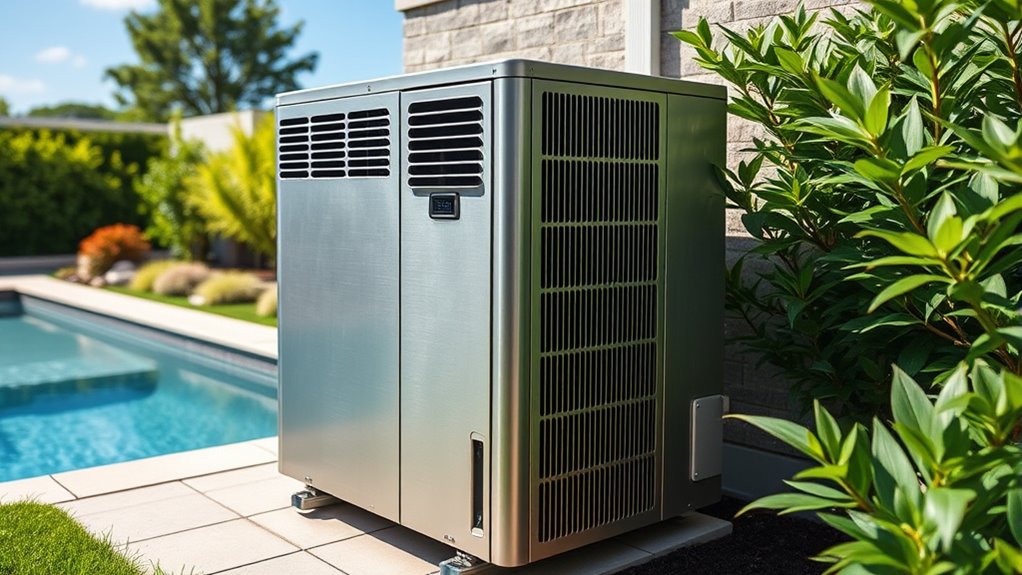
Dual-purpose heat pumps are versatile systems that provide both heating and cooling for your home, making them an efficient choice year-round. They can also handle water heating, which adds to their appeal as a comprehensive climate control solution. When contemplating these systems, energy efficiency stands out as a key benefit. Unlike traditional heating and cooling methods that operate separately, dual-purpose heat pumps transfer heat rather than generate it, consuming less energy overall. This means you’ll likely see lower utility bills and a smaller carbon footprint. Their ability to deliver both space and water heating with a single system simplifies your setup and enhances efficiency, especially during seasonal transitions when switching between heating and cooling.
Dual-purpose heat pumps efficiently provide heating, cooling, and water heating, reducing energy use and utility bills year-round.
However, it’s important to weigh the initial investment. Installation costs for dual-purpose heat pumps tend to be higher than those for conventional heating or cooling units. The complexity of integrating a system capable of providing both functions, along with water heating, requires specialized equipment and professional installation. While these upfront costs can seem significant, they often pay off over time through energy savings and reduced maintenance. Plus, many models are eligible for rebates or incentives, which can help offset the initial expense. When planning your budget, it’s wise to factor in not just the purchase price but also the long-term savings and benefits.
Another aspect to keep in mind is that the installation process might be more involved than setting up traditional systems. Proper placement and sizing are vital to guarantee ideal performance and energy efficiency. An experienced HVAC technician can assess your home’s layout, insulation, and existing infrastructure to determine the best setup. Proper installation ensures that the system operates at peak efficiency, reducing energy consumption and extending its lifespan. Additionally, integrating a water heating component requires careful plumbing work, which adds to the overall installation complexity and costs. According to renewable energy sources, hydrogen can be produced from renewable energy sources like wind and solar, supporting sustainable energy practices.
Despite these considerations, many homeowners find that the advantages of dual-purpose heat pumps outweigh the initial investment. They offer a streamlined solution that minimizes equipment clutter and simplifies maintenance. Plus, their ability to provide consistent, efficient heating, cooling, and water heating makes them an excellent choice for modern, eco-conscious households. If you’re looking to reduce energy bills while maintaining a comfortable home environment throughout the year, dual-purpose heat pumps could be a smart, sustainable investment that delivers long-term value.

Portable Air Pump for Inflatables, 4000mAh Ultra Fast Air Mattress Pump with Advanced Heat Dissipation, 3 Nozzles Electric Air Pump Inflate Deflate for Sleeping Pads, Pool Floats, Vacuum Storage Bag
【Inflate & Deflate 5X Faster】HYVOHEX sets a new standard in portable air pumps. With a powerful 5kPa pressure…
As an affiliate, we earn on qualifying purchases.
As an affiliate, we earn on qualifying purchases.
Frequently Asked Questions
What Is the Average Lifespan of a Dual-Purpose Heat Pump?
A dual-purpose heat pump typically lasts between 10 to 15 years, depending on system efficiency and maintenance. Technological advancements have improved durability and performance, helping extend its lifespan. To maximize longevity, you should schedule regular servicing and ensure proper installation. Keep an eye on system efficiency, as a well-maintained unit with modern features can serve you reliably for many years, providing efficient heating for both space and water needs.
Are Dual-Purpose Heat Pumps Suitable for All Climate Zones?
Dual-purpose heat pumps are generally suitable for most climate zones, thanks to their climate adaptability. However, you should consider geographic limitations in extremely cold areas where the efficiency might drop. In such zones, supplemental heating may be necessary. If you live in a moderate climate, these systems work efficiently year-round. Always assess your local climate and consult with a professional to determine if a dual-purpose heat pump fits your needs.
How Much Maintenance Do These Heat Pumps Require Annually?
You’ll need to perform maintenance about once a year to keep your dual-purpose heat pump running effectively. This includes checking filters, inspecting the refrigerant levels, and cleaning coils. Service requirements are generally straightforward but important to prevent issues and prolong lifespan. Regular maintenance helps guarantee peak performance, energy efficiency, and reduces the likelihood of costly repairs down the line. Staying on top of these tasks keeps your system in great shape year-round.
Can Dual-Purpose Heat Pumps Be Integrated With Existing HVAC Systems?
Yes, you can integrate dual-purpose heat pumps with your existing HVAC system, but you’ll face compatibility challenges and retrofit considerations. You might need to upgrade or modify certain components to guarantee proper functioning. It’s vital to evaluate your current system’s ductwork, controls, and electrical setup. Consulting a professional helps you navigate these challenges efficiently, ensuring seamless integration while maximizing energy savings and system performance.
What Is the Typical Installation Cost Compared to Traditional Systems?
Cost comparisons catch your eye, and dual-purpose heat pumps cost more upfront than traditional systems. Installation expenses tend to be higher due to added components and complexity. However, you’ll save on energy bills long-term. While initial investments are steep, the savings on both space and water heating can balance costs over time. So, you pay more initially, but benefit from better efficiency and lower ongoing expenses.
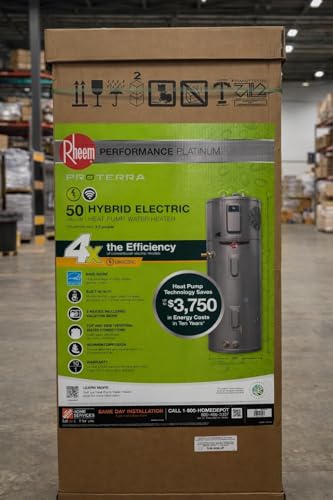
Rheem 50 Gal. Smart High Efficiency Hybrid Heat Pump Water Heater with 10-Year Warranty
It must be wired into your home’s electrical system and will typically require a dedicated electrical circuit (similar…
As an affiliate, we earn on qualifying purchases.
As an affiliate, we earn on qualifying purchases.
Conclusion
Dual-purpose heat pumps are your all-in-one solution, seamlessly providing both space and water heating. They’re like a Swiss Army knife for your home’s comfort needs, saving space, energy, and money. By choosing this versatile technology, you’ll enjoy warm rooms and hot water while reducing your carbon footprint. Embrace this innovative heating option and turn your home into a cozy haven—where efficiency and convenience work hand in hand, making every season a breeze.

Heat Pumps
As an affiliate, we earn on qualifying purchases.
As an affiliate, we earn on qualifying purchases.

3 TON 14 SEER HEAT PUMP PACKAGE UNIT WITH HEAT STRIP ALL IN ONE
As an affiliate, we earn on qualifying purchases.
As an affiliate, we earn on qualifying purchases.