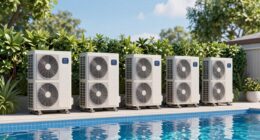

Installing heat pumps in apartment buildings can be challenging due to strict zoning laws, high upfront costs, and infrastructure needs. You may need permits, approvals, or variances from local authorities, which can take time. The initial investment might seem steep, but exploring rebates and grants can help. Working with experienced professionals and planning carefully can overcome these barriers. If you want to know more about making heat pumps work in apartments, keep exploring these solutions.
Key Takeaways
- Navigating local zoning laws and obtaining permits can delay heat pump installation in apartments.
- High upfront costs and infrastructure modifications require careful budgeting and potential funding incentives.
- Outdated building codes may restrict heat pump use, necessitating advocacy for regulatory updates or variances.
- Working with experienced HVAC professionals helps ensure compliance and smooth integration into existing systems.
- Planning phased projects and leveraging government grants can mitigate costs and address installation challenges.
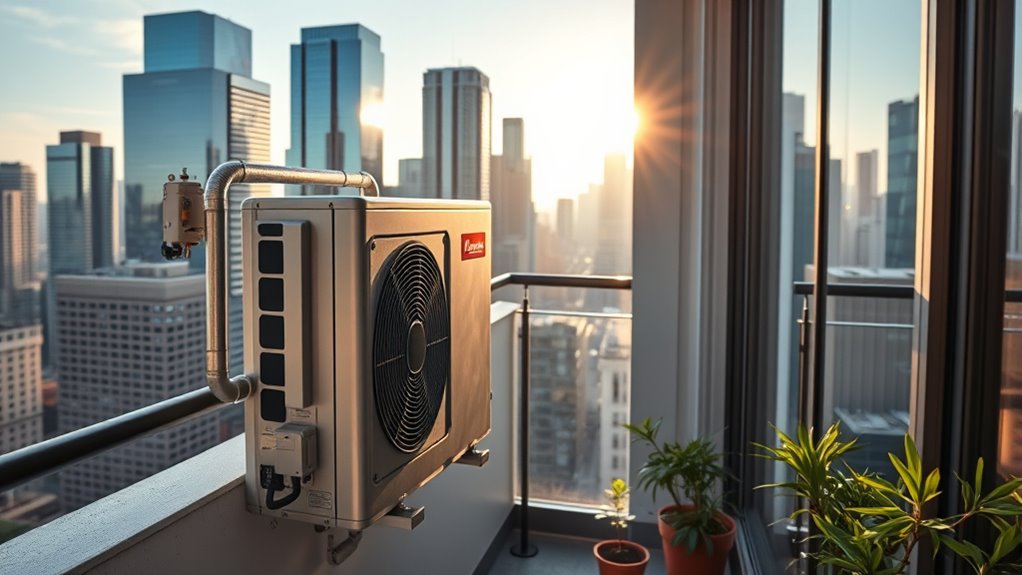
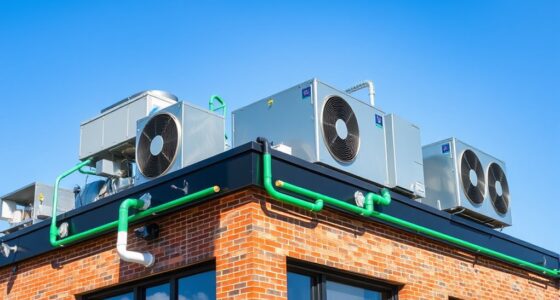
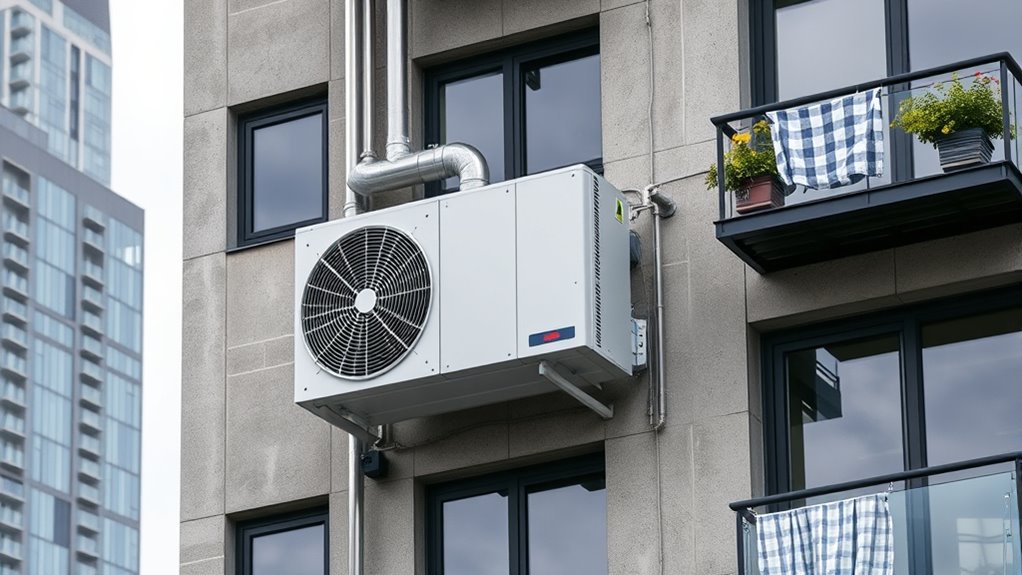
Have you considered how heat pumps can transform heating and cooling in apartment buildings? These systems offer an efficient, environmentally friendly way to manage indoor temperatures, but their implementation isn’t always straightforward. One of the main challenges you might face involves zoning restrictions. Many urban areas have strict zoning laws that limit the types of HVAC systems permitted or specify certain installation parameters. These restrictions can delay or even prevent you from installing heat pumps, especially if local codes favor traditional systems like gas furnaces or central air units. You’ll need to navigate these regulations carefully, often working with city planners or building authorities to secure the necessary permits. Sometimes, zoning ordinances are outdated and may not recognize heat pumps as compliant systems, which means you’ll need to advocate for updates or variances. This process can be time-consuming and might require presenting detailed plans or environmental benefits to justify the change.
Alongside regulatory hurdles, installation costs pose a significant barrier. Heat pumps, especially those designed for larger buildings or multi-unit setups, can have higher upfront costs compared to conventional heating and cooling options. You’ll want to consider not just the purchase price of the equipment but also expenses related to structural modifications, electrical upgrades, and system integration. For example, if your building’s existing infrastructure isn’t compatible with a heat pump system, you might need to invest in new ductwork or additional electrical capacity, which can escalate costs quickly. While these upfront investments can seem intimidating, it’s important to remember that heat pumps typically offer lower operating costs over time, leading to savings on energy bills. However, securing funding or incentives, such as government rebates or green energy grants, can help offset these initial expenses. Additionally, understanding vetted reviews of different heat pump models can guide you in selecting reliable and cost-effective options.
Getting around zoning restrictions and managing installation costs requires careful planning. You’ll need to research local laws thoroughly and possibly work with HVAC professionals who understand the nuances of building codes in your area. Sometimes, you might find that a phased approach works best—starting with a pilot project or retrofitting a single unit before expanding across the entire building. Additionally, exploring financing options or government incentives can make the upfront costs more manageable. Ultimately, while these challenges may seem significant at first, they’re not insurmountable. With persistence, proper planning, and expert guidance, you can successfully integrate heat pumps into your apartment building, reaping the benefits of energy efficiency and enhanced comfort for your residents.

PelPro PP150 Pellet Stove for Home Heating - 150 lb Hopper, 49,200 BTU Heats up to 2,500 Sq. Ft., Easy-Dial Temp Control, Built-in Thermostat with Auto-Ignition, Powerful & Quiet 265CFM Blower
PP150 pellet stoves for fireplaces are efficient for home heating up to 2,500 sq. ft. at almost 50,000...
As an affiliate, we earn on qualifying purchases.
Frequently Asked Questions
How Do Heat Pumps Affect Indoor Air Quality?
Heat pumps can improve your indoor air quality by providing consistent airflow and temperature control. They often include indoor air filtration systems that reduce allergens and pollutants, making your environment healthier. Additionally, heat pumps help with humidity control, preventing excessive moisture or dryness that can cause respiratory issues. By maintaining cleaner air and ideal humidity levels, heat pumps create a more comfortable, healthier living space for you.
Are Heat Pumps Suitable for All Climate Zones?
In the blink of an eye, you realize heat pumps aren’t perfect for every climate zone. While modern models offer great climate adaptability, their regional efficiency varies. They work well in moderate climates but may struggle in extreme cold or heat. If you’re in a milder region, a heat pump can be a reliable choice. But in harsher zones, you might need supplemental heating or cooling solutions for ideal comfort and efficiency.
What Maintenance Is Required for Apartment Heat Pumps?
You need to perform regular maintenance to keep your apartment heat pump running efficiently and guarantee component longevity. Change or clean filters monthly, inspect outdoor coils for debris, and keep the area clear. Schedule professional tune-ups annually to check system efficiency, refrigerant levels, and electrical components. Proper upkeep reduces energy use, prevents breakdowns, and extends your heat pump’s lifespan, keeping your apartment comfortable year-round.
How Do Heat Pumps Impact Building Energy Codes?
You need to guarantee your heat pumps meet building code compliance and energy efficiency standards. These systems often require upgrades or specific features to align with local regulations, which can influence installation and operation. By adhering to energy efficiency standards, you improve building performance and reduce energy costs. Check with local authorities for specific codes, and consider how your heat pump choices can help your building stay compliant and eco-friendly.
Can Heat Pumps Be Integrated With Existing Heating Systems?
You can definitely blend heat pumps with your existing heating system, making it a smooth changeover. Focus on system compatibility and retrofit considerations to guarantee everything works harmoniously. By carefully planning the integration, you minimize disruptions and maximize efficiency. This approach allows you to enjoy modern energy-saving benefits without overhauling your entire setup, creating a more comfortable and sustainable living environment.

Canyon Lodge Large Pellet Stove
Heats up to 2,000-3,000 sq. ft.
As an affiliate, we earn on qualifying purchases.
Conclusion
Just as Icarus learned the importance of balance, embracing heat pumps in apartment buildings requires careful planning and innovation. By addressing challenges head-on and exploring creative solutions, you can harness their energy-saving potential without risking overreach. Remember, the key lies in adapting wisely—turning the promise of modern heating into a sustainable reality, much like Daedalus’s craft, shaping a future where comfort and efficiency soar harmoniously.

Large Pellet Stove - 130lb Hopper
Built-in WiFi – Smart Home Technology
As an affiliate, we earn on qualifying purchases.

ALORAIR Whole House Dehumidifier, 90 PPD Commercial Grade Whole Home Dehumidifiers for Garages, Water Damage Restoration, 2300 Sq.Ft dehumidifiers for Crawl Space
Energy Efficient Whole House Dehumidifier: 90 pints per day at AHAM condition, 70 Pint at DOE, up to...
As an affiliate, we earn on qualifying purchases.