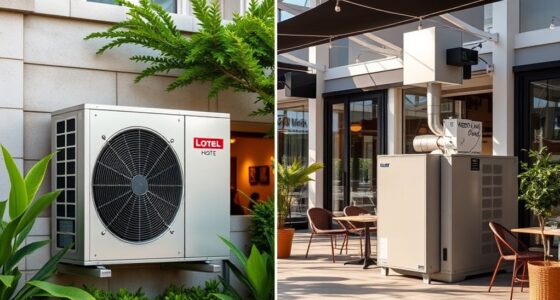
Heat pumps are a smart choice for data centers, offering efficient cooling and heating by utilizing renewable energy and recovering waste heat. They operate reliably across various temperatures, helping you cut energy costs and reduce environmental impact. By integrating these systems, you can optimize your facility’s performance and sustainability. To learn how to implement and maximize the benefits of heat pumps in your data center, keep exploring the vital considerations involved.
Key Takeaways
- Heat pumps provide efficient dual cooling and heating, reducing energy consumption in data centers.
- Integrating renewable energy sources enhances sustainability and lowers carbon emissions for heat pump systems.
- Waste heat recovery from data center equipment can be reused for heating, improving overall system efficiency.
- Modern heat pumps operate reliably across various temperatures, ensuring consistent performance during peak loads.
- Technological advancements increase heat pump COP, decreasing operational costs and supporting eco-friendly operations.
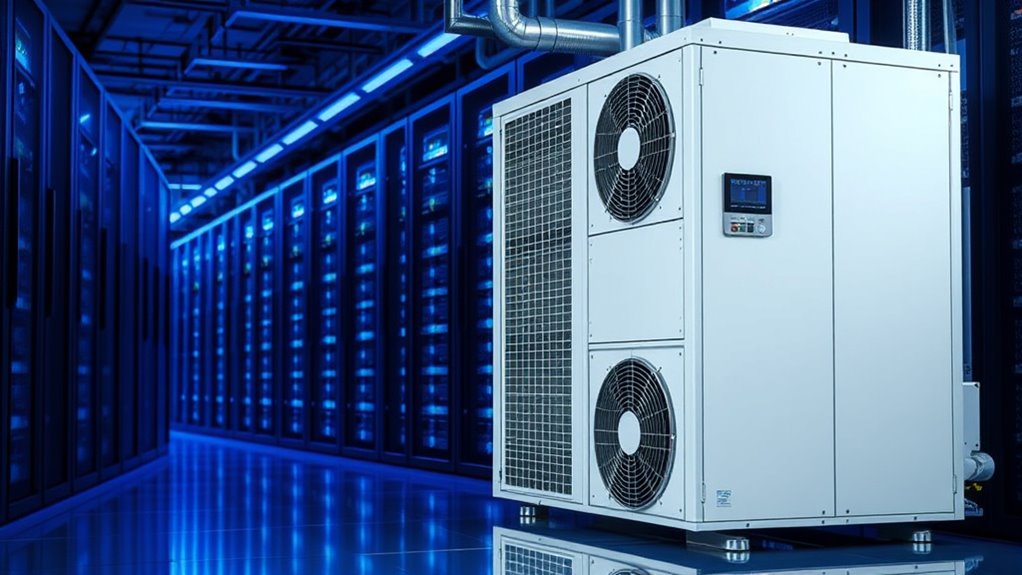
As data centers generate immense amounts of heat, managing their cooling efficiently is essential for maintaining ideal performance. Heat pumps offer a promising solution by providing both cooling and heating, which can notably improve energy efficiency. When considering heat pumps, it’s crucial to focus on how they can be integrated with renewable energy sources. Using renewable energy, like solar or wind, to power heat pumps reduces the carbon footprint of your data center and aligns with sustainable operational goals. This integration not only cuts greenhouse gas emissions but also enhances overall energy efficiency, making your data center more resilient and cost-effective in the long run.
Implementing heat pumps allows you to optimize energy use, especially when paired with renewable energy systems. These systems can capture excess heat generated by data center equipment and reuse it for heating purposes, creating a closed-loop system that minimizes waste. This approach maximizes energy efficiency because you’re utilizing heat that would otherwise be lost, reducing the need for traditional heating methods. Additionally, modern heat pumps are designed to operate efficiently across a wide range of temperatures, ensuring reliable performance even during peak loads or colder seasons. This adaptability further boosts energy efficiency and helps maintain consistent environmental conditions within the data center.
Another key benefit of heat pumps is their versatility in providing both cooling and heating, eliminating the need for separate systems. This dual functionality simplifies infrastructure, reduces energy consumption, and cuts down on maintenance costs. When powered by renewable energy, heat pumps can deliver sustainable climate control, aligning with eco-friendly policies and reducing reliance on fossil fuels. Plus, advances in heat pump technology have improved their coefficient of performance (COP), meaning they deliver more heating or cooling output per unit of electricity consumed. This efficiency gain translates directly into lower operational costs and less environmental impact, especially when renewable energy sources are part of the mix. Incorporating thermal energy recovery techniques can further enhance system efficiency by reusing waste heat for other operational needs.

PelPro PP150 Pellet Stove for Home Heating - 150 lb Hopper, 49,200 BTU Heats up to 2,500 Sq. Ft., Easy-Dial Temp Control, Built-in Thermostat with Auto-Ignition, Powerful & Quiet 265CFM Blower
PP150 pellet stoves for fireplaces are efficient for home heating up to 2,500 sq. ft. at almost 50,000...
As an affiliate, we earn on qualifying purchases.
Frequently Asked Questions
How Do Heat Pumps Impact Data Center Energy Efficiency?
Heat pumps improve your data center’s energy efficiency by reducing reliance on traditional cooling and heating systems. They enable renewable integration, lowering your carbon footprint and energy costs. Conducting a thorough cost analysis helps you determine long-term savings, as heat pumps often have higher upfront costs but lower operational expenses. By optimizing energy use, you enhance overall efficiency, making your data center more sustainable and cost-effective in the long run.
Are Heat Pumps Suitable for All Climate Zones?
Heat pumps are generally suitable for most climate zones, thanks to their climate adaptability. They perform well in moderate temperatures and can be enhanced with supplemental heating or cooling in extreme conditions. Your regional efficiency depends on local climate factors; in milder zones, they offer ideal energy savings. However, in very cold or hot environments, you might need specialized models to guarantee consistent performance and efficiency.
What Are the Maintenance Requirements for Heat Pumps in Data Centers?
You need to follow a regular maintenance checklist for your data center heat pumps, including filter changes, refrigerant level checks, and inspecting electrical connections. Keep an eye on system troubleshooting signs like unusual noises or temperature fluctuations. Scheduling routine professional inspections helps prevent breakdowns, optimize efficiency, and extend system lifespan. Consistent maintenance guarantees your heat pumps operate reliably, supporting both cooling and heating requirements effectively.
Can Heat Pumps Integrate With Existing Cooling Systems?
Yes, heat pumps can integrate with existing cooling systems, but you need to consider system compatibility to ensure smooth operation. Retrofit challenges may arise, especially if current systems weren’t designed for heat pump integration. You’ll want to evaluate your infrastructure and possibly upgrade components to optimize performance and avoid conflicts. With proper planning and professional assessment, integrating heat pumps can enhance your data center’s energy efficiency and climate control.
What Is the Typical Lifespan of a Heat Pump in a Data Center?
A heat pump in a data center typically lasts 10 to 15 years with proper lifecycle management. You should consider warranty coverage, as it can influence maintenance costs and replacement timing. Regular inspections and timely repairs extend its longevity, ensuring reliable cooling and heating. Keep an eye on performance and efficiency, and replace the unit when warranty coverage ends or if it shows signs of declining performance, to maintain maximum data center operations.

Canyon Lodge Large Pellet Stove
Heats up to 2,000-3,000 sq. ft.
As an affiliate, we earn on qualifying purchases.
Conclusion
In summary, heat pumps are game-changers for data centers, offering an eco-friendly and efficient way to manage cooling and heating. By embracing this technology, you’re not just keeping your infrastructure running smoothly—you’re potentially saving the planet from the brink of chaos! With the right setup, heat pumps can transform your data center into a powerhouse of sustainability and performance. Don’t wait—future-proof your operations and make climate-conscious choices today!

ALORAIR Whole House Dehumidifier, 90 PPD Commercial Grade Whole Home Dehumidifiers for Garages, Water Damage Restoration, 2300 Sq.Ft dehumidifiers for Crawl Space
Energy Efficient Whole House Dehumidifier: 90 pints per day at AHAM condition, 70 Pint at DOE, up to...
As an affiliate, we earn on qualifying purchases.

Large Pellet Stove - 130lb Hopper
Built-in WiFi – Smart Home Technology
As an affiliate, we earn on qualifying purchases.