Installing heat pumps in schools and educational facilities offers a sustainable, cost-effective solution for year-round climate control. These systems use renewable energy sources like ground or air heat, reducing reliance on fossil fuels and lowering your school’s carbon footprint. They also save money through incentives, rebates, and lower energy bills while providing reliable heating and cooling with minimal maintenance. To discover how these advantages can benefit your facility, keep exploring the options available.
Key Takeaways
- Heat pumps provide energy-efficient heating and cooling, reducing operational costs for schools and educational facilities.
- They utilize renewable energy sources, supporting sustainability and lowering the carbon footprint of educational buildings.
- Incentives like grants and tax credits help offset installation costs, making heat pump adoption more affordable.
- Heat pumps require low maintenance and offer reliable, versatile climate control in various climates.
- Implementing heat pumps aligns with green building policies and enhances overall environmental responsibility.
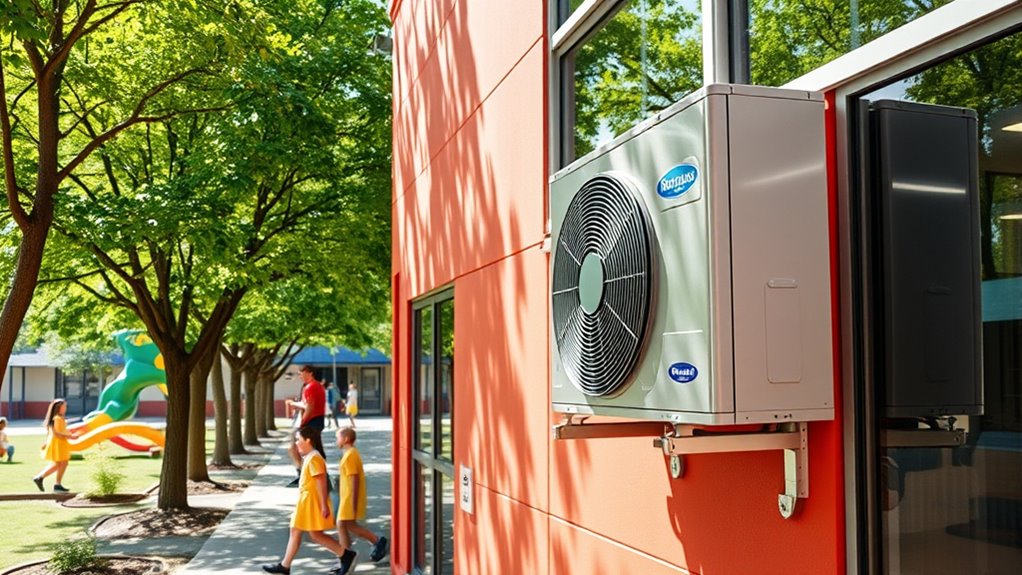
Switching to heat pumps in schools and educational facilities offers a sustainable and efficient way to manage heating and cooling needs. These systems use renewable energy sources, such as ambient air or ground heat, to provide heating and cooling, reducing reliance on traditional fossil fuels. By adopting heat pumps, you can considerably lower your school’s carbon footprint while creating a more comfortable environment for students and staff. Plus, many governments now offer incentives to encourage the adoption of renewable energy technologies, making it easier and more affordable for your school to transition. These government incentives can include grants, tax credits, or rebates that offset the initial installation costs, making heat pumps an attractive investment. Taking advantage of these incentives not only accelerates your school’s move toward sustainability but also results in long-term savings on energy bills.
Implementing heat pumps in your educational facility isn’t just about environmental benefits; it’s also a smart financial decision. These systems operate more efficiently than traditional HVAC units, especially when powered by renewable energy sources, leading to lower energy consumption and reduced utility bills. Many regions have policies that support the integration of renewable energy, further enhancing the financial appeal of switching to heat pumps. Additionally, the durability and low maintenance requirements of heat pumps mean fewer disruptions and ongoing costs, ensuring a reliable and cost-effective solution over the years. By leveraging government incentives, you can offset installation costs and maximize the return on your investment, making it easier to justify the switch to stakeholders. Energy efficiency is a key component of sustainable building management, and heat pumps excel in this area.
Another advantage of heat pumps is their versatility. They can provide both heating and cooling from a single system, simplifying your building’s climate control and reducing the need for separate units. This dual functionality helps optimize space and reduces installation complexity, which is especially beneficial in existing buildings where space may be limited. With advances in technology, modern heat pumps are becoming more efficient and capable even in colder climates, broadening their appeal for schools in various regions. As you consider switching, remember that many government programs also support training and technical assistance, ensuring your staff can operate and maintain the systems effectively.

BESULEN Diesel Heater Pump, Universal Car Air Heater Diesels Fuel Dosing Pump, 12V Pulse Metering Gas Inline Electric Fuel Pump Kit, Compatible with Webasto Eberspacher, Automotive Accessories
【High Quality】: This diesel heater pump is made of high-density brass and metal material, with high hardness, not…
As an affiliate, we earn on qualifying purchases.
As an affiliate, we earn on qualifying purchases.
Frequently Asked Questions
What Are the Initial Installation Costs for School Heat Pumps?
The initial installation costs for school heat pumps typically range from $10,000 to $30,000 per unit, depending on factors like system size, building size, and existing infrastructure. Cost factors include the complexity of the installation process, ductwork upgrades, and energy efficiency features. You’ll need to take these elements into account carefully, as they influence overall expenses. Proper planning ensures a smooth installation process and long-term savings on energy bills.
How Long Do Heat Pumps Typically Last in Educational Settings?
Think of your heat pump as a reliable marathon runner; it typically lasts 10 to 15 years in educational settings. With proper maintenance, you can extend its system lifespan, and warranty coverage often protects against early issues. Regular check-ups keep it running smoothly, ensuring your investment endures through many school years. So, expect your system to perform well, like a seasoned athlete, for over a decade with proper care.
Are Heat Pumps Suitable for All Climate Zones?
Heat pumps are generally suitable for many climate zones, but their effectiveness depends on climate adaptability and geographic limitations. In moderate climates, they work efficiently year-round, while in colder regions, you might need models with enhanced heating capabilities. If you’re considering a heat pump, evaluate your area’s temperature extremes and guarantee the system you choose can handle your specific climate challenges for ideal performance and energy savings.
What Maintenance Is Required for School Heat Pump Systems?
You need to regularly maintain your school heat pump system by replacing filters every 1-3 months to guarantee efficiency. Additionally, you should schedule refrigerant checks annually to prevent leaks and sustain peak performance. Keep the outdoor unit clear of debris and inspect electrical connections periodically. Proper maintenance extends the lifespan of your system, reduces energy costs, and ensures a comfortable learning environment for students and staff.
How Do Heat Pumps Compare to Traditional Heating Systems Financially?
Think of heat pumps as the steady river carving out a canyon—powerful yet gentle. They often cost less to operate than traditional systems, thanks to their energy efficiency, leading to significant cost savings over time. While the initial investment may be higher, the long-term financial benefits make heat pumps a smarter choice. You’ll enjoy lower energy bills and a more sustainable solution that flows seamlessly with your school’s budget.

ACiQ 3.5 Ton 13.4 SEER2 Packaged Heat Pump Unit with 7.5kW Back-up Heat Kit & Install Kit – R32 Horizontal | 42000 BTU AC/Heating System
CERTIFIED ACiQ SELLERS: Everything you need for reliable HVAC solutions!
As an affiliate, we earn on qualifying purchases.
As an affiliate, we earn on qualifying purchases.
Conclusion
Implementing heat pumps in schools and educational facilities offers a sustainable, cost-effective way to improve comfort and reduce energy consumption. Think of it like replacing an old, inefficient engine with a modern, eco-friendly one—you’re visualizing progress and innovation. As you explore this technology, remember that embracing renewable solutions can lead to a healthier environment and significant savings. Investing in heat pumps isn’t just smart; it’s a step toward a greener, more efficient future for your community.
air source heat pump for educational facilities
As an affiliate, we earn on qualifying purchases.
As an affiliate, we earn on qualifying purchases.

MICOE 18000 BTU Pool Heater for Above Ground Pools, Swimming Pool Heat Pump, Heating and Cooling, Smart App Control,Titanium Heat Exchanger, Ultra Quiet 50dB, 110V
Large Heating Capacity : 18000 BTU high-efficiency heating system designed specifically for 5500 gallons above-ground pools. Using our…
As an affiliate, we earn on qualifying purchases.
As an affiliate, we earn on qualifying purchases.