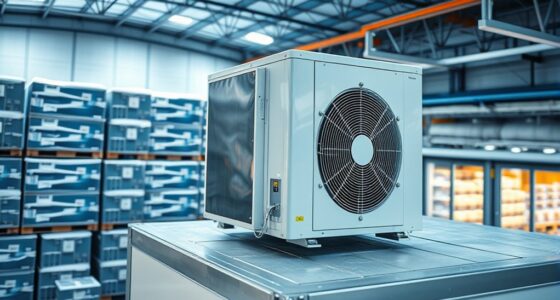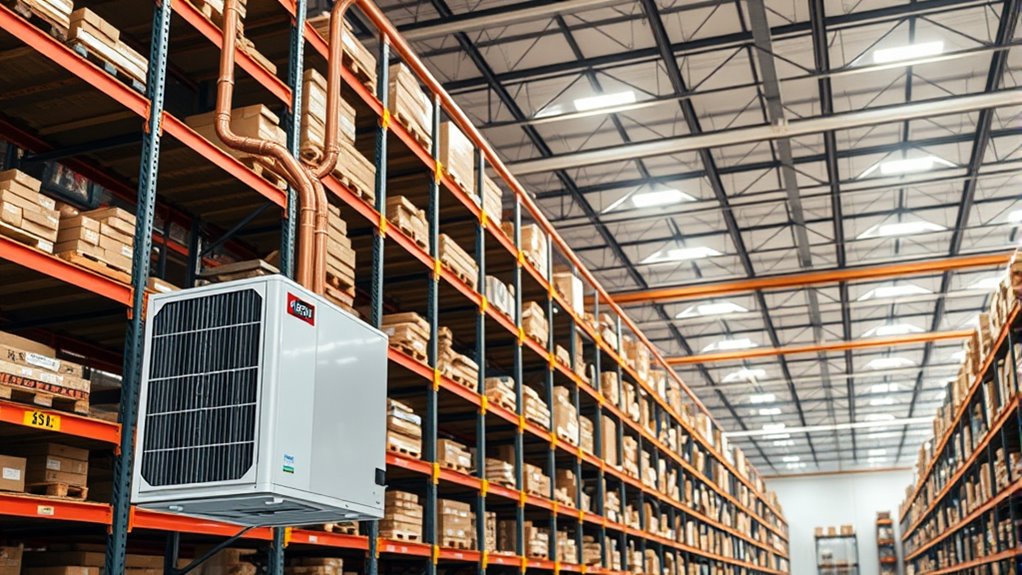

Scalable heat pump solutions let you customize your warehouse’s climate control to match your growing or changing needs. With smart controls and modular design, you can easily add or remove units, optimizing energy efficiency and reducing costs. These systems adapt to varying temperature requirements, improve automation, and support maintenance efforts. By choosing scalable options, you guarantee long-term flexibility and performance—discover how to implement these advancements effectively for your warehouse.
Key Takeaways
- Scalable heat pumps allow tailored capacity to meet warehouse size and temperature zone requirements efficiently.
- Modular design facilitates easy addition or removal of units as operational needs evolve.
- Advanced automation enables real-time adjustments, optimizing energy use and climate control.
- Energy-efficient heat transfer reduces electricity consumption and operational costs.
- Remote monitoring and predictive maintenance ensure system reliability and long-term performance.

As energy demands grow and the push for sustainable solutions intensifies, scalable heat pump systems have become an essential option for a wide range of applications. When it comes to warehouses, these systems offer a practical way to manage heating and cooling efficiently while supporting environmental goals. Because warehouses often span large areas with varying temperature needs, a scalable approach allows you to customize the system size and capacity, ensuring effective performance without overspending on unnecessary capacity. This flexibility means you can expand or modify your heating and cooling setup as your warehouse grows or operational demands change.
One of the key advantages of scalable heat pump solutions is their ability to incorporate automation enhancement. Advanced controls enable you to fine-tune the system, automatically adjusting heating and cooling outputs based on real-time data. This automation minimizes manual intervention and ensures the system operates at peak efficiency. You can set parameters for different zones within your warehouse, so temperature fluctuations are quickly addressed and maintained at consistent levels. Automation enhancement not only improves comfort but also reduces energy waste, helping you meet sustainability targets and lower operational costs.
Automation controls optimize warehouse climate, reduce energy waste, and enhance efficiency through real-time adjustments and zone-specific parameters.
Energy efficiency is at the core of scalable heat pump technology. Unlike traditional heating and cooling systems, heat pumps transfer heat rather than generate it, making them inherently more efficient. When scaled appropriately, these systems use less electricity to deliver the same amount of heating or cooling, which translates to significant savings over time. By selecting a system that matches your warehouse’s specific needs, you avoid the pitfalls of overcapacity that drain energy and increase expenses. Properly scaled solutions ensure that every component operates within its peak range, maximizing energy savings without sacrificing comfort or performance.
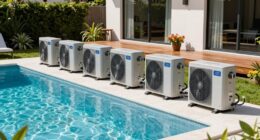
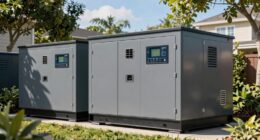
Furthermore, the modular nature of scalable heat pumps makes maintenance and upgrades straightforward. You can add or remove units as needed, keeping your system aligned with your evolving operational requirements. This flexibility ensures your investment remains relevant and cost-effective over the long term. Plus, the integration of smart controls allows you to monitor system performance remotely, identify inefficiencies quickly, and perform predictive maintenance, which minimizes downtime and prolongs equipment lifespan. Developing expertise in energy-efficient systems can further optimize your warehouse operations.

ALORAIR Whole House Dehumidifier, 90 PPD Commercial Grade Whole Home Dehumidifiers for Garages, Water Damage Restoration, 2300 Sq.Ft dehumidifiers for Crawl Space
Energy Efficient Whole House Dehumidifier: 90 pints per day at AHAM condition, 70 Pint at DOE, up to...
As an affiliate, we earn on qualifying purchases.
Frequently Asked Questions
How Do Heat Pumps Impact Warehouse Indoor Air Quality?
Heat pumps improve your warehouse’s indoor air quality by enhancing air filtration and humidity control. They efficiently filter out dust and airborne pollutants, creating cleaner air for your staff. Plus, they regulate humidity levels, preventing excess moisture that can foster mold or dust mites. By maintaining ideal air conditions, heat pumps help promote a healthier, more comfortable environment, reducing health risks and boosting productivity in your warehouse.
What Are the Maintenance Requirements for Scalable Heat Pump Systems?
You need to regularly inspect your scalable heat pump system to maintain efficiency and guarantee component durability. Change filters every 1-3 months, clean coils annually, and check refrigerant levels. Keep an eye on electrical connections and thermostats, and schedule professional maintenance at least once a year. Proper upkeep helps your system operate smoothly, prolongs its lifespan, and keeps energy costs low.
Can Heat Pumps Be Integrated With Existing HVAC Systems?
Think of integrating heat pumps into your existing HVAC system like fitting a new puzzle piece—it’s often possible, but you must check system compatibility first. While retrofit challenges exist, skilled technicians can usually adapt the new piece, ensuring it meshes well. With proper planning and assessment, heat pumps can work seamlessly with your current setup, boosting efficiency without the need for a total overhaul.
What Is the Typical Lifespan of a Warehouse Heat Pump?
A warehouse heat pump typically lasts around 10 to 15 years, depending on usage and maintenance. You can expect good heat pump durability if you regularly service it and keep it clean. Proper maintenance helps extend its lifespan estimation, ensuring reliable performance over the years. By staying on top of upkeep, you maximize your investment and avoid early replacements, making your system more cost-effective in the long run.
Are There Government Incentives for Installing Heat Pump Solutions?
Yes, government incentives and financial rebates are available for installing heat pump solutions, especially in commercial settings like warehouses. Many programs aim to promote energy efficiency and reduce carbon emissions, making your investment more affordable. You can often find federal, state, or local incentives that offset installation costs. It’s worth researching current offerings in your area, as these incentives can markedly lower your upfront expenses and improve your return on investment.

30 Pint Dehumidifier for Basement, 2500 Sq. Ft Dehumidifiers for Home with Drain Hose, 3 Modes, Smart Humidity Control, 24H Timer, 0.52 Gal Water Tank, for Whole House, Bedroom, Bathroom, Garage, Rv
Powerful 30-Pint Moisture Removal for Spaces up to 2500 Sq. Ft: High humidity can make rooms feel damp,...
As an affiliate, we earn on qualifying purchases.
Conclusion
By choosing scalable heat pump solutions, you’re investing in efficient, adaptable heating for your warehouse. These systems grow with your needs, saving you money and reducing your carbon footprint. Isn’t it time you considered a smarter, more sustainable way to heat your space? Embrace the future of warehouse climate control today and enjoy comfort, savings, and peace of mind knowing you’re making a responsible choice. Why settle for less when scalable solutions can do so much more?

Waykar 158 Pints Crawl Space Dehumidifier with Remote Control and Pump, Dual Duct HVAC Commercial Whole-House Dehumidifier for Basement, Industry Water Damage Unit - 5-Year Quality Coverage
【158 Pint Crawl Space Dehumidifier】The Waykar whole-house dehumidifier extracts up to 158 pints of water per day (under...
As an affiliate, we earn on qualifying purchases.

PelPro PP150 Pellet Stove for Home Heating - 150 lb Hopper, 49,200 BTU Heats up to 2,500 Sq. Ft., Easy-Dial Temp Control, Built-in Thermostat with Auto-Ignition, Powerful & Quiet 265CFM Blower
PP150 pellet stoves for fireplaces are efficient for home heating up to 2,500 sq. ft. at almost 50,000...
As an affiliate, we earn on qualifying purchases.