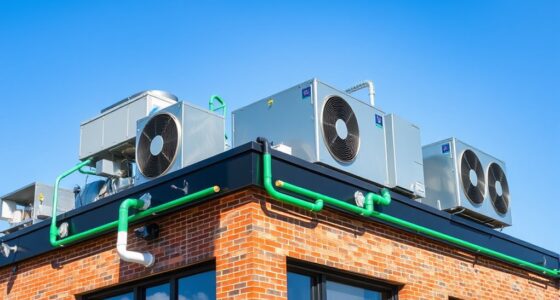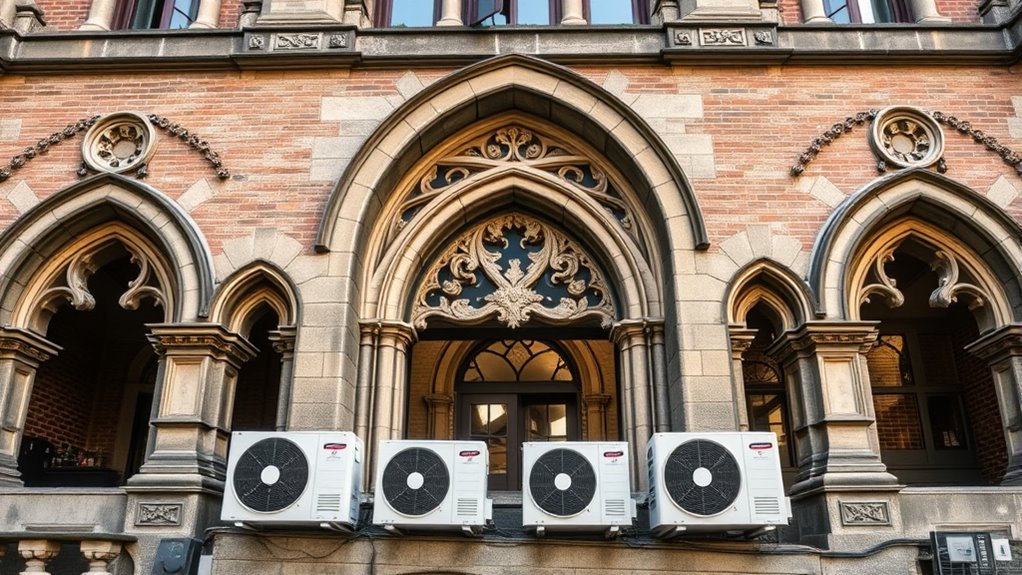

Retrofit case studies show that installing heat pumps in historic buildings can boost energy efficiency without harming their charm. You’ll find that discreet placement and expert planning safeguard original features while reducing reliance on outdated heating methods. These upgrades lower energy bills, cut carbon footprints, and improve comfort. By working with specialists, you ensure preservation and sustainability go hand in hand. Continue exploring to discover how these solutions can benefit your historic property.
Key Takeaways
- Successful projects demonstrate how heat pumps can improve energy efficiency while preserving historic architecture and interior features.
- Case studies highlight discreet installation methods that prevent damage to delicate structures and maintain aesthetic integrity.
- Examples show integration of modern controls and smart thermostats to optimize performance in historic settings.
- Reports detail collaboration with preservation specialists to select suitable heat pump types and ensure minimal structural impact.
- Outcomes include reduced energy costs, lower carbon footprints, and enhanced indoor comfort in heritage-listed buildings.
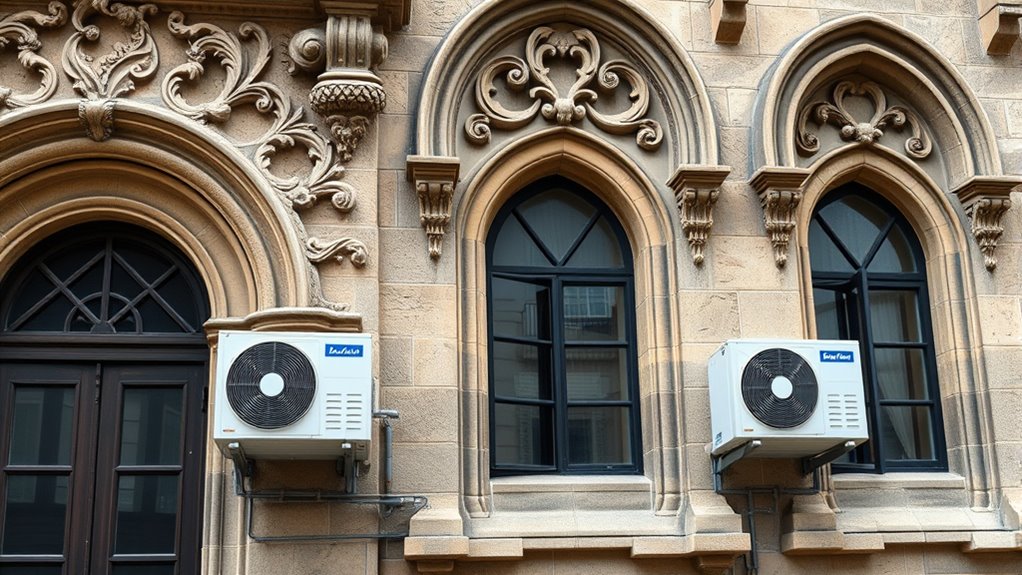
Have you ever wondered how existing buildings can be transformed to meet modern standards efficiently? One effective way is through retrofitting with heat pumps, especially in historic buildings where preservation is a priority. These structures often face challenges balancing energy efficiency with maintaining their architectural integrity. By installing heat pumps, you can markedly improve energy efficiency without compromising the building’s character. This approach allows you to upgrade the heating and cooling systems, reducing reliance on outdated, inefficient methods like oil or coal boilers, which often waste energy and increase operating costs.
Retrofitting historic buildings with heat pumps enhances efficiency while preserving architectural integrity.
When you opt for heat pumps in historic buildings, you’re focusing on sustainable building preservation. Instead of tearing down or extensively modifying these structures, you adapt them to modern needs while respecting their heritage. Heat pumps work by extracting heat from the outside air, ground, or water sources, then transferring it indoors. This process is highly efficient, especially in moderate climates, and can reduce energy consumption considerably. As a result, you get a more comfortable indoor environment, lower energy bills, and a smaller carbon footprint, all while maintaining the building’s original façade and interior features.
Implementing heat pumps in older buildings requires careful planning to avoid damaging historic elements. You might need to contemplate discreet installation methods, such as embedding units in basements or utilizing existing service spaces. Proper insulation and sealing are essential to maximize efficiency; otherwise, even the best heat pump won’t perform ideally. In many cases, integrating modern controls and smart thermostats can further enhance energy efficiency and ease of use. These upgrades help you fine-tune the system, ensuring it operates at peak performance and conserves energy.
It’s also important to work with specialists who understand the nuances of historic building preservation. They can help you select the right type of heat pump—air-source, ground-source, or water-source—and tailor the installation to preserve aesthetic and structural integrity. With the right approach, retrofitting historic buildings with heat pumps not only enhances energy efficiency but also extends the building’s lifespan. It becomes a sustainable solution that respects the past while embracing the future.
In addition, understanding the importance of Self Watering Plant Pots can inspire strategies for maintaining plants or greenery around historic sites, helping to preserve the landscape and aesthetic appeal. With the right approach, retrofitting with heat pumps offers a practical, environmentally friendly way to upgrade older structures. You get to enjoy improved comfort, lower operational costs, and a reduced environmental impact—all without sacrificing the building’s historic charm. By prioritizing energy efficiency and preservation, you ensure your building remains a treasured part of the community for generations to come.

Westinghouse Natural Gas Tankless Water Heater Indoor Installation Max 7.9 GPM 180,000 BTU, WIFI Enable Temp Self Modulating Non Condensing High Efficiency for House or Commercial, APOLO Performance
【On-Demand Efficiency】 Westinghouse tankless water heater works only needed, saving energy and costs. Compact yet powerful for whole-home...
As an affiliate, we earn on qualifying purchases.
Frequently Asked Questions
How Do Heat Pumps Affect the Historical Integrity of Buildings?
Heat pumps can impact the architectural preservation and aesthetic appeal of historic buildings, but careful integration minimizes these effects. You can choose sleek, discreet units or hidden installations that preserve the building’s character. While some may worry about visual intrusion, modern heat pumps are designed to blend seamlessly, ensuring that the aesthetic impact remains minimal. This way, you maintain the historic integrity while benefiting from efficient heating and cooling.
What Are the Cost Differences Between Various Heat Pump Models?
They say “you get what you pay for,” and that applies to heat pump costs. Generally, more efficient models cost more upfront but save you money long-term through lower energy bills. Cost comparisons show that basic models are cheaper initially, while high-efficiency models with advanced features cost more but deliver better performance. Choose wisely based on your budget and energy-saving goals, balancing initial cost with model efficiency.
Are There Specific Regulations for Installing Heat Pumps in Listed Buildings?
Yes, there are specific regulations for installing heat pumps in listed buildings. You must assess the heritage impact and make certain regulatory compliance with local conservation laws. You’ll likely need planning permission and possibly listed building consent, especially if the installation affects the building’s character. It’s essential to work with heritage specialists and authorities to minimize visual or structural impact, ensuring your retrofit respects the building’s historical significance.
How Long Is the Typical Installation Process for Heat Pumps in Historic Structures?
The installation timeline for heat pumps in historic structures usually spans 2 to 4 weeks. You’ll need to plan for site assessments, potential structural modifications, and careful integration to preserve the building’s integrity. The process can take longer if special regulations apply or if existing infrastructure requires upgrading. Staying flexible and coordinating with specialists guarantees a smoother installation, minimizing disruptions and maintaining the building’s historic features.
What Maintenance Is Required for Heat Pumps in Heritage Buildings?
You should expect to perform annual maintenance on your heat pump, including filter replacements and system checks. Notably, insulation upgrades and ventilation improvements can reduce your heat pump’s workload by up to 30%, making maintenance easier. Regularly inspect the system, clear debris, and ensure proper airflow. These steps help preserve your historic building’s integrity while keeping your heat pump running efficiently and extending its lifespan.
APUS Tankless Water Heater Propane, 140,000 BTU Indoor Installation Up to 6.8 GPM, Zero Cold Water Technology for Instant Hot Water on Demand, Smart Wi-Fi App Control
Instant Hot Water: This upgraded smart propane tankless water heater delivers consistent performance with its 140,000 BTU burner...
As an affiliate, we earn on qualifying purchases.
Conclusion
As you explore these retrofit case studies, remember that upgrading historic buildings with heat pumps is like giving them a gentle, modern heartbeat. It’s a delicate dance between preserving their timeless charm and embracing new technology. With careful planning, you can breathe new life into these structures, ensuring they stand strong for generations to come. So, step forward confidently—your efforts can turn old gems into warm, efficient spaces that tell a story of innovation and respect.

ALORAIR Whole House Dehumidifier, 90 PPD Commercial Grade Whole Home Dehumidifiers for Garages, Water Damage Restoration, 2300 Sq.Ft dehumidifiers for Crawl Space
Energy Efficient Whole House Dehumidifier: 90 pints per day at AHAM condition, 70 Pint at DOE, up to...
As an affiliate, we earn on qualifying purchases.

FOGATTI Natural Gas Tankless Water Heater Indoor - Max 7.5 GPM 170,000 BTU, CSA Certified Compact Design On Demand Instant Hot Water Heater - Instagas Comfort 170S Series
Powerhouse Performance: The FOGATTI tankless water heater takes up a third of the space of traditional tank heaters...
As an affiliate, we earn on qualifying purchases.