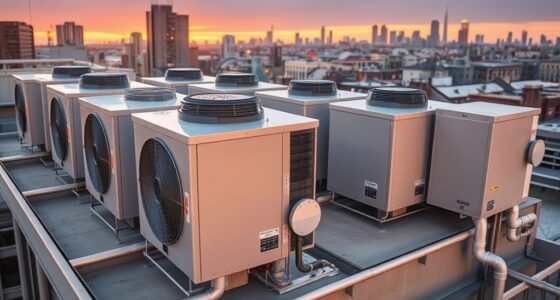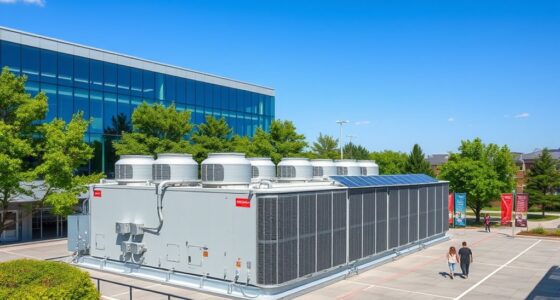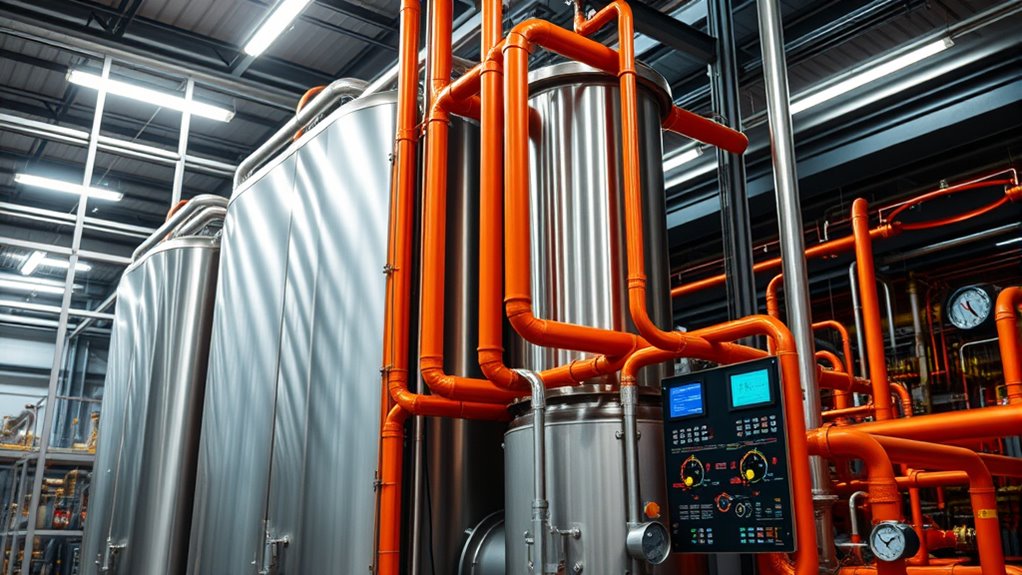

Heat pumps for industrial process heating offer a highly energy-efficient solution by transferring heat instead of generating it, which lowers energy use and operational costs. They can be scaled and adapted to meet specific needs, helping you save on fuel and maintenance expenses while reducing environmental impact. Plus, they support sustainability goals and can be integrated with renewable energy sources. To discover how these systems can transform your operations, keep exploring the benefits and options available.
Key Takeaways
- Heat pumps efficiently transfer heat using electricity, reducing reliance on fossil fuels and lowering operational costs.
- They support environmental sustainability by decreasing greenhouse gas emissions and integrating with renewable energy sources.
- Heat pumps are adaptable, scalable, and suitable for various industrial processes requiring large-scale or fluctuating heat demands.
- They require less maintenance, offer reliable operation, and help stabilize energy expenses over their lifespan.
- Implementing heat pumps aligns with sustainability goals, regulatory incentives, and enhances overall operational efficiency.

Heat pumps are transforming industrial process heating by offering an energy-efficient alternative to traditional fossil fuel-based systems. Instead of burning fuels like natural gas or coal, heat pumps transfer heat from one place to another using electricity, making them a smarter choice for reducing energy consumption. This shift not only boosts your facility’s energy efficiency but also leads to significant cost savings over time. As energy costs continue to rise, adopting heat pump technology helps you cut expenses related to fuel purchases and reduces your overall operating costs. By optimizing the transfer of heat, these systems use less energy to produce the same or even greater levels of heat, making your processes more sustainable and economical.
Heat pumps boost energy efficiency and cut costs by transferring heat using electricity instead of fossil fuels.
You’ll notice that with heat pumps, the initial investment pays off quickly because of the lower operating costs. Unlike traditional systems that rely heavily on fuel combustion, heat pumps leverage the ambient environment—drawing heat from air, water, or ground sources—so you’re not paying for costly fuels. This makes your energy bills more predictable and easier to manage. Additionally, heat pumps operate with less maintenance, minimizing downtime and repair expenses, which further enhances your cost savings. Over the system’s lifespan, the reduction in fuel and maintenance costs can be substantial, providing a compelling financial benefit.
Another advantage is the flexibility heat pumps offer for process heating applications. They can be scaled to match your specific needs, whether you’re heating large volumes of water, air, or other process fluids. This adaptability ensures you’re not wasting energy or money on oversized or underperforming systems. As your demand fluctuates, heat pumps can adjust accordingly, maintaining high efficiency and keeping your operational costs in check. Moreover, because heat pumps run on electricity, you can easily integrate renewable energy sources such as solar or wind power, further lowering your energy expenses and carbon footprint.
Implementing heat pump technology also aligns with your sustainability goals. Reducing reliance on fossil fuels not only cuts emissions but can also qualify your facility for various incentives and rebates. These financial benefits, combined with the operational savings, make heat pumps an attractive investment for industrial process heating. As you consider upgrading or replacing existing systems, the long-term advantages of energy efficiency and cost savings become clear. Heat pumps empower you to modernize your operations, lower your environmental impact, and improve your bottom line, all while maintaining reliable and effective process heating.

Fundamentals of Geothermal Heat Pump Systems: Design and Application
As an affiliate, we earn on qualifying purchases.
As an affiliate, we earn on qualifying purchases.
Frequently Asked Questions
What Are the Typical Lifespan and Maintenance Needs of Industrial Heat Pumps?
You can expect your industrial heat pump to last around 15 to 20 years with proper maintenance. Following a regular maintenance schedule helps guarantee component durability, reducing breakdowns and extending its lifespan. Keep an eye on key parts like compressors and fans, and perform routine inspections and cleaning. Doing so minimizes wear and tear, keeps efficiency high, and ensures your heat pump operates reliably over its long service life.
How Do Heat Pumps Perform in Extremely Cold or Variable Climates?
You might think heat pumps struggle in extremely cold or variable climates, but they actually adapt well with modern technology. Climate adaptation features help maintain efficiency, though you could notice some efficiency variability at lower temperatures. Advanced models use enhanced compressors and refrigerants to perform reliably, ensuring consistent process heating. While performance may dip in severe cold, proper system design minimizes issues, keeping your operations running smoothly regardless of climate challenges.
What Are the Initial Installation Costs Compared to Traditional Heating Methods?
You’ll find that the initial installation costs of heat pumps are higher than traditional heating methods due to the required capital investment in specialized equipment and infrastructure. However, these installation expenses often pay off over time through lower operational costs and increased efficiency. While the upfront costs might seem steep, you’ll benefit from energy savings and environmental advantages, making heat pumps a smart long-term choice for industrial process heating.
Are There Any Industries Where Heat Pumps Are Less Effective?
Think of heat pumps as a versatile tool, but they have their limitations. In certain industries, like those requiring very high-temperature processes or with fluctuating demand, heat pumps may be less effective. These are unsuitable applications where traditional heating methods excel. If your industry involves extreme heat or rapid changes, relying solely on heat pumps could hinder efficiency, making it essential to assess their limitations before opting for this technology.
How Do Heat Pumps Impact Overall Energy Consumption and Carbon Footprint?
You’ll find that heat pumps substantially reduce overall energy consumption and carbon footprint by improving efficiency and supporting renewable integration. They use less electricity than traditional systems, cutting emissions and helping your operations meet environmental goals. As you adopt heat pumps, you contribute to emission reduction efforts while lowering energy costs. This sustainable approach enhances your company’s environmental impact, making your processes more eco-friendly and aligned with global climate initiatives.
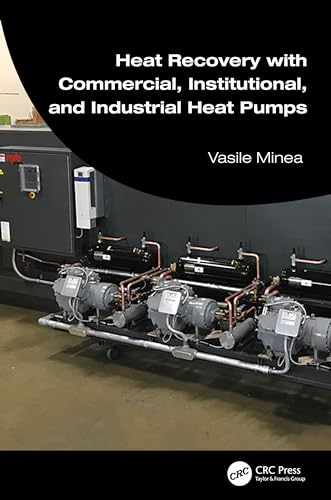
Heat Recovery with Commercial, Institutional, and Industrial Heat Pumps
As an affiliate, we earn on qualifying purchases.
As an affiliate, we earn on qualifying purchases.
Conclusion
By choosing heat pumps for your industrial process heating, you can substantially cut energy costs and reduce emissions. Imagine a factory switching to a heat pump, lowering its carbon footprint while maintaining efficient operation. For example, a food processing plant installed heat pumps and saw a 30% energy savings within the first year. Embracing this technology not only benefits your bottom line but also supports a more sustainable future for your industry.
Fundamentals of Geothermal Heat Pump Systems: Design and Application
As an affiliate, we earn on qualifying purchases.
As an affiliate, we earn on qualifying purchases.
Fundamentals of Geothermal Heat Pump Systems: Design and Application
As an affiliate, we earn on qualifying purchases.
As an affiliate, we earn on qualifying purchases.