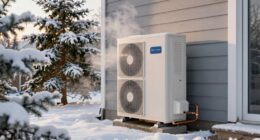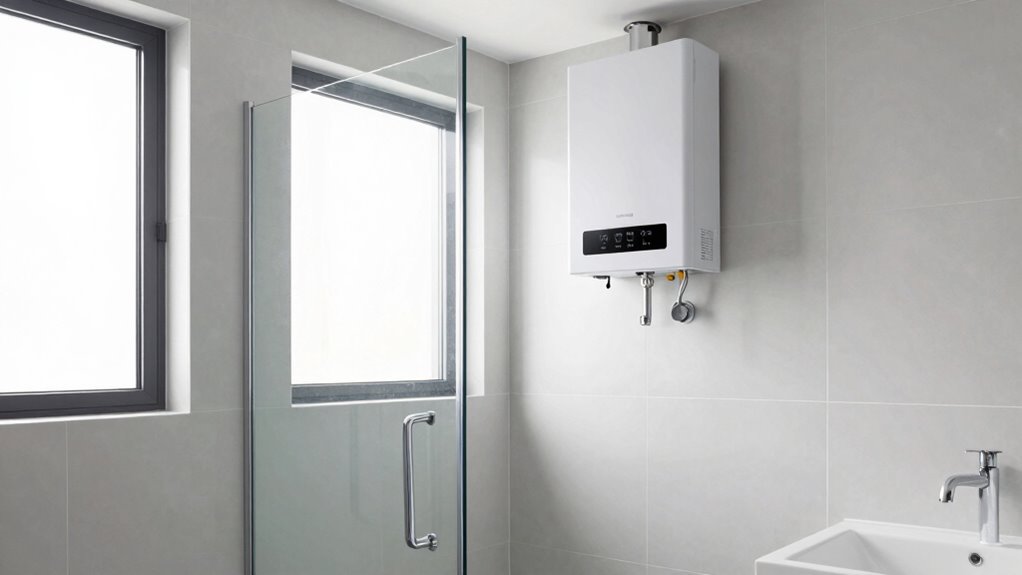
Your tankless water heater’s capacity to handle multiple bathrooms depends on its flow rate and household water use. For example, a unit with a 7-10 GPM rating can typically serve two to three bathrooms at once, depending on how many fixtures are used simultaneously. Larger households or higher water demands may require a bigger unit. To find out what fits your needs, consider your household size and peak usage, and discover more about optimizing your system below.
Key Takeaways
- The unit’s flow rate (GPM) determines how many fixtures it can support simultaneously.
- Larger households with multiple bathrooms typically need higher GPM-rated units.
- Matching the flow rate and temperature rise ensures sufficient hot water for all bathrooms.
- Consider the demand of appliances like dishwashers and washers when sizing the heater.
- Professional assessment helps select the right unit size based on household hot water needs.
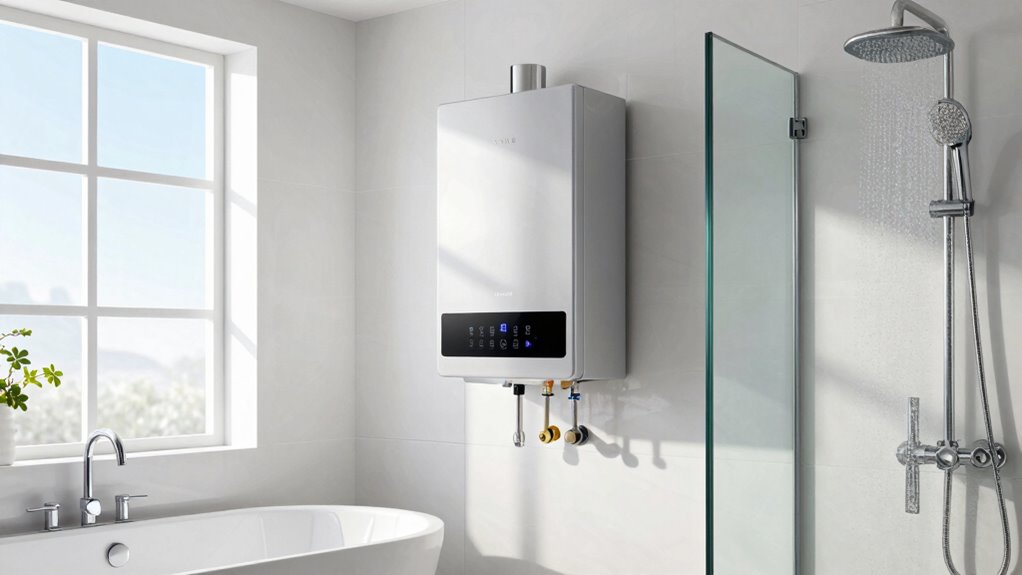
Ever wondered how many bathrooms a tankless water heater can supply at once? The answer depends on several factors, but understanding its capacity is vital for making the right choice for your home. Tankless water heaters, also known as on-demand heaters, heat water only when you need it, which makes them considerably more energy-efficient than traditional tank models. This energy efficiency means you’re not wasting power keeping a large tank of water heated constantly. Instead, the heater activates only when a hot water tap is turned on, reducing energy bills over time. However, the initial installation costs can be higher than those of tank-style units, mainly because tankless systems often require upgraded electrical or gas lines and may involve more complex installation procedures. Still, many homeowners find the long-term savings in energy costs make up for the upfront expense.
Your household’s size and water usage habits play a vital role in determining how many bathrooms a tankless water heater can handle simultaneously. For small households with minimal hot water demand, a single point-of-use unit or a small whole-house model might suffice. But for larger families with multiple bathrooms running simultaneously, you’ll need a more powerful system designed to meet higher flow rates. Typically, tankless units are rated by their flow rate, measured in gallons per minute (GPM). A standard shower uses about 2 GPM, so if you want to run two showers and a faucet at the same time, look for a unit capable of delivering around 6 GPM or more. Keep in mind that adding other appliances like dishwashers or washing machines will also impact your total hot water needs.
Another key consideration is the temperature rise—how much your unit needs to warm cold water to your desired temperature. Larger households or homes with colder incoming water require units with higher temperature rise capabilities. If you don’t choose a unit that matches your household’s hot water demand, you may find yourself running out of hot water during peak usage times. To guarantee your tankless water heater handles your household’s needs efficiently, it’s wise to consult with a professional installer who can evaluate your specific requirements, including flow rates and temperature rise.

Rheem RTG-70DVLN-3 High Efficiency Non-Condensing Indoor Tankless Natural Gas Water Heater 7.0 GPM, 160,000 BTUs
High-efficiency tankless gas water heater delivers up to 7.0 GPM, perfect for 2–3 bathroom homes with multiple hot…
As an affiliate, we earn on qualifying purchases.
As an affiliate, we earn on qualifying purchases.
Frequently Asked Questions
Can a Tankless Water Heater Work During a Power Outage?
A tankless water heater typically doesn’t work during a power outage because it relies on electricity to operate its components. If you want hot water during outages, you should consider backup solutions like a battery backup system or a generator. These options guarantee your heater runs smoothly when power is unavailable, providing continuous hot water and peace of mind during emergencies or outages.
How Does Water Temperature Fluctuation Affect Multiple Bathrooms?
Water temperature fluctuations can impact multiple bathrooms by causing inconsistent temperatures during simultaneous use. Your tankless heater’s temperature stability may drop if demand exceeds its flow regulation capacity, leading to colder water in some fixtures. To avoid this, make sure your system is appropriately sized for your household’s peak flow rate, and consider adjusting the temperature setting slightly higher for better stability. This helps maintain consistent hot water across all bathrooms.
What Is the Lifespan of a Typical Tankless Water Heater?
Back in the day, tankless water heaters were considered a modern marvel, and they still are. Typically, they last around 20 years, but efficiency concerns and maintenance requirements can influence lifespan. You need to regularly flush the unit and check components to prevent build-up and corrosion. Proper maintenance guarantees you get the most out of your heater, keeping it running smoothly for decades, saving you money and water.
Are Tankless Water Heaters Suitable for Large Households?
Yes, tankless water heaters are suitable for large households, especially if you consider bathroom capacity and household size. They can efficiently supply hot water to multiple bathrooms, but you’ll need a high-capacity unit or multiple units to meet your demand. Smaller units might struggle during peak times, so it’s crucial to choose a model designed for your household size to guarantee everyone has enough hot water.
How Does Installation Complexity Impact Capacity?
Did you know that improper installation can reduce a tankless water heater’s capacity by up to 30%? Installation challenges directly impact capacity limitations, making it essential to follow proper procedures. Complex setups, such as adding multiple units or adjusting your home’s plumbing, can strain the system’s ability to meet demand. So, investing in professional installation guarantees your heater performs at its best, providing reliable hot water for your household’s needs.

Electric Tankless Water Heater WINTEMP 27kW 240V, Whole House Hot Water Supply, On Demand Instant Endless Water Heater, with LED Temperature Display, WiFi Control, Up to 6.3 GPM, ETL Certified
Important Note: Ensure this tankless water heater meets your installation requirements. The WN27 model is rated at 27KW…
As an affiliate, we earn on qualifying purchases.
As an affiliate, we earn on qualifying purchases.
Conclusion
Ultimately, choosing the right tankless water heater is like selecting a trusty steed for your journey—balance your needs and capacity carefully. Remember, even Hercules faced his challenges, but with the right tools, he triumphed. So, assess your household’s demands wisely, and don’t settle for less. A well-chosen unit will serve you reliably, turning your daily routines into smooth sailing—proof that, with the right preparation, you can conquer even the biggest demands.

Rheem 3.5kW 120V Point of Use Thermostatic Tankless Electric Water Heater
ELECTRICAL REQUIREMENTS: 1 x 30 AMP Double Pole Breaker Required. Product installation hard wired to 120 volts requiring…
As an affiliate, we earn on qualifying purchases.
As an affiliate, we earn on qualifying purchases.

FOGATTI Natural Gas Tankless Water Heater Indoor – Max 7.5 GPM 170,000 BTU, CSA Certified Compact Design On Demand Instant Hot Water Heater – Instagas Comfort 170S Series
Powerhouse Performance: The FOGATTI tankless water heater takes up a third of the space of traditional tank heaters…
As an affiliate, we earn on qualifying purchases.
As an affiliate, we earn on qualifying purchases.