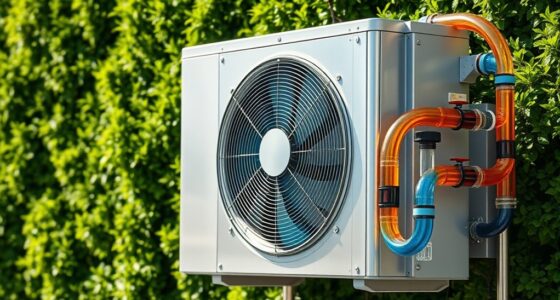
Heat recovery systems capture waste heat from processes, exhaust gases, or HVAC systems to boost energy efficiency and reduce costs. They use heat exchangers, recuperators, or ventilators to reclaim and reuse heat for preheating air, water, or fluids. By doing so, you’ll lower energy consumption, cut operational expenses, and support sustainability efforts. Understanding how these systems work can help you find solutions tailored to your needs and release greater energy savings.
Key Takeaways
- Heat recovery systems capture waste heat from processes, exhaust gases, or ventilation to improve energy efficiency.
- Common technologies include heat exchangers, recuperators, and heat recovery ventilators (HRVs).
- They are widely used in industrial plants, HVAC systems, and manufacturing to preheat air, water, or fluids.
- Implementing these systems reduces energy consumption, operational costs, and carbon emissions.
- Proper selection and optimization enhance thermal efficiency, support regulatory compliance, and promote sustainability.

Heat recovery systems are designed to improve energy efficiency by capturing and reusing heat that would otherwise be wasted. When you implement these systems, you actively enhance the thermal efficiency of your operations by recovering heat from processes, exhaust gases, or other sources. This recovered heat can then be redirected to preheat incoming air, water, or other fluids, reducing the need for additional energy input. As a result, you not only save on energy costs but also contribute to the broader goal of energy conservation. These systems are especially valuable in industrial settings, commercial buildings, and HVAC systems, where large amounts of heat are generated and often lost to the environment.
Heat recovery systems enhance energy efficiency by reclaiming and reusing waste heat in various applications.
By recovering heat, you optimize the use of energy already present in your processes. Instead of venting hot exhaust gases or letting valuable thermal energy escape, you capture it using heat exchangers or recuperators. This process boosts the overall thermal efficiency of your system, meaning you get more useful work out of the energy you consume. When designing or upgrading your facility, integrating heat recovery solutions allows you to maximize energy conservation. This is vital not only for reducing operational costs but also for minimizing your carbon footprint, aligning with sustainability goals.
In practical terms, you might install a heat exchanger in your manufacturing plant to reclaim heat from exhaust fumes. This heat can then preheat boiler feedwater or incoming air, considerably lowering energy consumption. Similarly, in HVAC systems, heat recovery ventilators (HRVs) capture heat from stale indoor air before releasing it outside, then transfer that heat to incoming fresh air. This efficient exchange reduces the workload on heating systems, cutting energy use and lowering utility bills. The key advantage here is that you’re making smarter use of the energy already in play, rather than relying solely on additional fuel or electricity.
Furthermore, heat recovery systems are adaptable to various scales and industries. Whether you run a large industrial plant or manage a commercial building, you can tailor solutions that fit your specific needs. They are not only effective at conserving energy but also help you meet regulatory standards for emissions and energy efficiency. Over time, investing in these systems pays off by decreasing your operational expenses and providing a more sustainable approach to energy management. Additionally, understanding the types of heat recovery systems available can help you choose the most suitable technology for your application. Ultimately, heat recovery is about turning wasted heat into a valuable resource, improving your thermal efficiency, and supporting your commitment to energy conservation.

Canyon Lodge Large Pellet Stove
Heats up to 2,000-3,000 sq. ft.
As an affiliate, we earn on qualifying purchases.
Frequently Asked Questions
What Are the Initial Costs of Implementing Heat Recovery Systems?
The initial costs of implementing heat recovery systems vary based on your facility’s size and complexity. Conducting a thorough cost analysis helps you understand upfront expenses, including equipment and installation. You might face installation challenges like integrating new systems with existing infrastructure. While costs can be significant initially, the energy savings and efficiency gains often justify the investment over time, making it a smart choice for long-term operational savings.
How Do Heat Recovery Systems Impact Overall Energy Efficiency?
Think of heat recovery systems like a clever sponge, soaking up wasted energy. They markedly boost your overall energy efficiency by capturing and reusing heat that would otherwise be lost. This not only reduces energy consumption but also leads to environmental benefits and substantial cost savings over time. By implementing these systems, you make your operations smarter and more sustainable, cutting costs while helping the planet.
Are Heat Recovery Systems Suitable for Small-Scale Applications?
Yes, heat recovery systems can be suitable for small-scale applications. You should conduct a small-scale feasibility and cost-effectiveness analysis to determine if implementing such systems makes sense for your specific needs. These systems can improve energy efficiency and reduce operational costs, especially in settings like small businesses or residential buildings. With proper assessment, you’ll find that they’re a practical option that offers tangible benefits without requiring large investments.
What Maintenance Is Required for Optimal Performance?
Think of your heat recovery system like a car—you gotta keep it tuned for peak performance. Regularly check system calibration to guarantee accurate heat transfer, and replace filters as needed to prevent dust buildup. I once ignored filter replacement, and my system’s efficiency dropped, costing more energy. By maintaining proper calibration and timely filter changes, you’ll keep your system running smoothly and save money in the long run.
How Do Different Types of Heat Recovery Systems Compare?
You’ll find that comparison types of heat recovery systems vary in design and efficiency differences. For example, heat exchangers like plate or shell-and-tube differ in how effectively they transfer heat, impacting overall efficiency. You should consider factors like size, application, and maintenance needs when choosing between these types. Understanding these differences helps you select a system that maximizes energy savings and performance for your specific setup.

PelPro PP150 Pellet Stove for Home Heating - 150 lb Hopper, 49,200 BTU Heats up to 2,500 Sq. Ft., Easy-Dial Temp Control, Built-in Thermostat with Auto-Ignition, Powerful & Quiet 265CFM Blower
PP150 pellet stoves for fireplaces are efficient for home heating up to 2,500 sq. ft. at almost 50,000...
As an affiliate, we earn on qualifying purchases.
Conclusion
Imagine your building is a mighty river, constantly flowing and full of energy. Heat recovery systems act as a skilled dam operator, capturing and redirecting that energy instead of letting it waste away. By embracing these systems, you harness the river’s true potential, transforming what’s lost into something valuable. You become the steward of efficiency, turning fleeting heat into lasting power—creating a future where every drop counts and nothing goes to waste.

Large Pellet Stove - 130lb Hopper
Built-in WiFi – Smart Home Technology
As an affiliate, we earn on qualifying purchases.

Medium Pellet Stove - 60lb Hopper
Built-in WiFi – Smart Home Technology
As an affiliate, we earn on qualifying purchases.